
Consumercarts is reader-supported. Learn more
Apple M4 Pro vs Apple M5: Comparison
Apple M4 Pro and Apple M5 differ on cache: Apple M4 Pro at 24MB L2 + 4MB L1, Apple M5 at 16MB L2 + 4MB L1, which puts Apple M4 Pro ahead on that measure. They match on form factor and boost/base clock. In Blender Cycles (CPU) the Apple M4 Pro scores 344 against 275 for the Apple M5, a lead of 20%.
Specs
| Specification |  |  |
|---|---|---|
| Brand | Apple | Apple |
| Form Factor | Laptop | Laptop |
| Model Number | M4 Pro | M5 |
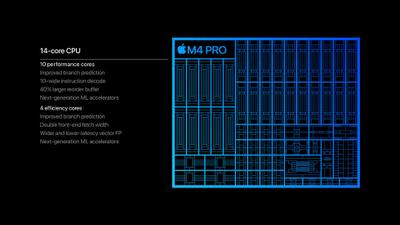
| Core/Thread Count | 14 Core / 14 Thread (10 Performance + 4 Efficiency) | 10 Core / 10 Thread (4 Performance + 6 Efficiency) |
| TDP | 35 W | 22 W |
| Cache | 24MB L2 + 4MB L1 | 16MB L2 + 4MB L1 |
| Boost/Base Clock | 4.5 GHz / 2.9 GHz | 4.5 GHz / 2.9 GHz |
| Series | Apple Silicon | Apple Silicon |
| CPU Process Node | 3 Nanometers | 3 Nanometers (Enhanced) |
| Architecture | Apple Silicon, Fourth Generation | Apple Silicon, Fifth Generation |
Benchmarks
Measured results, not specifications. Percentages are the gap to the leading product in each test.
Blender Cycles (CPU)
Blender 4.5, Blender Open Data (CC0). Median of monster + junkshop + classroom, combined samples/min.
Blender renders 3D scenes by tracing light through them, which loads every core at once. The score measures sustained multi-core throughput, so a chip that wins here can still lose at gaming, where one or two fast cores matter more. Figures come from Blender's Open Data project, which places no restriction on reuse, and we publish the median of every submission for that chip on the same Blender version.