
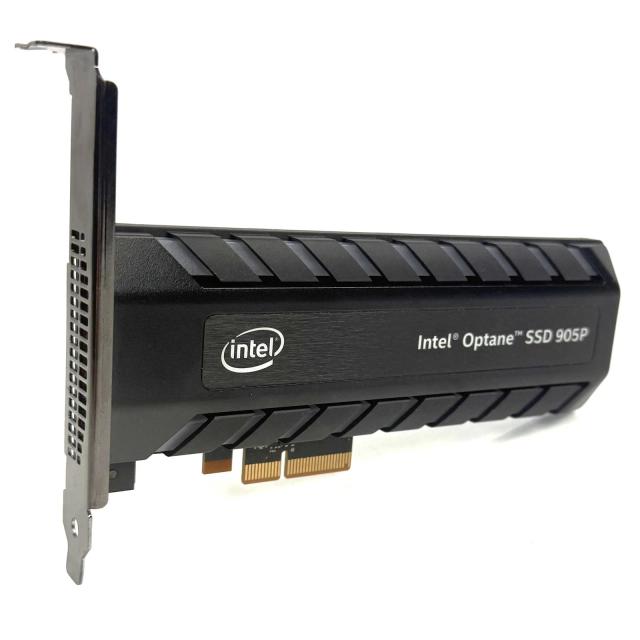
Intel Optane SSD 905P
Expert rating6.5 / 10
- Model:
- Intel Optane SSD 905P
- Interface:
- PCIe 3.0
- Sequential Read:
- Up to 2
- NAND Type:
- 3D XPoint (Not NAND Flash)
Consumercarts is reader-supported. Learn more
Disclaimer: The price and specification of the given product may differ from the actual product. Please confirm on the retailer's website before buying.
Manufacturer: Intel Last updated: September 12, 2026
Intel Optane SSD 905P (PCIe 3.0 NVMe/2,600 MB/s Read/3D XPoint Latency Benchmark, Legacy) Review
The Intel Optane SSD 905P is a discontinued enthusiast drive built on 3D XPoint media rather than NAND flash entirely, and it's still cited today as the practical benchmark for extreme low-latency and consistent 4K random performance.
Its sequential numbers look unremarkable next to any current PCIe 4.0 or 5.0 NAND drive, that's not what it's for, its actual strength is near-instant, essentially load-independent responsiveness under mixed random I/O that NAND-based SSDs still can't fully match years later.
Why This Drive Is Different
3D XPoint media stores and accesses data through a fundamentally different physical mechanism than NAND flash, with no separate erase-before-write cycle and dramatically lower latency, which is why this drive's real-world random I/O responsiveness held up as a reference point long after Intel discontinued Optane as a product line.
Performance Context, Not Just Numbers
2,600 MB/s sequential read looks slow next to modern PCIe 4.0 or 5.0 drives hitting 7,000 to 14,000 MB/s, but this drive's actual selling point was always 4K random read/write IOPS at very low queue depths and latency measured in single-digit microseconds, a category current NAND-based flagships still don't fully match despite far higher sequential numbers.
Comparison to Modern Alternatives
Against the Samsung 990 PRO, covered elsewhere on this site, that current NAND flagship posts vastly higher sequential numbers but doesn't match this drive's random-I/O latency floor, a genuinely different strength rather than a simple win either way. Against Sabrent's Rocket 5, also covered on this site, that PCIe 5.0 drive is dramatically faster for sequential and most real workloads, and is the practical recommendation for anyone not specifically chasing Optane's latency characteristics.
Who This SSD Is Actually For
Enthusiasts and reviewers who specifically want a latency reference point for testing or comparison. This is the drive's remaining, genuine use case today.
Database and caching workloads on older systems already built around Optane, where replacing the drive isn't worth the disruption.
Not for anyone shopping for a modern boot or gaming drive by capacity or sequential speed. Any current PCIe 4.0 or 5.0 NAND drive on this site outperforms it there for less money.
Specifications
Identity
| Brand | Intel |
|---|---|
| Model Number | 905P |
| Series | Optane SSD 905P |
Interface and form
| Bus Interface | PCIe 3.0 x4, NVMe (M.2 and U.2/Add-in Card) |
|---|
Sequential performance
| Sequential Read | 2600 MB/s |
|---|---|
| Sequential Write | 2200 MB/s |
NAND
| NAND Type | 3D XPoint (Not NAND Flash) |
|---|
Power and thermals
| Heatsink | Included on Add-in Card SKUs |
|---|
Physical and commercial
| Warranty | 5 Years |
|---|
| Capacity Options | 380GB, 480GB, 960GB, 1.5TB |
|---|
Expert Review
Reviewed by Burooj Alam. Rated by us, not by users.
Expert rating6.5 / 10
Not a sensible buy for modern capacity or throughput needs, but still the reference point for random-I/O latency years after discontinuation.
Best for
- Enthusiasts and reviewers who specifically want a latency reference point for testing or comparison.
- Database and caching workloads on older systems already built around Optane, where replacing the drive isn't worth the disruption.
- Collectors and hardware historians interested in 3D XPoint as a genuinely distinct storage technology.
Not for
- Not for anyone shopping for a modern boot or gaming drive by capacity or sequential speed. Any current PCIe 4.0 or 5.0 NAND drive on this site outperforms it there for less money.
- Not for buyers wanting the largest available capacity per dollar; NAND-based drives are far cheaper per gigabyte.
- Not for new builds without a specific, deliberate reason to seek out discontinued Optane hardware.
FAQs
What are the key specifications of the Intel Optane SSD 905P (PCIe 3.0 NVMe/2,600 MB/s Read/3D XPoint Latency Benchmark, Legacy)?
The Intel Optane SSD 905P (PCIe 3.0 NVMe/2,600 MB/s Read/3D XPoint Latency Benchmark, Legacy) is a component from Intel. Key specs: Interface PCIe 3.0 x4, NVMe (M.2 and U.2/Add-in Card), Sequential Read 2600, Sequential Write 2200, NAND Type 3D XPoint (Not NAND Flash), Capacity Options 380GB, 480GB, 960GB, 1.5TB.
Who is the Intel Optane SSD 905P (PCIe 3.0 NVMe/2,600 MB/s Read/3D XPoint Latency Benchmark, Legacy) best suited to?
It suits enthusiasts and reviewers who specifically want a latency reference point for testing or comparison., database and caching workloads on older systems already built around optane, where replacing the drive isn't worth the disruption., collectors and hardware historians interested in 3d xpoint as a genuinely distinct storage technology..
What are the drawbacks of the Intel Optane SSD 905P (PCIe 3.0 NVMe/2,600 MB/s Read/3D XPoint Latency Benchmark, Legacy)?
It is a poor fit for not for anyone shopping for a modern boot or gaming drive by capacity or sequential speed. any current pcie 4.0 or 5.0 nand drive on this site outperforms it there for less money., not for buyers wanting the largest available capacity per dollar; nand-based drives are far cheaper per gigabyte., not for new builds without a specific, deliberate reason to seek out discontinued optane hardware..
Compare and read more
- Acer FA100 (Micron B27B) vs Intel Optane SSD 905P (PCIe 3.0 NVMe/2,600 MB/s Read/3D XPoint Latency Benchmark, Legacy)
- Acer FA100 (Micron B47R) vs Intel Optane SSD 905P (PCIe 3.0 NVMe/2,600 MB/s Read/3D XPoint Latency Benchmark, Legacy)
- Acer FA200 vs Intel Optane SSD 905P (PCIe 3.0 NVMe/2,600 MB/s Read/3D XPoint Latency Benchmark, Legacy)
- Acer FA300 vs Intel Optane SSD 905P (PCIe 3.0 NVMe/2,600 MB/s Read/3D XPoint Latency Benchmark, Legacy)
- Acer Predator GM7000 (PCIe 4.0 NVMe/7,400 MB/s Read/6,700 MB/s Write/Gaming-Branded Midrange Drive) vs Intel Optane SSD 905P (PCIe 3.0 NVMe/2,600 MB/s Read/3D XPoint Latency Benchmark, Legacy)