
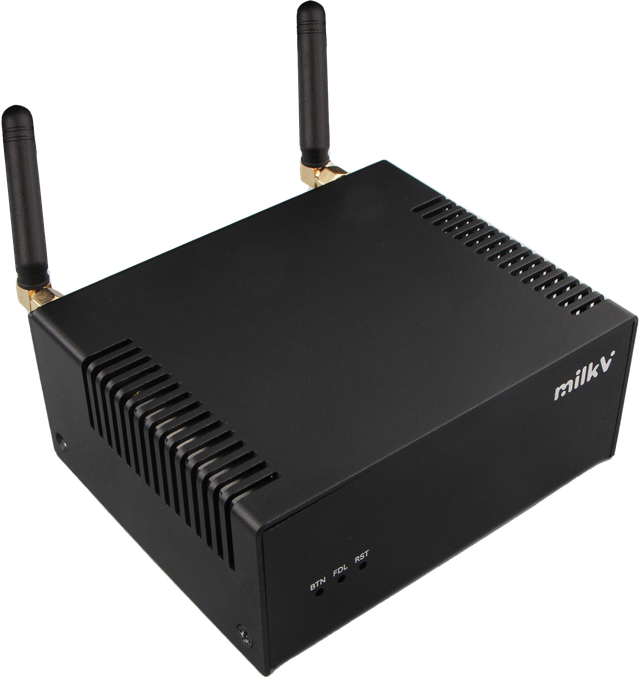
Milk-V Jupiter2
- SoC:
- SpacemiT K3
- Memory:
- Up to 32GB LPDDR5
- Storage Type:
- NVMe/M.2
- CPU Architecture:
- RISC-V
Consumercarts is reader-supported. Learn more
Disclaimer: The price and specification of the given product may differ from the actual product. Please confirm on the retailer's website before buying.
Manufacturer: Milk-V Last updated: 2026-09-14
Milk-V Jupiter2 (Single-Board Computer/SpacemiT K3/8-Core RISC-V 2.4GHz/Up to 32GB LPDDR5/10GbE SFP+/Pico-ITX) Review
The Milk-V Jupiter2 is a Pico-ITX RISC-V single-board computer built on the SpacemiT K3, with eight X100 cores up to 2.4GHz, up to 32GB of LPDDR5, an onboard NPU, WiFi 6, and both Gigabit Ethernet and a 10GbE SFP+ port.
The Jupiter2 is one of the few RISC-V boards with genuinely modern I/O rather than hobbyist-tier ports. A 10GbE SFP+ cage on a board this size is unusual at any architecture, and combined with the M.2 Gen3 x4 slot it makes a credible small NAS or router platform. Two things to go in with your eyes open about. The 60 TOPS NPU figure is a manufacturer peak claim, and independent testing of the same K3 silicon measured real FP16 throughput an order of magnitude below it. And there is no 40-pin GPIO header on the standalone board, so if you want Raspberry Pi style breadboard work this is the wrong board.
SpacemiT K3 and the RISC-V Question
Eight X100 quad-issue out-of-order RISC-V cores at up to 2.4GHz with 8MB of shared L2, plus a separate dual-core RT24 real-time coprocessor. This is RVA23-class silicon, which matters because it is the profile that mainstream Linux distributions are standardising on. OS support already covers Ubuntu 26.04, Fedora, Debian-derived Bianbu and OpenHarmony.
The NPU Claim, Honestly
Milk-V claims up to 60 TOPS from eight A100 AI cores across INT4 through BF16. Treat that as a peak marketing figure. Independent hands-on testing of the same SpacemiT K3 silicon on a competing board measured real FP16 throughput around an order of magnitude lower. The NPU is genuinely useful for edge inference, but size your workload against measured numbers rather than the headline.
Networking and Storage Make This a NAS Board
A 10GbE SFP+ port alongside Gigabit copper is rare on any single-board computer, and pairing it with an M.2 2280 PCIe Gen3 x4 slot and up to 256GB of onboard UFS turns this into a plausible small NAS or software router rather than a pure development board.
What It Is Not
There is no conventional 40-pin GPIO header. Expansion is via RT I/O FPC connectors aimed at EtherCAT and CAN-FD industrial work. Note also that Milk-V sells a separate Jupiter2 NX SO-DIMM module and a Jupiter2 Dev Kit pairing that module with a Radxa C200 carrier, both of which have different ports and dimensions from this standalone board.
Specifications
Identity
| Brand | Milk-V |
|---|
Power
| Power Input | USB-C Power Delivery (65W) or 12V ATX 2-pin |
|---|
| CPU Architecture | RISC-V |
|---|---|
| Memory | 32 GB |
| Storage Type | NVMe/M.2 |
| Has AI Accelerator / NPU | Yes |
| Wireless | WiFi 6 |
| GPIO Header | No |
| Price | 300 USD |
| Use Case | AI / Machine Learning |
| Model | Jupiter2 |
| SoC | SpacemiT K3 |
| Processor | 8x X100 64-bit RISC-V quad-issue out-of-order cores up to 2.4GHz, 8MB shared L2, plus dual-core RT24 real-time coprocessor |
| GPU | IMG BXM-4-64-MC1 (OpenGL ES 3.2, OpenCL 3.0, Vulkan 1.3) |
| Memory Type | LPDDR5 dual-channel 64-bit, 6400 MT/s |
| Storage | Onboard UFS up to 256GB, M.2 2280 PCIe Gen3 x4 for NVMe |
| NPU | 8x A100 AI cores, manufacturer claims up to 60 TOPS peak (INT4/INT8/FP8/INT16/FP16/BF16). Independent testing of the same K3 silicon measured far lower real FP16 throughput |
| Bluetooth | Bluetooth 5.2 |
| Ethernet | 1x Gigabit Ethernet (RJ45), 1x 10GbE SFP+ |
| Expansion I/O | RT I/O FPC connectors for EtherCAT and CAN-FD via the RT24 real-time core. No conventional 40-pin GPIO header on the standalone board |
| Video Output | USB-C DisplayPort Alt Mode (4K@60Hz), eDP (2.5K@90Hz) |
| USB Ports | 2x USB 3.2 Gen1 Type-C, 4x USB 2.0 Type-A |
| PCIe | M.2 M-Key PCIe Gen3 x4 (NVMe), M.2 B-Key PCIe Gen3 x2 + USB for cellular |
| Board Dimensions | 100 x 86 mm (Pico-ITX plus) |
| Operating System Support | Bianbu 3.0, Ubuntu 26.04, OpenHarmony 6.0, OpenKylin, Deepin, Fedora |
| Price Variants | 8GB $300 / 16GB $380 / 32GB $575 |
Expert Review
Reviewed by Burooj Alam. Rated by us, not by users.
Best for
- Small NAS or software router builds that want 10GbE on a single board
- RISC-V development on RVA23-class silicon with mainstream distro support
- Edge inference work, sized against measured NPU throughput rather than the 60 TOPS headline
Not for
- GPIO and breadboard projects, there is no 40-pin header on this board
- Buyers who need the 60 TOPS figure to be real, it is a peak claim
FAQs
What are the key specifications of the Milk-V Jupiter2 (Single-Board Computer/SpacemiT K3/8-Core RISC-V 2.4GHz/Up to 32GB LPDDR5/10GbE SFP+/Pico-ITX)?
The Milk-V Jupiter2 (Single-Board Computer/SpacemiT K3/8-Core RISC-V 2.4GHz/Up to 32GB LPDDR5/10GbE SFP+/Pico-ITX) is a single board computer from Milk-V. Key specs: SoC SpacemiT K3, CPU Architecture RISC-V, Processor 8x X100 64-bit RISC-V quad-issue out-of-order cores up to 2.4GHz, 8MB shared L2, plus dual-core RT24 real-time coprocessor, GPU IMG BXM-4-64-MC1 (OpenGL ES 3.2, OpenCL 3.0, Vulkan 1.3), Memory 32.
Will the Milk-V Jupiter2 (Single-Board Computer/SpacemiT K3/8-Core RISC-V 2.4GHz/Up to 32GB LPDDR5/10GbE SFP+/Pico-ITX) work with my current setup?
The Milk-V Jupiter2 (Single-Board Computer/SpacemiT K3/8-Core RISC-V 2.4GHz/Up to 32GB LPDDR5/10GbE SFP+/Pico-ITX) lists SoC is SpacemiT K3. Check that against the hardware you already own before buying, since this is the field that most often decides whether a part fits.
Who is the Milk-V Jupiter2 (Single-Board Computer/SpacemiT K3/8-Core RISC-V 2.4GHz/Up to 32GB LPDDR5/10GbE SFP+/Pico-ITX) best suited to?
It suits small nas or software router builds that want 10gbe on a single board, risc-v development on rva23-class silicon with mainstream distro support, edge inference work, sized against measured npu throughput rather than the 60 tops headline.
What are the drawbacks of the Milk-V Jupiter2 (Single-Board Computer/SpacemiT K3/8-Core RISC-V 2.4GHz/Up to 32GB LPDDR5/10GbE SFP+/Pico-ITX)?
It is a poor fit for gpio and breadboard projects, there is no 40-pin header on this board, buyers who need the 60 tops figure to be real, it is a peak claim.
Compare and read more
- ASUS NUC 13 Pro Board (Single-Board Computer/Intel Core i7-1360P (Raptor Lake)/Up to 64GB DDR5/Embedded NUC Motherboard) vs Milk-V Jupiter2 (Single-Board Computer/SpacemiT K3/8-Core RISC-V 2.4GHz/Up to 32GB LPDDR5/10GbE SFP+/Pico-ITX)
- ASUS Tinker Board 2 (Single-Board Computer/Rockchip RK3399/Hexa-Core Cortex-A72+A53/Up to 4GB LPDDR4/Industrial-Grade Pi-Style Board) vs Milk-V Jupiter2 (Single-Board Computer/SpacemiT K3/8-Core RISC-V 2.4GHz/Up to 32GB LPDDR5/10GbE SFP+/Pico-ITX)
- ASUS Tinker Board 3N (Single-Board Computer/Rockchip RK3568 Quad-Core Cortex-A55/LPDDR4X/Dual LAN/PoE PD/M.2 Expansion) vs Milk-V Jupiter2 (Single-Board Computer/SpacemiT K3/8-Core RISC-V 2.4GHz/Up to 32GB LPDDR5/10GbE SFP+/Pico-ITX)
- ASUS Tinker Board S (Single-Board Computer/Rockchip RK3288/Quad-Core Cortex-A17/2GB LPDDR3/Onboard eMMC Storage) vs Milk-V Jupiter2 (Single-Board Computer/SpacemiT K3/8-Core RISC-V 2.4GHz/Up to 32GB LPDDR5/10GbE SFP+/Pico-ITX)
- Banana Pi BPI-F3 (Single-Board Computer/SpacemiT K1/Octa-Core RISC-V/Dual Ethernet/PCIe 2.1) vs Milk-V Jupiter2 (Single-Board Computer/SpacemiT K3/8-Core RISC-V 2.4GHz/Up to 32GB LPDDR5/10GbE SFP+/Pico-ITX)