
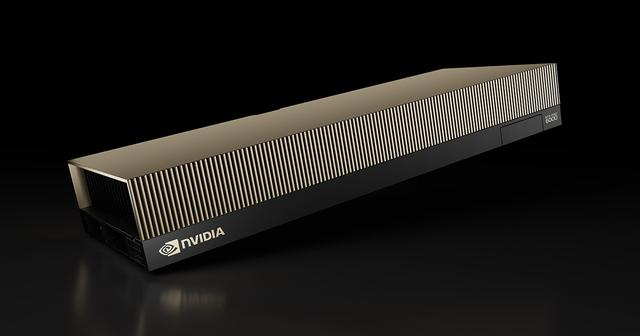
NVIDIA RTX PRO 6000 Blackwell Server Edition
Expert rating9.4 / 10
- GPU Brand:
- NVIDIA
- VRAM:
- 96GB GDDR7
- Memory Type:
- GDDR7
- TDP:
- 600W
Consumercarts is reader-supported. Learn more
Disclaimer: The price and specification of the given product may differ from the actual product. Please confirm on the retailer's website before buying.
Manufacturer: NVIDIA Last updated: 2026-09-12
NVIDIA RTX PRO 6000 Blackwell Server Edition Review
If you're deciding between the NVIDIA RTX PRO 6000 Blackwell Server Edition and the standard workstation version, the Server Edition is the passively-cooled, display-less variant built for high-density GPU servers rather than a desk-side tower.
It carries the same full GB202 die as the workstation card - 24,064 CUDA cores and a massive 96GB of ECC GDDR7 - but relies entirely on chassis airflow instead of onboard fans, so it's meant to be packed 4 or 8 to a rack server for large-scale AI inference, fine-tuning, and rendering farms.
Performance & Use Case
With 96GB of VRAM per card, it can hold 70B-class LLMs for inference on a single GPU and handle batch rendering or simulation jobs that would require multi-GPU splitting on smaller cards. It's built exclusively for data center and rack-server deployments running dense AI inference, generative AI pipelines, and render farm workloads at scale, not for desk-side workstations.
Comparison to Alternatives
Against the NVIDIA L40S (nvidia-l40s), a similarly server-oriented Ada-generation card, the RTX PRO 6000 Blackwell Server Edition offers double the VRAM (96GB vs 48GB) and a full architecture generation of tensor and RT core improvements, making it the clear choice for teams standardizing on the newest silicon for LLM inference. Against the NVIDIA RTX PRO 5000 Blackwell (nvidia-rtx-pro-5000-blackwell), the Server Edition roughly doubles VRAM and CUDA core count, at double the power draw, so it only makes sense in server chassis engineered for 600W passive cards.
Specifications
Platform
| GPU Brand | NVIDIA |
|---|---|
| Board Partner | NVIDIA Reference (OEM server/rackmount, passive cooling) |
Identity and type
| Series | RTX PRO Blackwell |
|---|---|
| Tier | Flagship |
Performance
| VRAM | 96 GB |
|---|---|
| Memory Type | GDDR7 |
| Boost Clock | 2550 MHz |
| Ray Tracing Support | Yes |
Physical & Power
| TDP | 600 W |
|---|---|
| Card Length | 267 mm |
| Slot Width | 2 |
Silicon
| Architecture | Blackwell |
|---|---|
| Process Node | TSMC 4N |
| Shader Units | 24064 |
Memory
| Memory Bus Width | 512 bit |
|---|---|
| Memory Bandwidth | 1792 GB/s |
Power
| Recommended PSU | 850 W |
|---|---|
| Power Connector | 1x 12V-2x6 |
Host interface
| PCIe Generation | PCIe 5.0 x16 |
|---|
Market and workstation
| MSRP | 8565 USD |
|---|---|
| Launch Date | 2025-05 |
| Base / Game Clock | 1900 MHz |
|---|---|
| Display Outputs | None (server edition ships display-less) |
| Media Engine | 4x NVENC (9th gen), 4x NVDEC, AV1 encode/decode |
Expert Review
Reviewed by Burooj Alam. Rated by us, not by users.
Expert rating9.4 / 10
The most VRAM-dense Blackwell professional GPU NVIDIA sells outside the B-series data center parts - a serious tool for AI infrastructure teams, wasted in a single desktop.
Best for
- dense rack-server AI inference deployments
- large language model hosting (single-GPU 70B-class)
- render farms needing maximum VRAM per card
Not for
- desktop workstation builds (no active cooling or display outputs)
- gaming
- small studios without server-grade chassis and PSUs
FAQs
What are the key specifications of the NVIDIA RTX PRO 6000 Blackwell Server Edition?
The NVIDIA RTX PRO 6000 Blackwell Server Edition is a graphics card from NVIDIA. Key specs: GPU Brand NVIDIA, Tier Flagship, Board Partner NVIDIA Reference (OEM server/rackmount, passive cooling), VRAM 96GB GDDR7, Memory Type GDDR7.
Who is the NVIDIA RTX PRO 6000 Blackwell Server Edition best suited to?
It suits dense rack-server ai inference deployments, large language model hosting (single-gpu 70b-class), render farms needing maximum vram per card.
What are the drawbacks of the NVIDIA RTX PRO 6000 Blackwell Server Edition?
It is a poor fit for desktop workstation builds (no active cooling or display outputs), gaming, small studios without server-grade chassis and psus.
Compare and read more
- NVIDIA RTX PRO 6000 Blackwell Server Edition vs Sapphire Nitro+ Radeon RX 6900 XT
- NVIDIA RTX PRO 6000 Blackwell Server Edition vs PowerColor Red Devil Radeon RX 7900 XTX
- NVIDIA RTX PRO 6000 Blackwell Server Edition vs Sapphire Nitro+ Radeon RX 7900 XTX
- NVIDIA RTX PRO 6000 Blackwell Server Edition vs XFX Merc 310 Black Radeon RX 7900 XTX
- NVIDIA RTX PRO 6000 Blackwell Server Edition vs Sapphire Nitro+ Radeon RX 7900 XTX