
Consumercarts is reader-supported. Learn more
ASUS Tinker Board S vs Radxa ROCK 5A: Comparison
ASUS Tinker Board S and Radxa ROCK 5A differ on has ai accelerator / npu: ASUS Tinker Board S at false, Radxa ROCK 5A at true. They match on cpu architecture, storage type and gpio header.
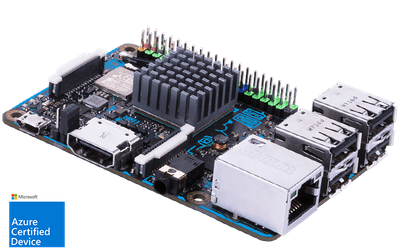
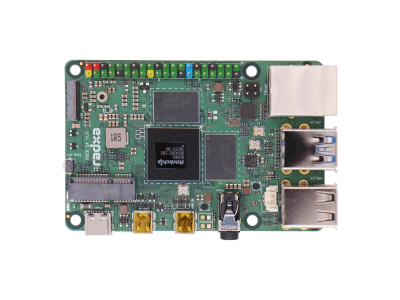
Specs
| Specification |  |  |
|---|---|---|
| Brand | ASUS | Radxa |
| CPU Architecture | ARM | ARM |
| Memory | 2GB LPDDR3 | 16 |
| Storage Type | eMMC | eMMC |
| Has AI Accelerator / NPU | false | true |
| Wireless | WiFi 5 | WiFi 6 |
| GPIO Header | true | true |
| Price | $79 | 79 |
| Use Case | General Purpose | AI / Machine Learning |
| Model | Tinker Board S | ROCK 5A |
| Processor | Quad-Core Cortex-A17 up to 1.8GHz | Rockchip RK3588S, Quad Cortex-A76 @ 2.4GHz + Quad Cortex-A55 @ 1.8GHz |
| GPU | Mali-T760 MP4 | Mali-G610 MP4 |
Price comparison
| Retailer | ASUS Tinker Board S | Radxa ROCK 5A |
|---|---|---|
| Consumercarts listing | $79.00 View on Consumercarts listing | $79.00 View on Consumercarts listing |
Disclaimer: The price and specification of the given product may differ from the actual product. Please confirm on the retailer's website before buying.
Verdict
ASUS Tinker Board S
6.5 / 10 Expert Rating
Dated performance-wise, but the onboard eMMC still makes it a sensible pick for always-on signage and kiosk deployments.
Radxa ROCK 5A
8 / 10 Expert Rating
A genuinely fast, NPU-equipped board in Pi-4-sized clothing -- the best pick when you want ROCK 5-class performance without paying for the M.2 slot you won't use.
More comparisons in Single-board Computers
- ASUS Tinker Board S vs NVIDIA Jetson Xavier NX Developer Kit
- ASUS Tinker Board S vs Raspberry Pi Foundation Raspberry Pi 3 Model A+
- ASUS Tinker Board S vs NVIDIA Jetson Nano 2GB Developer Kit
- ASUS Tinker Board S vs Raspberry Pi 3 Model B+
- ASUS Tinker Board S vs Radxa Zero 3W
- ASUS Tinker Board S vs NVIDIA Jetson Orin NX Developer Kit