
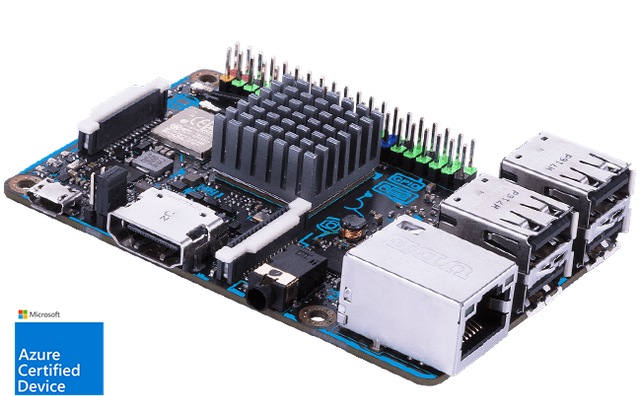
ASUS Tinker Board S
Expert rating6.5 / 10
- SoC:
- Rockchip RK3288
- Memory:
- 2GB LPDDR3
- Storage:
- 16GB Onboard eMMC
Consumercarts is reader-supported. Learn more
Disclaimer: The price and specification of the given product may differ from the actual product. Please confirm on the retailer's website before buying.
Manufacturer: ASUS Last updated: 2026-09-12
ASUS Tinker Board S (Single-Board Computer/Rockchip RK3288/Quad-Core Cortex-A17/2GB LPDDR3/Onboard eMMC Storage) Review
ASUS Tinker Board S is a Raspberry Pi-form-factor SBC built around the Rockchip RK3288, notable for shipping with 16GB of onboard eMMC storage for more reliable boot media than a typical microSD-only board.
The Tinker Board S solved one of the most common Pi-era headaches — flaky microSD cards corrupting over time — by soldering 16GB of eMMC directly onto the board as the primary boot drive, while still keeping a microSD slot for extra storage. It's an older platform now, but that eMMC reliability still appeals to always-on kiosk and digital signage builds.
eMMC as the Headline Feature
On-board eMMC storage is dramatically more resistant to the write-cycle wear and corruption that plagues microSD cards in always-on deployments, making the Tinker Board S a longtime favorite for digital signage, kiosks, and other set-and-forget installs where a corrupted SD card means an on-site truck roll.
An Aging but Capable Platform
The RK3288's quad Cortex-A17 cores and Mali-T760 GPU were competitive against the Raspberry Pi 3 generation but are now clearly outdated against RK3588 or Pi 5-class silicon, so the Tinker Board S is best considered for its storage reliability rather than raw performance.
Comparison to Alternatives
Against the current Raspberry Pi 5, the Tinker Board S is far slower but still wins on out-of-the-box eMMC reliability for kiosk use unless the Pi is paired with a Compute Module and eMMC carrier. Compared to the Libre Computer Renegade, another Rockchip-based board, the Tinker Board S has better long-term ASUS commercial support documentation.
Specifications
Identity
| Brand | ASUS |
|---|
| CPU Architecture | ARM |
|---|---|
| Memory | 2GB LPDDR3 |
| Storage Type | eMMC |
| Has AI Accelerator / NPU | No |
| Wireless | WiFi 5 |
| GPIO Header | Yes |
| Price | 79 USD |
| Use Case | General Purpose |
| Model | Tinker Board S |
| SoC | Rockchip RK3288 |
| Processor | Quad-Core Cortex-A17 up to 1.8GHz |
| GPU | Mali-T760 MP4 |
| Storage | 16GB onboard eMMC + microSD |
| Connectivity | Gigabit Ethernet, USB 3.0, HDMI, 40-pin GPIO (Pi layout) |
| Operating System | TinkerOS (Debian), Android |
Expert Review
Reviewed by Burooj Alam. Rated by us, not by users.
Expert rating6.5 / 10
Dated performance-wise, but the onboard eMMC still makes it a sensible pick for always-on signage and kiosk deployments.
Best for
- Digital signage and kiosk displays needing reliable boot storage
- Always-on embedded installs avoiding SD card failure
- Legacy TinkerOS/Android projects
Not for
- New projects needing current-generation performance
- GPU-intensive or 4K video applications
- AI/ML workloads
FAQs
What are the key specifications of the ASUS Tinker Board S (Single-Board Computer/Rockchip RK3288/Quad-Core Cortex-A17/2GB LPDDR3/Onboard eMMC Storage)?
The ASUS Tinker Board S (Single-Board Computer/Rockchip RK3288/Quad-Core Cortex-A17/2GB LPDDR3/Onboard eMMC Storage) is a single board computer from ASUS. Key specs: SoC Rockchip RK3288, CPU Architecture ARM, Processor Quad-Core Cortex-A17 up to 1.8GHz, GPU Mali-T760 MP4, Memory 2GB LPDDR3.
Will the ASUS Tinker Board S (Single-Board Computer/Rockchip RK3288/Quad-Core Cortex-A17/2GB LPDDR3/Onboard eMMC Storage) work with my current setup?
The ASUS Tinker Board S (Single-Board Computer/Rockchip RK3288/Quad-Core Cortex-A17/2GB LPDDR3/Onboard eMMC Storage) lists SoC is Rockchip RK3288. Check that against the hardware you already own before buying, since this is the field that most often decides whether a part fits.
Who is the ASUS Tinker Board S (Single-Board Computer/Rockchip RK3288/Quad-Core Cortex-A17/2GB LPDDR3/Onboard eMMC Storage) best suited to?
It suits digital signage and kiosk displays needing reliable boot storage, always-on embedded installs avoiding sd card failure, legacy tinkeros/android projects.
What are the drawbacks of the ASUS Tinker Board S (Single-Board Computer/Rockchip RK3288/Quad-Core Cortex-A17/2GB LPDDR3/Onboard eMMC Storage)?
It is a poor fit for new projects needing current-generation performance, gpu-intensive or 4k video applications, ai/ml workloads.
Compare and read more
- ASUS Tinker Board S (Single-Board Computer/Rockchip RK3288/Quad-Core Cortex-A17/2GB LPDDR3/Onboard eMMC Storage) vs Banana Pi BPI-SM10 (K3-CoM260 Compute Module/SpacemiT K3 RISC-V/8-Core X100 2.4GHz/60 TOPS NPU Claim/Up to 32GB LPDDR5)
- ASUS Tinker Board S (Single-Board Computer/Rockchip RK3288/Quad-Core Cortex-A17/2GB LPDDR3/Onboard eMMC Storage) vs NVIDIA Jetson Nano (Single-Board Computer/Quad-Core Cortex-A57/128-Core Maxwell GPU/4GB RAM/Legacy Budget AI Entry Point)
- ASUS Tinker Board S (Single-Board Computer/Rockchip RK3288/Quad-Core Cortex-A17/2GB LPDDR3/Onboard eMMC Storage) vs Onion Omega2+ (Single-Board Computer/MediaTek MT7688/580MHz MIPS/128MB RAM/Coin-Sized WiFi IoT Board)
- ASUS Tinker Board S (Single-Board Computer/Rockchip RK3288/Quad-Core Cortex-A17/2GB LPDDR3/Onboard eMMC Storage) vs Orange Pi CM4 (Compute Module/Rockchip RK3566/Quad-Core Cortex-A55 1.8GHz/Up to 8GB LPDDR4/SO-DIMM Embedded Module)
- ASUS Tinker Board S (Single-Board Computer/Rockchip RK3288/Quad-Core Cortex-A17/2GB LPDDR3/Onboard eMMC Storage) vs Pine64 Quartz64 Model A (Single-Board Computer/Rockchip RK3566/Quad-Core Cortex-A55/Up to 8GB LPDDR4/Budget ARM Desktop)