
Consumercarts is reader-supported. Learn more
AMD Instinct MI210 vs AMD Instinct MI300X: Comparison
AMD Instinct MI210 and AMD Instinct MI300X separate most on tdp: AMD Instinct MI210 at 300 W, AMD Instinct MI300X at 750 W, 150% in favor of AMD Instinct MI210. Card Length splits them by another 110%, this time favoring AMD Instinct MI300X. They match on 4 other specifications, including gpu brand, tier and ray tracing support.
Pick the AMD Instinct MI210 if that matters to you: 2.5x the TDP (300 W vs 750 W), so it needs a smaller power supply and runs cooler. Pick the AMD Instinct MI300X if that matters to you: 3x the VRAM (192 GB vs 64 GB), which matters at 1440p and 4K with high texture settings.
Which is better, AMD Instinct MI210 or AMD Instinct MI300X?
On paper, AMD Instinct MI210 has the edge on tdp, at 300 W vs AMD Instinct MI300X at 750 W.
What is the main difference between AMD Instinct MI210 and AMD Instinct MI300X?
The AMD Instinct MI210 and AMD Instinct MI300X are built for different jobs. The AMD Instinct MI210 has 2.5x the TDP (300 W vs 750 W), so it needs a smaller power supply and runs cooler. The AMD Instinct MI300X has 3x the VRAM (192 GB vs 64 GB), which matters at 1440p and 4K with high texture settings.

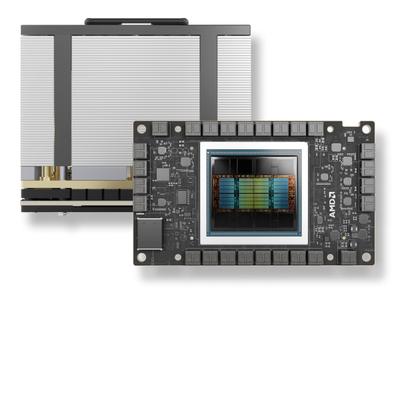
Specs and benchmarks
GPU Brand
- AMD Instinct MI210
- AMD
- AMD Instinct MI300X
- AMD
Series
- AMD Instinct MI210
- Instinct MI200
- AMD Instinct MI300X
- Instinct MI300
Board Partner
- AMD Instinct MI210
- AMD Reference (PCIe dual-slot card, data center/OEM only)
- AMD Instinct MI300X
- AMD Reference (OAM module, data center/OEM only)
VRAM
- AMD Instinct MI210
- 64 GB-67%
- AMD Instinct MI300X
- 192 GBBest
Tier
- AMD Instinct MI210
- Datacenter / AI Accelerator
- AMD Instinct MI300X
- Datacenter / AI Accelerator
Memory Type
- AMD Instinct MI210
- HBM2E
- AMD Instinct MI300X
- HBM3Best
Boost Clock
- AMD Instinct MI210
- 1700 MHz-19%
- AMD Instinct MI300X
- 2100 MHzBest
Ray Tracing Support
- AMD Instinct MI210
- No
- AMD Instinct MI300X
- No
TDP
- AMD Instinct MI210
- 300 WBest
- AMD Instinct MI300X
- 750 W-150%
Architecture
- AMD Instinct MI210
- CDNA 2 (single Graphics Compute Die)
- AMD Instinct MI300X
- CDNA 3
Process Node
- AMD Instinct MI210
- TSMC 6nm
- AMD Instinct MI300X
- TSMC 5nm compute dies + 6nm I/O dies (chiplet)
Card Length
- AMD Instinct MI210
- 267 mm-110%
- AMD Instinct MI300X
- 127 mmBest
Slot Width
- AMD Instinct MI210
- 2
- AMD Instinct MI300X
- N/A (OAM form factor)
Compute Blocks
- AMD Instinct MI210
- 104
- AMD Instinct MI300X
- 304
Memory Bus Width
- AMD Instinct MI210
- 4096 bit-50%
- AMD Instinct MI300X
- 8192 bitBest
Memory Bandwidth
- AMD Instinct MI210
- 1600 GB/s-70%
- AMD Instinct MI300X
- 5300 GB/sBest
PCIe Generation
- AMD Instinct MI210
- PCIe 4.0 x16
- AMD Instinct MI300X
- PCIe 5.0 x16 host link + Infinity Fabric GPU-to-GPU
Launch Date
- AMD Instinct MI210
- 2022-03
- AMD Instinct MI300X
- 2023-12
Display Outputs
- AMD Instinct MI210
- N/A - compute-only, no display output
- AMD Instinct MI300X
- N/A - compute-only, no display output


Which one should you pick?
Choose AMD Instinct MI210 if you want the lower TDP (300 W vs 750 W).
Choose AMD Instinct MI300X if you want the higher VRAM (192 GB vs 64 GB), the higher boost clock (2100 MHz vs 1700 MHz) and the lower card length (127 mm vs 267 mm).
Verdict
AMD Instinct MI210
7.3 / 10 Expert Rating
A practical, PCIe-slot-friendly way to get CDNA 2 compute into a standard server, useful for smaller HPC and AI deployments, but clearly the entry point of its generation next to the dual-die MI250X and now well behind the MI300 series.
AMD Instinct MI300X
8.8 / 10 Expert Rating
A legitimate memory-capacity leader against the H100 generation, and AMD's strongest foothold yet in the AI training and inference market, held back mainly by CUDA ecosystem lock-in rather than the silicon itself.