
Consumercarts is reader-supported. Learn more
AMD Instinct MI210 vs Apple M1 Pro 16-Core GPU: Comparison
AMD Instinct MI210 vs Apple M1 Pro 16-Core GPU: the memory bandwidth difference
On memory bandwidth the spread is 88%, AMD Instinct MI210 1600 GB/s against Apple M1 Pro 16-Core GPU 200 GB/s, so AMD Instinct MI210 takes it.
Which should you buy, AMD Instinct MI210 or Apple M1 Pro 16-Core GPU?
The AMD Instinct MI210 suits double-precision workloads that don't need MI250X-level throughput, though it is not built for any desktop or workstation build - compute-only, no display output and maximum-throughput HPC nodes (use MI250X instead). The same goes for HPC and AI deployments in standard PCIe-slot servers without OAM sled support. Buy the Apple M1 Pro 16-Core GPU for photographers and designers using Metal-accelerated Lightroom or Photoshop workflows, though it is not the pick for native Windows gaming or CUDA-dependent professional software. It is equally the pick for video editors and podcasters running Final Cut Pro or Logic Pro on a 2021-era MacBook Pro. It is not the one for workloads needing hardware ray tracing, which Apple only added starting with the M3 generation. Our rating of the AMD Instinct MI210 (7.3/10): A practical, PCIe-slot-friendly way to get CDNA 2 compute into a standard server, useful for smaller HPC and AI deployments, but clearly the entry point of its generation next to the dual-die MI250X and now well behind the MI300 series. Our rating of the Apple M1 Pro 16-Core GPU (6.2/10): the chip that proved Apple Silicon could replace discrete laptop GPUs for creative work; dated next to newer ray-tracing-capable chips but still solid for Metal-native editing.
Frequently asked questions
Do the AMD Instinct MI210 and Apple M1 Pro 16-Core GPU differ on gpu brand?
Yes. GPU Brand reads AMD on the AMD Instinct MI210 versus Apple on the Apple M1 Pro 16-Core GPU.
Is the Ray Tracing Support the same on the AMD Instinct MI210 and Apple M1 Pro 16-Core GPU?
It is. Both are listed at No, so it is not a reason to pick one over the other.

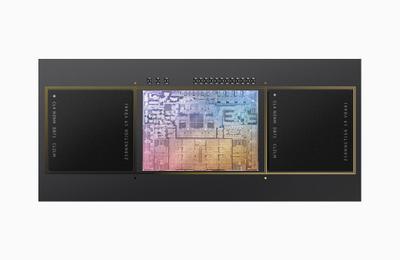
Specs and benchmarks
GPU Brand
- AMD Instinct MI210
- AMD
- Apple M1 Pro 16-Core GPU
- Apple
Series
- AMD Instinct MI210
- Instinct MI200
- Apple M1 Pro 16-Core GPU
- Apple Silicon
Tier
- AMD Instinct MI210
- Datacenter / AI Accelerator
- Apple M1 Pro 16-Core GPU
- Upper Mid-Range
Memory Type
- AMD Instinct MI210
- HBM2E
- Apple M1 Pro 16-Core GPU
- Unified LPDDR5Best
Ray Tracing Support
- AMD Instinct MI210
- No
- Apple M1 Pro 16-Core GPU
- No
Architecture
- AMD Instinct MI210
- CDNA 2 (single Graphics Compute Die)
- Apple M1 Pro 16-Core GPU
- Apple Silicon
Process Node
- AMD Instinct MI210
- TSMC 6nm
- Apple M1 Pro 16-Core GPU
- 5nm (TSMC N5)
Memory Bandwidth
- AMD Instinct MI210
- 1600 GB/sBest
- Apple M1 Pro 16-Core GPU
- 200 GB/s-87%
PCIe Generation
- AMD Instinct MI210
- PCIe 4.0 x16
- Apple M1 Pro 16-Core GPU
- Not Applicable


Which one should you pick?
Choose AMD Instinct MI210 if you want the higher memory bandwidth (1600 GB/s vs 200 GB/s).
Choose Apple M1 Pro 16-Core GPU if you already have it on hand or find it at a lower price.
Verdict
AMD Instinct MI210
7.3 / 10 Expert Rating
A practical, PCIe-slot-friendly way to get CDNA 2 compute into a standard server, useful for smaller HPC and AI deployments, but clearly the entry point of its generation next to the dual-die MI250X and now well behind the MI300 series.
Apple M1 Pro 16-Core GPU
6.2 / 10 Expert Rating
The chip that proved Apple Silicon could replace discrete laptop GPUs for creative work; dated next to newer ray-tracing-capable chips but still solid for Metal-native editing.