
Consumercarts is reader-supported. Learn more
AMD Instinct MI210 vs AMD Radeon PRO W5500M: Comparison
AMD Instinct MI210 and AMD Radeon PRO W5500M separate most on memory bus width: AMD Instinct MI210 at 4,096 bit, AMD Radeon PRO W5500M at 128 bit, 97% in favor of AMD Instinct MI210. Memory Bandwidth splits them by another 86%, again favoring AMD Instinct MI210.
Which is better, AMD Instinct MI210 or AMD Radeon PRO W5500M?
On paper, AMD Instinct MI210 has the edge on memory bus width, at 4,096 bit vs AMD Radeon PRO W5500M at 128 bit.
What is the main difference between AMD Instinct MI210 and AMD Radeon PRO W5500M?
The AMD Instinct MI210 is the stronger choice on paper: it has 7.1x the memory bandwidth (1,600 GB/s vs 224 GB/s), which feeds the GPU faster at high resolutions.

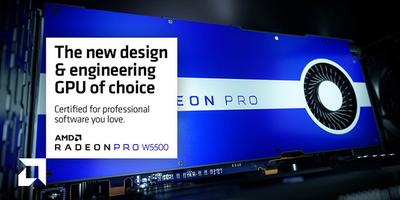
Specs and benchmarks
GPU Brand
- AMD Instinct MI210
- AMD
- AMD Radeon PRO W5500M
- AMD
Series
- AMD Instinct MI210
- Instinct MI200
- AMD Radeon PRO W5500M
- Radeon PRO
Board Partner
- AMD Instinct MI210
- AMD Reference (PCIe dual-slot card, data center/OEM only)
- AMD Radeon PRO W5500M
- Reference
Tier
- AMD Instinct MI210
- Datacenter / AI Accelerator
- AMD Radeon PRO W5500M
- Workstation
Memory Type
- AMD Instinct MI210
- HBM2E
- AMD Radeon PRO W5500M
- GDDR6Best
Architecture
- AMD Instinct MI210
- CDNA 2 (single Graphics Compute Die)
- AMD Radeon PRO W5500M
- Legacy
Compute Blocks
- AMD Instinct MI210
- 104
- AMD Radeon PRO W5500M
- 22
Memory Bus Width
- AMD Instinct MI210
- 4096 bitBest
- AMD Radeon PRO W5500M
- 128 bit-97%
Memory Bandwidth
- AMD Instinct MI210
- 1600 GB/sBest
- AMD Radeon PRO W5500M
- 224 GB/s-86%
PCIe Generation
- AMD Instinct MI210
- PCIe 4.0 x16
- AMD Radeon PRO W5500M
- PCIe 4.0


Which one should you pick?
Choose AMD Instinct MI210 if you want the higher memory bus width (4096 bit vs 128 bit) and the higher memory bandwidth (1600 GB/s vs 224 GB/s).
Choose AMD Radeon PRO W5500M if you already have it on hand or find it at a lower price.
Verdict
AMD Instinct MI210
7.3 / 10 Expert Rating
A practical, PCIe-slot-friendly way to get CDNA 2 compute into a standard server, useful for smaller HPC and AI deployments, but clearly the entry point of its generation next to the dual-die MI250X and now well behind the MI300 series.