
Consumercarts is reader-supported. Learn more
Arctic P14 Max vs Thermaltake Riing Quad 12 RGB: Comparison
Arctic P14 Max vs Thermaltake Riing Quad 12 RGB static pressure compared
On static pressure the spread is 67%, Arctic P14 Max 4.18 mmH2O against Thermaltake Riing Quad 12 RGB 1.4 mmH2O, so Arctic P14 Max takes it. Arctic P14 Max also leads on airflow, 95 CFM on the Arctic P14 Max versus 40.9 CFM on the Thermaltake Riing Quad 12 RGB. Max speed runs the same way, 2800 RPM on the Arctic P14 Max versus 1500 RPM on the Thermaltake Riing Quad 12 RGB, another win for Arctic P14 Max. There is a split on lighting as well, No RGB on the Arctic P14 Max versus RGB on the Thermaltake Riing Quad 12 RGB. Fan thickness is not the same on both, 27 mm on the Arctic P14 Max versus 25 mm on the Thermaltake Riing Quad 12 RGB.
Which should you buy, Arctic P14 Max or Thermaltake Riing Quad 12 RGB?
The Arctic P14 Max suits server and NAS builds prioritizing airflow over noise and extreme overclocking and test-bench cooling, though it is not the pick for quiet daily-driver builds and bedroom or office PCs. Buy the Thermaltake Riing Quad 12 RGB for TT RGB Plus ecosystem builds and show-window RGB case fans, though it is the wrong buy for Non-Thermaltake lighting ecosystems and silent builds. Our rating of the Arctic P14 Max (7/10): genuinely excellent cooling capacity for the size, but too loud at full speed for most home builds. Our rating of the Thermaltake Riing Quad 12 RGB (7/10): A dependable RGB case fan best bought as part of a full TT RGB Plus ecosystem rather than standalone.
Frequently asked questions
Do the Arctic P14 Max and Thermaltake Riing Quad 12 RGB differ on fan size?
Yes. Fan Size reads 140 mm on the Arctic P14 Max versus 120 mm on the Thermaltake Riing Quad 12 RGB.
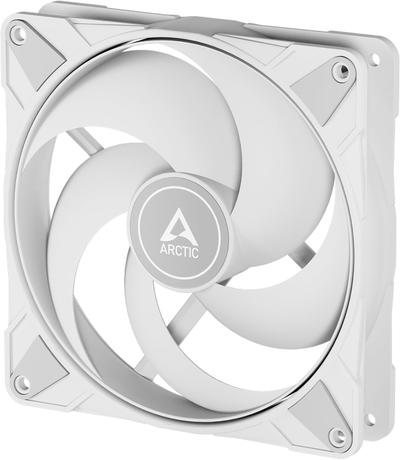

Specs and benchmarks
Fan Size
- Arctic P14 Max
- 140 mm
- Thermaltake Riing Quad 12 RGB
- 120 mm
Brand
- Arctic P14 Max
- Arctic
- Thermaltake Riing Quad 12 RGB
- Thermaltake
Model
- Arctic P14 Max
- P14 Max
- Thermaltake Riing Quad 12 RGB
- Riing Quad 12 RGB
Bearing Type
- Arctic P14 Max
- Fluid Dynamic
- Thermaltake Riing Quad 12 RGB
- Hydraulic
Lighting
- Arctic P14 Max
- No RGB
- Thermaltake Riing Quad 12 RGB
- RGB
Fan Thickness
- Arctic P14 Max
- 27 mm
- Thermaltake Riing Quad 12 RGB
- 25 mm
Static Pressure
- Arctic P14 Max
- 4.18 mmH2OBest
- Thermaltake Riing Quad 12 RGB
- 1.4 mmH2O-67%
Max Speed
- Arctic P14 Max
- 2800 RPMBest
- Thermaltake Riing Quad 12 RGB
- 1500 RPM-46%
Airflow
- Arctic P14 Max
- 95 CFMBest
- Thermaltake Riing Quad 12 RGB
- 40.9 CFM-57%
Min Speed
- Arctic P14 Max
- 400 RPM
- Thermaltake Riing Quad 12 RGB
- 500 RPMBest
Start Voltage
- Arctic P14 Max
- 3.9 V
- Thermaltake Riing Quad 12 RGB
- 9 V
Connector Type
- Arctic P14 Max
- 4-Pin PWM
- Thermaltake Riing Quad 12 RGB
- Proprietary
Weight
- Arctic P14 Max
- 245 g
- Thermaltake Riing Quad 12 RGB
- 189 gBest
Positioning
- Arctic P14 Max
- Performance
- Thermaltake Riing Quad 12 RGB
- Mainstream


Which one should you pick?
Choose Arctic P14 Max if you want the higher static pressure (4.18 mmH2O vs 1.4 mmH2O), the higher max speed (2800 RPM vs 1500 RPM) and the higher airflow (95 CFM vs 40.9 CFM).
Choose Thermaltake Riing Quad 12 RGB if you already have it on hand or find it at a lower price.
Price comparison
| Retailer | Arctic P14 Max | Thermaltake Riing Quad 12 RGB |
|---|---|---|
| Amazon | View on Amazon | |
| Thermaltake | View on Thermaltake |
Disclaimer: The price and specification of the given product may differ from the actual product. Please confirm on the retailer's website before buying.
Verdict
Arctic P14 Max
7 / 10 Expert Rating
Genuinely excellent cooling capacity for the size, but too loud at full speed for most home builds.
Thermaltake Riing Quad 12 RGB
7 / 10 Expert Rating
A dependable RGB case fan best bought as part of a full TT RGB Plus ecosystem rather than standalone.