
Consumercarts is reader-supported. Learn more
Corsair SP140 RGB Elite vs Scythe Kaze Flex II 120 PWM: Comparison
What is the difference between Corsair SP140 RGB Elite and Scythe Kaze Flex II 120 PWM?
Start with static pressure, because it is the widest measured gap between them: Corsair SP140 RGB Elite 1.66 mmH2O against Scythe Kaze Flex II 120 PWM 0.97 mmH2O, 42% in favour of Corsair SP140 RGB Elite. Airflow runs the same way, 68.1 CFM on the Corsair SP140 RGB Elite versus 52.94 CFM on the Scythe Kaze Flex II 120 PWM, another win for Corsair SP140 RGB Elite.
Corsair SP140 RGB Elite vs Scythe Kaze Flex II 120 PWM: which one fits your build
The Corsair SP140 RGB Elite suits 140mm radiators needing moderate static pressure and budget RGB builds filling multiple large mounts, though it is not built for builders chasing the lowest possible noise floor and high-restriction radiators needing max pressure. The Scythe Kaze Flex II 120 PWM is the one to take for quiet mainstream case airflow and Non-RGB builds, though it is the wrong buy for high static pressure radiator duty and show-window RGB builds. Our rating of the Corsair SP140 RGB Elite (7/10): A capable mid-range 140mm RGB fan, though the pricier ML140 PRO RGB or quieter Light Wings both outclass it in their own way. Our rating of the Scythe Kaze Flex II 120 PWM (7/10): A dependable, quiet mainstream fan with nothing flashy about it, which is exactly the point.
What Corsair SP140 RGB Elite and Scythe Kaze Flex II 120 PWM have in common
Where they agree, they agree completely, connector type, max speed, pwm control and positioning included, so the decision does not turn on any of those.
Frequently asked questions
Do the Corsair SP140 RGB Elite and Scythe Kaze Flex II 120 PWM differ on noise level?
Yes. Noise Level reads 26.8 dBA on the Corsair SP140 RGB Elite versus 23.8 dBA on the Scythe Kaze Flex II 120 PWM.

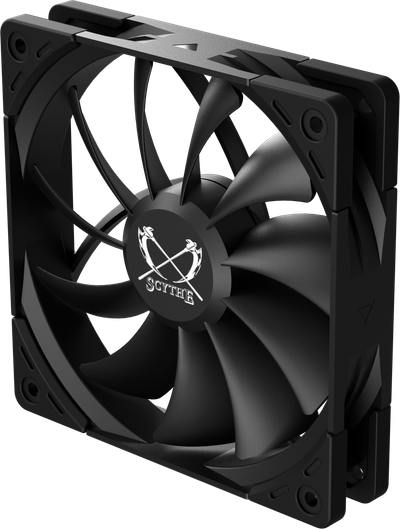
Specs and benchmarks
Fan Size
- Corsair SP140 RGB Elite
- 140 mm
- Scythe Kaze Flex II 120 PWM
- 120 mm
Brand
- Corsair SP140 RGB Elite
- Corsair
- Scythe Kaze Flex II 120 PWM
- Scythe
Model
- Corsair SP140 RGB Elite
- SP140 RGB Elite
- Scythe Kaze Flex II 120 PWM
- Kaze Flex II 120 PWM (1200RPM)
Bearing Type
- Corsair SP140 RGB Elite
- Hydraulic
- Scythe Kaze Flex II 120 PWM
- Fluid Dynamic
Lighting
- Corsair SP140 RGB Elite
- RGB
- Scythe Kaze Flex II 120 PWM
- No RGB
Fan Thickness
- Corsair SP140 RGB Elite
- 25 mm
- Scythe Kaze Flex II 120 PWM
- 26 mm
Static Pressure
- Corsair SP140 RGB Elite
- 1.66 mmH2OBest
- Scythe Kaze Flex II 120 PWM
- 0.97 mmH2O-42%
Max Speed
- Corsair SP140 RGB Elite
- 1200 RPM
- Scythe Kaze Flex II 120 PWM
- 1200 RPM
Airflow
- Corsair SP140 RGB Elite
- 68.1 CFMBest
- Scythe Kaze Flex II 120 PWM
- 52.94 CFM-22%
Noise Level
- Corsair SP140 RGB Elite
- 26.8 dBA
- Scythe Kaze Flex II 120 PWM
- 23.8 dBABest
PWM Control
- Corsair SP140 RGB Elite
- Yes
- Scythe Kaze Flex II 120 PWM
- Yes
Min Speed
- Corsair SP140 RGB Elite
- 450 RPMBest
- Scythe Kaze Flex II 120 PWM
- 300 RPM
Connector Type
- Corsair SP140 RGB Elite
- 4-Pin PWM
- Scythe Kaze Flex II 120 PWM
- 4-Pin PWM
Positioning
- Corsair SP140 RGB Elite
- Mainstream
- Scythe Kaze Flex II 120 PWM
- Mainstream

Which one should you pick?
Choose Corsair SP140 RGB Elite if you want the higher static pressure (1.66 mmH2O vs 0.97 mmH2O), the higher max speed (1200 RPM vs 1200 RPM) and the higher airflow (68.1 CFM vs 52.94 CFM).
Choose Scythe Kaze Flex II 120 PWM if you want the lower noise level (23.8 dBA vs 26.8 dBA).
Price comparison
| Retailer | Corsair SP140 RGB Elite | Scythe Kaze Flex II 120 PWM |
|---|---|---|
| Scythe | View on Scythe |
Disclaimer: The price and specification of the given product may differ from the actual product. Please confirm on the retailer's website before buying.
Verdict
Corsair SP140 RGB Elite
7 / 10 Expert Rating
A capable mid-range 140mm RGB fan, though the pricier ML140 PRO RGB or quieter Light Wings both outclass it in their own way.
Scythe Kaze Flex II 120 PWM
7 / 10 Expert Rating
A dependable, quiet mainstream fan with nothing flashy about it, which is exactly the point.