
Consumercarts is reader-supported. Learn more
Alienware Graphics Amplifier vs PowerColor Gaming Station Mini Pro: Comparison
What is the difference between Alienware Graphics Amplifier and PowerColor Gaming Station Mini Pro?
They are built to different briefs, and cooling type shows it, Alienware Graphics Amplifier Active Fan against PowerColor Gaming Station Mini Pro Active fan in a pint-sized vented chassis. Add psu wattage to that, 460 W on the Alienware Graphics Amplifier versus 570 W on the PowerColor Gaming Station Mini Pro, and the pattern holds. They differ on connection standard too, Proprietary on the Alienware Graphics Amplifier versus Thunderbolt 3 on the PowerColor Gaming Station Mini Pro. There is a split on extra ports as well, 4 on the Alienware Graphics Amplifier versus None beyond the PCIe slot on the PowerColor Gaming Station Mini Pro.
Which should you buy, Alienware Graphics Amplifier or PowerColor Gaming Station Mini Pro?
it is not built for anyone wanting USB-C laptop charging through the eGPU cable. The same goes for owners of a compatible older Alienware or Dell G-Series laptop with the Amplifier Port. Avoid it for any laptop without the specific Alienware Graphics Amplifier Port, since the connector is proprietary. The PowerColor Gaming Station Mini Pro is the one to take for frequent travelers needing a lighter eGPU box and simple single-card setups with no need for extra ports, though it is not the pick for owners of large triple-fan or triple-slot GPUs and buyers wanting USB/Ethernet hub features. It is equally the pick for buyers wanting the smallest possible enclosure for an RX 570/580-class card. Our rating of the Alienware Graphics Amplifier (6/10): strong bandwidth for its era, but locked to a short list of older Alienware and Dell G-Series laptops. Our rating of the PowerColor Gaming Station Mini Pro (5.5/10): A genuinely compact eGPU box for mid-range cards, but its small chassis caps out well below flagship-GPU compatibility.
Which is cheaper, Alienware Graphics Amplifier or PowerColor Gaming Station Mini Pro?
At the last price check the Alienware Graphics Amplifier was $299 and the PowerColor Gaming Station Mini Pro $2,019, a 575% premium.
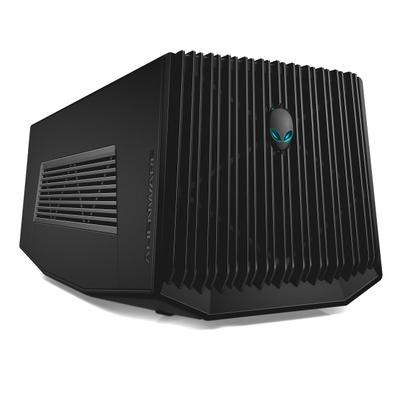
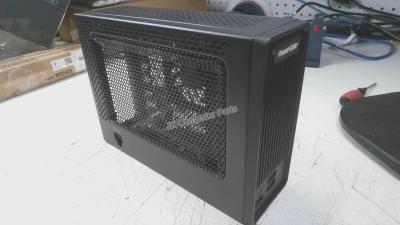
Specs and benchmarks
Brand
- Alienware Graphics Amplifier
- Alienware
- PowerColor Gaming Station Mini Pro
- PowerColor
Connection Standard
- Alienware Graphics Amplifier
- Proprietary
- PowerColor Gaming Station Mini Pro
- Thunderbolt 3
Model Number
- Alienware Graphics Amplifier
- Graphics Amplifier
- PowerColor Gaming Station Mini Pro
- Gaming Station Mini Pro
Extra Ports
- Alienware Graphics Amplifier
- 4
- PowerColor Gaming Station Mini Pro
- None beyond the PCIe slot
PSU Wattage
- Alienware Graphics Amplifier
- 460 W-19%
- PowerColor Gaming Station Mini Pro
- 570 WBest
Cooling Type
- Alienware Graphics Amplifier
- Active Fan
- PowerColor Gaming Station Mini Pro
- Active fan in a pint-sized vented chassis
Price
- Alienware Graphics Amplifier
- Launched around $299 (2015)
- PowerColor Gaming Station Mini Pro
- Announced at CES 2019, around $329.99


Which one should you pick?
Choose Alienware Graphics Amplifier if you already have it on hand or find it at a lower price.
Choose PowerColor Gaming Station Mini Pro if you want the higher PSU wattage (570 W vs 460 W).
Price comparison
| Retailer | Alienware Graphics Amplifier | PowerColor Gaming Station Mini Pro |
|---|---|---|
| Amazon | $299.00 View on Amazon | |
| Consumercarts listing | $2,019.00 View on Consumercarts listing |
Disclaimer: The price and specification of the given product may differ from the actual product. Please confirm on the retailer's website before buying.
Verdict
Alienware Graphics Amplifier
6 / 10 Expert Rating
Strong bandwidth for its era, but locked to a short list of older Alienware and Dell G-Series laptops.
PowerColor Gaming Station Mini Pro
5.5 / 10 Expert Rating
A genuinely compact eGPU box for mid-range cards, but its small chassis caps out well below flagship-GPU compatibility.