
Consumercarts is reader-supported. Learn more
AMD Instinct MI100 vs NVIDIA CMP 50HX: Comparison
AMD Instinct MI100 vs NVIDIA CMP 50HX memory bandwidth compared
The gap that matters here is memory bandwidth: AMD Instinct MI100 1200 GB/s against NVIDIA CMP 50HX 448 GB/s, which puts AMD Instinct MI100 63% ahead. Add memory bus width to that, 4096 bit on the AMD Instinct MI100 versus 256 bit on the NVIDIA CMP 50HX, and the pattern holds. Add tdp to that, 300 W on the AMD Instinct MI100 versus 225 W on the NVIDIA CMP 50HX, and the pattern holds. Tier is not the same on both, Datacenter on the AMD Instinct MI100 versus Mid-Level Mining on the NVIDIA CMP 50HX. Architecture is not the same on both, CDNA on the AMD Instinct MI100 versus Ampere , the first Ampere-based tier of the CMP... on the NVIDIA CMP 50HX.
Who each one is for
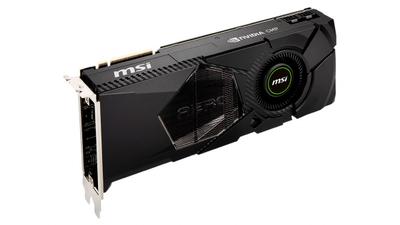
The AMD Instinct MI100 is the one to take for buyers comparing AMD's official reference specifications and researching a chip before choosing a board-partner card, though it is not built for overclocking-focused enthusiasts (reference clocks only). It is the wrong buy for buyers wanting a specific retail card with cooler and warranty details. The NVIDIA CMP 50HX suits secondary-market buyers mining non-Ethereum proof-of-work coins and repurposing as a cheap compute card for non-graphics CUDA workloads. Avoid it for gaming, no display output at all, cannot drive a monitor under any configuration. Our rating of the NVIDIA CMP 50HX (3.5/10): capable Ampere-generation mining silicon in its day, now a niche secondary-market product with no display output and diminished relevance after Ethereum's Merge.
Frequently asked questions
Do the AMD Instinct MI100 and NVIDIA CMP 50HX differ on boost clock?
Yes. Boost Clock reads 1502 MHz on the AMD Instinct MI100 versus 1665 MHz on the NVIDIA CMP 50HX.
Is the Card Length the same on the AMD Instinct MI100 and NVIDIA CMP 50HX?
It is. Both are listed at 267 mm, so it is not a reason to pick one over the other.

Specs and benchmarks
GPU Brand
- AMD Instinct MI100
- AMD
- NVIDIA CMP 50HX
- NVIDIA
Series
- AMD Instinct MI100
- Instinct
- NVIDIA CMP 50HX
- CMP (Cryptocurrency Mining Processor)
Board Partner
- AMD Instinct MI100
- Reference
- NVIDIA CMP 50HX
- ASUS, Colorful, Gigabyte, Inno3D, MSI, Palit, Zotac (reference blower design)
Tier
- AMD Instinct MI100
- Datacenter
- NVIDIA CMP 50HX
- Mid-Level Mining (2021)
Memory Type
- AMD Instinct MI100
- HBM2
- NVIDIA CMP 50HX
- GDDR6Best
Boost Clock
- AMD Instinct MI100
- 1502 MHz-10%
- NVIDIA CMP 50HX
- 1665 MHzBest
TDP
- AMD Instinct MI100
- 300 W-33%
- NVIDIA CMP 50HX
- 225 WBest
Architecture
- AMD Instinct MI100
- CDNA
- NVIDIA CMP 50HX
- Ampere (GA104), the first Ampere-based tier of the CMP lineup
Process Node
- AMD Instinct MI100
- TSMC 7nm FinFET
- NVIDIA CMP 50HX
- Samsung 8nm (8N)
Card Length
- AMD Instinct MI100
- 267 mm
- NVIDIA CMP 50HX
- 267 mm
Slot Width
- AMD Instinct MI100
- 2
- NVIDIA CMP 50HX
- 2
Shader Units
- AMD Instinct MI100
- 7680
- NVIDIA CMP 50HX
- 3840
Memory Bus Width
- AMD Instinct MI100
- 4096 bitBest
- NVIDIA CMP 50HX
- 256 bit-94%
Memory Bandwidth
- AMD Instinct MI100
- 1200 GB/sBest
- NVIDIA CMP 50HX
- 448 GB/s-63%
PCIe Generation
- AMD Instinct MI100
- PCIe 4.0
- NVIDIA CMP 50HX
- PCIe 4.0 x4 (deliberately narrow lane count; mining needs almost no host bandwidth)
Launch Date
- AMD Instinct MI100
- 11/16/2020
- NVIDIA CMP 50HX
- 2021-03


Which one should you pick?
Choose AMD Instinct MI100 if you want the lower card length (267 mm vs 267 mm), the lower slot width (2 vs 2) and the higher memory bus width (4096 bit vs 256 bit).
Choose NVIDIA CMP 50HX if you want the higher boost clock (1665 MHz vs 1502 MHz) and the lower TDP (225 W vs 300 W).
Verdict
NVIDIA CMP 50HX
3.5 / 10 Expert Rating
Capable Ampere-generation mining silicon in its day, now a niche secondary-market product with no display output and diminished relevance after Ethereum's Merge.