
Consumercarts is reader-supported. Learn more
ADATA AD4U3200716G22-BADZ vs G.Skill Trident Z5 RGB F5-6000J2836G32G 32GB DDR5-6000 CL28: Comparison
ADATA AD4U3200716G22-BADZ vs G.Skill Trident Z5 RGB F5-6000J2836G32G: the capacity per module difference
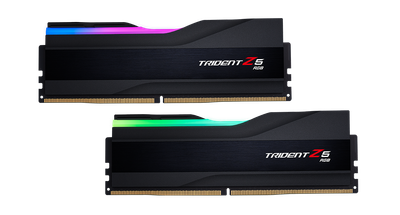
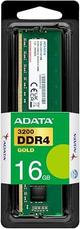
On capacity per module the spread is 50%, ADATA AD4U3200716G22-BADZ 16 GB against G.Skill Trident Z5 RGB F5-6000J2836G32G 32 GB, so G.Skill Trident Z5 RGB F5-6000J2836G32G takes it. G.Skill Trident Z5 RGB F5-6000J2836G32G also leads on true latency, 13.8 ns on the ADATA AD4U3200716G22-BADZ versus 9.3 ns on the G.Skill Trident Z5 RGB F5-6000J2836G32G. Add cas latency to that, 22 on the ADATA AD4U3200716G22-BADZ versus 28 on the G.Skill Trident Z5 RGB F5-6000J2836G32G, and the pattern holds. Peak bandwidth runs the same way, 25.6 GB/s on the ADATA AD4U3200716G22-BADZ versus 48.0 GB/s on the G.Skill Trident Z5 RGB F5-6000J2836G32G, another win for G.Skill Trident Z5 RGB F5-6000J2836G32G. They differ on ddr generation too, DDR4 on the ADATA AD4U3200716G22-BADZ versus DDR5 on the G.Skill Trident Z5 RGB F5-6000J2836G32G. There is a split on ram segment as well, Industrial/Embedded on the ADATA AD4U3200716G22-BADZ versus Desktop DDR5 on the G.Skill Trident Z5 RGB F5-6000J2836G32G. There is a split on form factor as well, DIMM on the ADATA AD4U3200716G22-BADZ versus Desktop DIMM on the G.Skill Trident Z5 RGB F5-6000J2836G32G. Platform optimisation is not the same on both, JEDEC Only on the ADATA AD4U3200716G22-BADZ versus AM5 on the G.Skill Trident Z5 RGB F5-6000J2836G32G.
Which should you buy, ADATA AD4U3200716G22-BADZ or G.Skill Trident Z5 RGB F5-6000J2836G32G?
it is not the pick for anyone needing a guaranteed matched dual-channel pair. It also earns its place with buyers wanting the classic Trident Z5 RGB look with tighter-than-stock timings. It is not the one for budget buyers where the CL36 Trident Z5 RGB stick is close enough.
Where the two are identical
The common ground is wider than the gap: module count are identical here.

Specs and benchmarks
Speed Score
- ADATA AD4U3200716G22-BADZ
- –
- G.Skill Trident Z5 RGB F5-6000J2836G32G 32GB DDR5-6000 CL28
- 8.8/10
DDR4 and DDR5 kits are scored on separate scales, so these two scores can't be compared directly. Your motherboard supports only one of the two.
DDR Generation
- ADATA AD4U3200716G22-BADZ
- DDR4
- G.Skill Trident Z5 RGB F5-6000J2836G32G 32GB DDR5-6000 CL28
- DDR5
Brand
- ADATA AD4U3200716G22-BADZ
- ADATA
- G.Skill Trident Z5 RGB F5-6000J2836G32G 32GB DDR5-6000 CL28
- G.Skill
Part Number
- ADATA AD4U3200716G22-BADZ
- AD4U3200716G22-BADZ
- G.Skill Trident Z5 RGB F5-6000J2836G32G 32GB DDR5-6000 CL28
- F5-6000J2836G32G
Series
- ADATA AD4U3200716G22-BADZ
- ADATA Industrial
- G.Skill Trident Z5 RGB F5-6000J2836G32G 32GB DDR5-6000 CL28
- Trident Z5 RGB
CAS Latency
- ADATA AD4U3200716G22-BADZ
- 22Best
- G.Skill Trident Z5 RGB F5-6000J2836G32G 32GB DDR5-6000 CL28
- 28-27%
Module Count
- ADATA AD4U3200716G22-BADZ
- 1
- G.Skill Trident Z5 RGB F5-6000J2836G32G 32GB DDR5-6000 CL28
- 1
RAM Segment
- ADATA AD4U3200716G22-BADZ
- Industrial/Embedded
- G.Skill Trident Z5 RGB F5-6000J2836G32G 32GB DDR5-6000 CL28
- Desktop DDR5
Form Factor
- ADATA AD4U3200716G22-BADZ
- DIMM
- G.Skill Trident Z5 RGB F5-6000J2836G32G 32GB DDR5-6000 CL28
- Desktop DIMM
Platform Optimisation
- ADATA AD4U3200716G22-BADZ
- JEDEC Only
- G.Skill Trident Z5 RGB F5-6000J2836G32G 32GB DDR5-6000 CL28
- AM5
Capacity Per Module
- ADATA AD4U3200716G22-BADZ
- 16 GB-50%
- G.Skill Trident Z5 RGB F5-6000J2836G32G 32GB DDR5-6000 CL28
- 32 GBBest
True Latency
- ADATA AD4U3200716G22-BADZ
- 13.8 ns-48%
- G.Skill Trident Z5 RGB F5-6000J2836G32G 32GB DDR5-6000 CL28
- 9.3 nsBest
Peak Bandwidth
- ADATA AD4U3200716G22-BADZ
- 25.6 GB/s-47%
- G.Skill Trident Z5 RGB F5-6000J2836G32G 32GB DDR5-6000 CL28
- 48.0 GB/sBest

Which one should you pick?
Choose ADATA AD4U3200716G22-BADZ if you want the lower CAS latency (22 vs 28).
Choose G.Skill Trident Z5 RGB F5-6000J2836G32G 32GB DDR5-6000 CL28 if you want the higher capacity per module (32 GB vs 16 GB), the lower true latency (9.3 ns vs 13.8 ns) and the higher peak bandwidth (48.0 GB/s vs 25.6 GB/s).