
Consumercarts is reader-supported. Learn more
ASUS Tinker Board 3N vs Sipeed LicheePi 4A: Comparison
ASUS Tinker Board 3N vs Sipeed LicheePi 4A: the memory difference
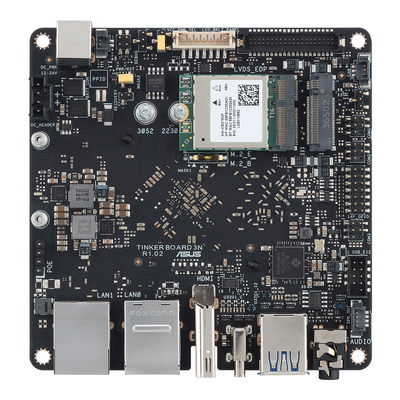
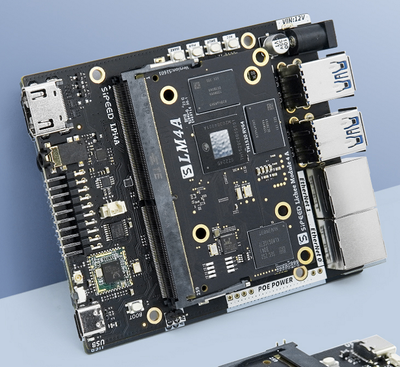
Start with memory, because it is the widest measured gap between them: ASUS Tinker Board 3N 4 GB against Sipeed LicheePi 4A 16 GB, 75% in favour of Sipeed LicheePi 4A. There is a split on gpu model as well, Arm Mali-G52 on the ASUS Tinker Board 3N versus Imagination BXE-4-32 MC1 on the Sipeed LicheePi 4A. They differ on power input too, 12 to 24V DC on the ASUS Tinker Board 3N versus 5V/3A USB-C on the Sipeed LicheePi 4A. Soc model is not the same on both, Rockchip RK3568, quad-core Cortex-A55 on the ASUS Tinker Board 3N versus Alibaba T-Head TH1520, Quad-Core RISC-V C910 @ 1.85GHz on the Sipeed LicheePi 4A.
Who each one is for
Take the ASUS Tinker Board 3N for industrial, kiosk, and embedded deployments needing dual LAN and modular connectivity expansion. Avoid it for hobbyist projects and beginners, the Raspberry Pi 5's ecosystem and community support are a better fit there. Buy the Sipeed LicheePi 4A for developers exploring RISC-V AI/NPU toolchains early and RAM-hungry RISC-V projects (up to 16GB), though it is the wrong buy for production AI deployments needing mature tooling and buyers wanting the broadest available software support. Our rating of the ASUS Tinker Board 3N (7/10): an industrial-first board where dual LAN and modular M.2 connectivity matter more than raw compute. Our rating of the Sipeed LicheePi 4A (6.9/10): the most ambitious RISC-V AI board available today, but its software stack is still catching up to what its hardware promises -- best suited to developers who want to be early rather than comfortable.
Specs and benchmarks
Brand
- ASUS Tinker Board 3N
- ASUS
- Sipeed LicheePi 4A
- Sipeed
Model Number
- ASUS Tinker Board 3N
- Tinker Board 3N
- Sipeed LicheePi 4A
- LicheePi 4A
Memory
- ASUS Tinker Board 3N
- 4 GB-75%
- Sipeed LicheePi 4A
- 16 GBBest
SoC Model
- ASUS Tinker Board 3N
- Rockchip RK3568, quad-core Cortex-A55
- Sipeed LicheePi 4A
- Alibaba T-Head TH1520, Quad-Core RISC-V C910 @ 1.85GHz
GPU Model
- ASUS Tinker Board 3N
- Arm Mali-G52
- Sipeed LicheePi 4A
- Imagination BXE-4-32 MC1
Power Input
- ASUS Tinker Board 3N
- 12 to 24V DC (barrel jack or 4-pin header)
- Sipeed LicheePi 4A
- 5V/3A USB-C (PD)


Which one should you pick?
Choose ASUS Tinker Board 3N if you already have it on hand or find it at a lower price.
Choose Sipeed LicheePi 4A if you want the higher memory (16 GB vs 4 GB).
Price comparison
| Retailer | ASUS Tinker Board 3N | Sipeed LicheePi 4A |
|---|---|---|
| Consumercarts listing | $99.00 View on Consumercarts listing |
Disclaimer: The price and specification of the given product may differ from the actual product. Please confirm on the retailer's website before buying.
Verdict
ASUS Tinker Board 3N
7 / 10 Expert Rating
An industrial-first board where dual LAN and modular M.2 connectivity matter more than raw compute.
Sipeed LicheePi 4A
6.9 / 10 Expert Rating
The most ambitious RISC-V AI board available today, but its software stack is still catching up to what its hardware promises -- best suited to developers who want to be early rather than comfortable.