
Consumercarts is reader-supported. Learn more
Banana Pi BPI-F3 vs Hardkernel ODROID-C4: Comparison
What is the difference between Banana Pi BPI-F3 and Hardkernel ODROID-C4?
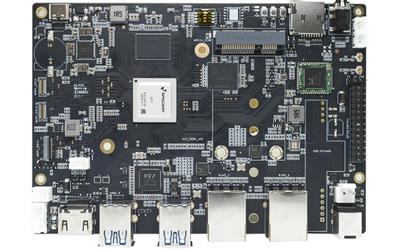
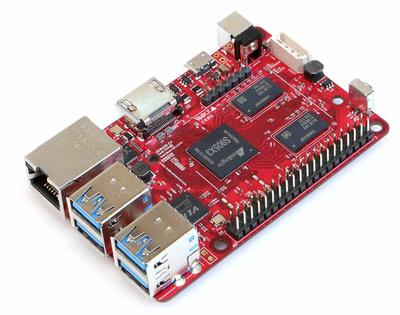
They are built to different briefs, and soc model shows it, Banana Pi BPI-F3 Octa-core RISC-V against Hardkernel ODROID-C4 Quad-core Cortex-A55 @ 2.0GHz.
Who each one is for
Take the Banana Pi BPI-F3 for RISC-V networking experiments that want dual Ethernet and PCIe expansion in a compact board. It is not the one for buyers who want the most mature RISC-V Linux distribution support currently available. it is the wrong buy for anyone needing RK3588-class or Raspberry Pi 5-class performance. It also earns its place with budget Linux and lightweight media-server projects with a proven, stable board design. Our rating of the Banana Pi BPI-F3 (7/10): octa-core RISC-V with dual Ethernet and PCIe, in a far smaller package than the Jupiter. Our rating of the Hardkernel ODROID-C4 (7/10): A cheap, stable, well-supported board that keeps earning its place in home-server and media projects.
Specs and benchmarks
These products are in different categories and don't share enough specifications to compare meaningfully.
Which one should you pick?
Choose Banana Pi BPI-F3 if you already have it on hand or find it at a lower price.
Choose Hardkernel ODROID-C4 if you already have it on hand or find it at a lower price.
Price comparison
| Retailer | Banana Pi BPI-F3 | Hardkernel ODROID-C4 |
|---|---|---|
| Consumercarts listing | $49.00 View on Consumercarts listing |
Disclaimer: The price and specification of the given product may differ from the actual product. Please confirm on the retailer's website before buying.
Verdict
Banana Pi BPI-F3
7 / 10 Expert Rating
Octa-core RISC-V with dual Ethernet and PCIe, in a far smaller package than the Jupiter.
Hardkernel ODROID-C4
7 / 10 Expert Rating
A cheap, stable, well-supported board that keeps earning its place in home-server and media projects.