
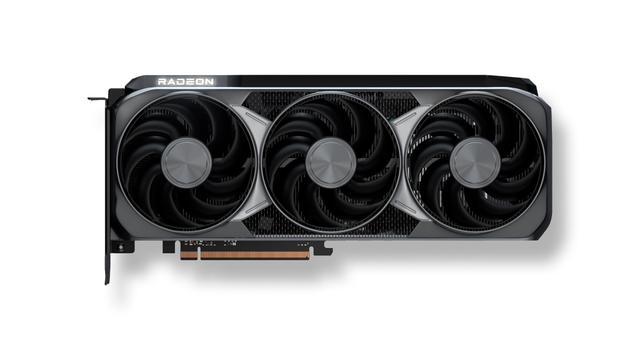
AMD Radeon RX 9070 XT
Expert rating9 / 10
- GPU Brand:
- AMD
- Series:
- RDNA 4
- Tier:
- Upper Mid-Range
- Board Partner:
- Reference/Founders Edition
- VRAM:
- 16 GB
- Ray Tracing Support:
- Yes
- TDP:
- 280 W
Consumercarts is reader-supported. Learn more
Disclaimer: The price and specification of the given product may differ from the actual product. Please confirm on the retailer's website before buying.
Manufacturer: AMD Last updated: September 8, 2026
AMD Radeon RX 9070 XT Review
The AMD Radeon RX 9070 XT is an upper mid-range RDNA 4-architecture graphics card with 16GB of VRAM, a 280W TDP, FSR 4 upscaling, ray tracing support, and a recommended 850W PSU with a native 8-pin connector.
AMD's most well-rounded graphics card in years, it delivers raw gaming performance within spitting distance of the RTX 5070 Ti for far less money. It is AMD's fastest ray-tracing card in current test suites, outpacing the RX 7900 XTX across all tested resolutions, leading the RDNA 3 halo card by about 10% overall despite a 33% deficit in CUs versus the XTX, an impressive generational leap. At 4K it is independently named the cheapest way to get into native 4K 60 FPS gaming. If gaming at 4K without needing CUDA or heavy ray tracing, it is independently named the best raster-per-dollar pick, often cheaper for similar frame rates in aggregated independent benchmarks. Ray tracing still trails NVIDIA by 15-20%, though the gap has narrowed considerably with RDNA 4. FSR 4 has improved significantly this generation.
Raster Value Leadership
AMD's most well-rounded graphics card in years, it delivers raw gaming performance within spitting distance of the RTX 5070 Ti for far less money. At 4K it is independently named the cheapest way to get into native 4K 60 FPS gaming, and if gaming at 4K without needing CUDA or heavy ray tracing, it is independently named the best raster-per-dollar pick, often cheaper for similar frame rates in aggregated independent benchmarks.
Ray Tracing Generational Leap
AMD's fastest ray-tracing card in current test suites, outpacing the RX 7900 XTX across all tested resolutions, leading the RDNA 3 halo card by about 10% overall despite a 33% deficit in CUs versus the XTX, an impressive generational leap. Ray tracing still trails NVIDIA by 15-20%, though the gap has narrowed considerably with RDNA 4, and FSR 4 has improved significantly this generation.
Power Requirements
Wants at least an 850W PSU with a native 8-pin connector, with a 280W TDP.
Comparison to Alternatives
Against the RTX 5070 Ti, that card leads by a wide margin in RT tests specifically and offers a stronger DLSS software ecosystem, though this AMD card matches it closely in raw rasterization for less money. Against the RX 9070 (non-XT), the price gap between them has been smaller than the performance gap at most retailers, worth spending the small step up for the XT.
Benchmarks
The benchmarks below are published results for specific applications. They are measured separately and do not feed the two scores above.
Puget Bench for After Effects v1.0-1.1 - points (More is Better)
- AMD Radeon AI PRO R970010827.75 points
- AMD Radeon PRO W79008009.33 points
- AMD Radeon PRO W78007956.67 points
- AMD Radeon RX 9070 XT (AMD/RDNA 4/Upper Mid-Range/16GB VRAM/280W TDP/FSR 4/Ray Tracing/850W PSU) (this product)7861.14 points
- AMD Radeon RX 7700 XT (RDNA 3/Navi 32/54 Compute Units/12GB GDDR6/245W TDP/1440p)7706.44 points
- AMD Radeon RX 6900 XT7611.33 points
- AMD Radeon PRO W76007266 points
- AMD Radeon RX 7900 XT7184.4 points
RAM preview and rendering of 2D and 3D compositions in After Effects, including camera tracking.
After Effects still runs largely on one core at a time, so per-core speed decides this and extra cores add very little. This is the benchmark where a high-clock chip pulls ahead of a many-core one.
Puget Bench for DaVinci Resolve v1.2 - points (More is Better)
- AMD Radeon PRO W790010980 points
- AMD Radeon PRO W780010482 points
- AMD Radeon RX 9070 XT (AMD/RDNA 4/Upper Mid-Range/16GB VRAM/280W TDP/FSR 4/Ray Tracing/850W PSU) (this product)10466.5 points
- AMD Radeon AI PRO R97009999 points
- AMD Radeon RX 9070 (AMD/RDNA 4/Upper Mid-Range/16GB GDDR6/220W TDP/Ray Tracing)9577.75 points
- AMD Radeon RX 7900 XTX (RDNA 3/Navi 31/96 Compute Units/24GB GDDR6/355W TDP/Flagship)9354.16 points
- AMD Radeon RX 7800 XT (RDNA 3/Navi 32/60 Compute Units/16GB GDDR6/263W TDP/Value Pick)8714.96 points
- AMD Radeon RX 9070 GRE8627.67 points
Grading, effects, AI tools and export in DaVinci Resolve Studio, across the codecs a colourist actually works in.
Resolve leans harder on the graphics card than on the processor, so the CPU difference here is usually smaller than the difference your GPU choice would make. Use it to rule out a bottleneck, not to pick a winner.
Puget Bench for Premiere Pro v1.0-1.1 - points (More is Better)
- AMD Radeon RX 9070 (AMD/RDNA 4/Upper Mid-Range/16GB GDDR6/220W TDP/Ray Tracing)11845.69 points
- AMD Radeon RX 9070 XT (AMD/RDNA 4/Upper Mid-Range/16GB VRAM/280W TDP/FSR 4/Ray Tracing/850W PSU) (this product)11743.24 points
- AMD Radeon RX 7900 XT11083.47 points
- AMD Radeon RX 7900 XTX (RDNA 3/Navi 31/96 Compute Units/24GB GDDR6/355W TDP/Flagship)11062.45 points
- AMD Radeon PRO W790010014.33 points
- AMD Radeon RX 6950 XT (Graphics Card/RDNA 2 Navi 21 KXTX/80 Compute Units/16GB GDDR6/RDNA 2 Refresh Flagship)9931.57 points
- AMD Radeon RX 7900 GRE9922.39 points
- AMD Radeon RX 7800 XT (RDNA 3/Navi 32/60 Compute Units/16GB GDDR6/263W TDP/Value Pick)9828.17 points
Plays back and exports 4K and 8K timelines across several camera codecs, with effects and multi-stream sequences, in Adobe Premiere Pro.
Export time rewards more cores, but much of the timeline work runs on the hardware decoder and the graphics card instead of the processor. A small gap here rarely changes how the edit feels.
Puget Bench for DaVinci Resolve v2.0-2.1 - points (More is Better)
- AMD Radeon AI PRO R9700111982 points
- AMD Radeon RX 9070 XT (AMD/RDNA 4/Upper Mid-Range/16GB VRAM/280W TDP/FSR 4/Ray Tracing/850W PSU) (this product)100891.62 points
- AMD Radeon RX 7800 XT (RDNA 3/Navi 32/60 Compute Units/16GB GDDR6/263W TDP/Value Pick)97575.4 points
- AMD Radeon RX 7900 XTX (RDNA 3/Navi 31/96 Compute Units/24GB GDDR6/355W TDP/Flagship)96178.48 points
- AMD Radeon RX 6950 XT (Graphics Card/RDNA 2 Navi 21 KXTX/80 Compute Units/16GB GDDR6/RDNA 2 Refresh Flagship)91103.67 points
- AMD Radeon Pro W6800X Duo91066.67 points
- AMD Radeon RX 7900 XT85418.33 points
- AMD Radeon RX 680069443.87 points
Grading, effects, AI tools and export in DaVinci Resolve Studio, across the codecs a colourist actually works in.
Resolve leans harder on the graphics card than on the processor, so the CPU difference here is usually smaller than the difference your GPU choice would make. Use it to rule out a bottleneck, not to pick a winner.
Puget Bench for Premiere Pro v2.0 - points (More is Better)
- AMD Radeon RX 9070 (AMD/RDNA 4/Upper Mid-Range/16GB GDDR6/220W TDP/Ray Tracing)99875.07 points
- AMD Radeon RX 7900 XTX (RDNA 3/Navi 31/96 Compute Units/24GB GDDR6/355W TDP/Flagship)93327.96 points
- AMD Radeon RX 9070 XT (AMD/RDNA 4/Upper Mid-Range/16GB VRAM/280W TDP/FSR 4/Ray Tracing/850W PSU) (this product)89204.09 points
- AMD Radeon RX 9070 GRE76028.33 points
- AMD Radeon RX 7800 XT (RDNA 3/Navi 32/60 Compute Units/16GB GDDR6/263W TDP/Value Pick)74421.67 points
- AMD Radeon RX 6800 XT (Graphics Card/RDNA 2 Navi 21/72 Compute Units/16GB GDDR6/RDNA 2 High-End)73559.33 points
- AMD Radeon RX 7700 XT (RDNA 3/Navi 32/54 Compute Units/12GB GDDR6/245W TDP/1440p)73027 points
- AMD Radeon RX 6900 XT69915 points
Plays back and exports 4K and 8K timelines across several camera codecs, with effects and multi-stream sequences, in Adobe Premiere Pro.
Export time rewards more cores, but much of the timeline work runs on the hardware decoder and the graphics card instead of the processor. A small gap here rarely changes how the edit feels.
Our verdict
Reviewed by Burooj Alam. Rated by us, not by users.
Expert rating9 / 10
AMD's most well-rounded card in years, near-5070-Ti raster for less, the cheapest path to native 4K 60 FPS, with a narrowed RT gap and improved FSR 4.
Best for
- 4K raster gaming without CUDA or heavy ray tracing needs, the cheapest way to native 4K 60 FPS.
- Value-conscious buyers wanting near-5070-Ti raster performance for considerably less.
Not for
- Buyers prioritizing best-in-class ray tracing, the RTX 5070 Ti leads by a wide margin there.
Specifications
What these specs meanIdentity and type
| Product Type | Desktop Add-In Card |
|---|---|
| GPU Brand | AMD |
| GPU Model | Radeon RX 9070 XT |
| Series | Radeon RX 9000 |
| Tier | Upper Mid-Range |
Platform
| Board Partner | Reference |
|---|
Performance
| Memory Type | GDDR6 |
|---|---|
| Boost Clock | 2970 MHz |
| Ray Tracing Support | Yes |
Physical & Power
| TDP | 304 W |
|---|
Silicon
| Architecture | RDNA 4 |
|---|---|
| Shader Units | 4096 |
| Compute Blocks | 64 |
Ray tracing and AI
| RT Cores | 64 |
|---|---|
| AI Accelerators | 128 |
| Upscaling Tech | FSR 4 |
Clocks
| Game Clock | 2400 MHz |
|---|
Memory
| VRAM Capacity | 16 GB |
|---|---|
| Memory Bus Width | 256 bit |
| Memory Bandwidth | 640 GB/s |
| Cache Size | 64 MB |
Power
| Recommended PSU | 750 W |
|---|---|
| Power Connector | 2x 8-pin |
Host interface
| PCIe Generation | PCIe 5.0 |
|---|---|
| PCIe Lanes | 16 |
Display and media
| DisplayPort Version | DP 2.1a |
|---|---|
| HDMI Version | HDMI 2.1b |
| AV1 Encode | Yes |
FAQs
What are the key specifications of the AMD Radeon RX 9070 XT (AMD/RDNA 4/Upper Mid-Range/16GB VRAM/280W TDP/FSR 4/Ray Tracing/850W PSU)?
Key specs for the AMD Radeon RX 9070 XT: VRAM Capacity 16 GB, Memory Bandwidth 640 GB/s, Boost Clock 2970 MHz, TDP 304 W, Architecture RDNA 4, Ray Tracing Support Yes.
Who is the AMD Radeon RX 9070 XT (AMD/RDNA 4/Upper Mid-Range/16GB VRAM/280W TDP/FSR 4/Ray Tracing/850W PSU) best suited to?
Best suited to: 4K raster gaming without CUDA or heavy ray tracing needs, the cheapest way to native 4K 60 FPS; Value-conscious buyers wanting near-5070-Ti raster performance for considerably less.
What are the drawbacks of the AMD Radeon RX 9070 XT (AMD/RDNA 4/Upper Mid-Range/16GB VRAM/280W TDP/FSR 4/Ray Tracing/850W PSU)?
Not the best fit for: Buyers prioritizing best-in-class ray tracing, the RTX 5070 Ti leads by a wide margin there.