
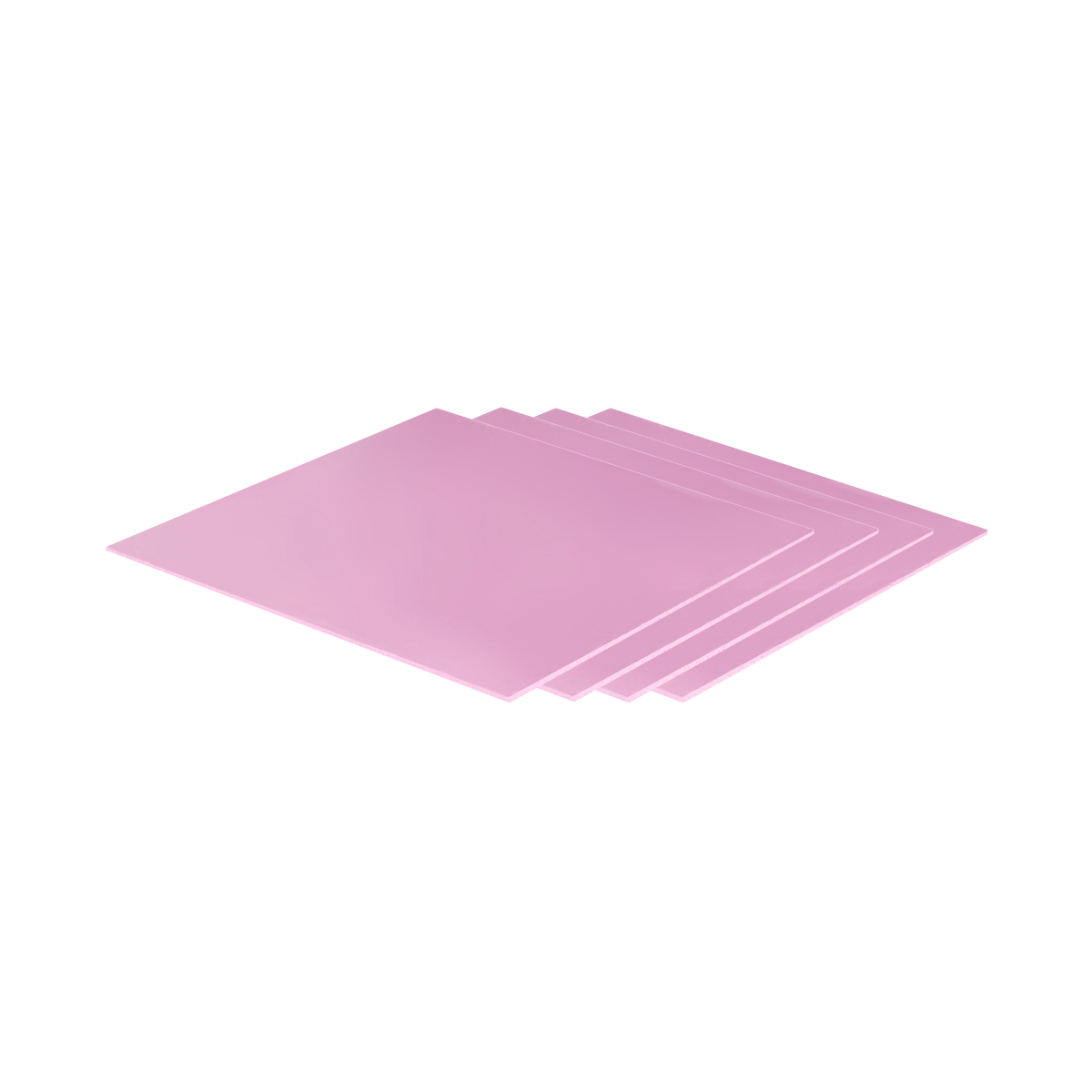
Arctic TP-1
Expert rating6 / 10
- Form:
- Pad
- Electrical Conductivity:
- Non-Conductive
- Recommended Use:
- Mainstream CPU/GPU
- Package Size:
- 120x20mm / 100x100mm, 0.5/1/1.5mm
Consumercarts is reader-supported. Learn more
Disclaimer: The price and specification of the given product may differ from the actual product. Please confirm on the retailer's website before buying.
Manufacturer: Arctic Last updated: 2026-09-15
Where to buy
- Arctic StoreGo to store
Arctic TP-1 Review
Arctic TP-1 (APT2012) thermal pad specs and review - Arctic's cheapest thermal pad, sold under the model code APT2012.
This is Arctic's entry-level pad, not a paste. It's a soft, non-conductive silicone-family sheet you cut to size for RAM heatsinks, chipsets and single-board computers rather than a CPU/GPU die. At 20 Shore OO it's the softest pad in Arctic's lineup, so it compresses easily to fill gaps, but that same softness means it's not built for high-wattage dies - step up to the TP-4 for that. Arctic doesn't publish a W/mK number for any of its pads, by design (their own FAQ explains why), so don't expect a headline thermal conductivity spec here.
Thermal Performance
Arctic doesn't publish thermal conductivity figures for its pad lineup - a stated company policy, not a missing data point. What we do know: the TP-1 is the softest and thinnest-duty pad in the family at 20 Shore OO hardness, so it's built to gap-fill low-power components, not to compete with high-conductivity CPU/GPU pastes.
Application
Sold as pre-cut 120x20mm or 100x100mm sheets in 0.5mm, 1mm and 1.5mm thicknesses, four to a pack. Cut to size with scissors for RAM sticks, VRMs, chipsets and single-board computer heatsinks.
Safety
No metal particles means no electrical conductivity or capacitance risk - you can lay this across exposed traces without worrying about shorts, which is exactly why it's popular for Raspberry Pi and SBC builds.
Our verdict
Reviewed by Burooj Alam. Rated by us, not by users.
Expert rating6 / 10
Arctic's entry-level pad, ultra-soft and easy to fit, aimed at low-cost gap-filling rather than peak conductivity.
Best for
- RAM heatsinks and VRM gap-filling
- Raspberry Pi and single-board computer builds
- Budget chipset cooling
Not for
- High-wattage CPU or GPU direct cooling - too soft/thin for that duty
- Buyers who want a published W/mK thermal conductivity number
Specifications
What these specs meanElectrical and board risk
| Paste Segment | Pad |
|---|
Application
| Viscosity | 20 Pa-s |
|---|---|
| Applicator Included | None |
Operating envelope
| Min Operating Temperature | -40 C |
|---|---|
| Max Operating Temperature | 150 C |
Quantity, volume versus weight
| Density | 2.3 g/cm3 |
|---|
| Electrical Conductivity | Insulating |
|---|---|
| Package Size | 120x20mm or 100x100mm sheets, 0.5mm/1mm/1.5mm thickness, sold in 4-pad packs |
| Recommended Use | Mainstream CPU/GPU (RAM heatsinks, chipsets, single-board computers) |
| Safety Notes | Non-adhesive, electrically insulating, no metal particles, not capacitive - safe even in contact with electrical components |
FAQs
What are the key specifications of the Arctic TP-1 (APT2012) (Thermal Pad/Non-Conductive/Ultra-Soft Entry-Level Gap Filler)?
Key specs for the Arctic TP-1: Electrical Conductivity Insulating, Consistency 20 Shore OO hardness - very soft, conforms easily to uneven surfaces, Density 2.3 g/cm3, Operating Temperature -40C to 150C continuous use, Safety Notes Non-adhesive, electrically insulating, no metal particles, not capacitive - safe even in contact with electrical components, Min Operating Temp -40 C.
Who is the Arctic TP-1 (APT2012) (Thermal Pad/Non-Conductive/Ultra-Soft Entry-Level Gap Filler) best suited to?
Best suited to: RAM heatsinks and VRM gap-filling; Raspberry Pi and single-board computer builds; Budget chipset cooling.
What are the drawbacks of the Arctic TP-1 (APT2012) (Thermal Pad/Non-Conductive/Ultra-Soft Entry-Level Gap Filler)?
Not the best fit for: High-wattage CPU or GPU direct cooling - too soft/thin for that duty; Buyers who want a published W/mK thermal conductivity number.
Compare and read more
- 3M Thermally Conductive Acrylic Interface Pad 5590H (Acrylic Pad/Non-Conductive/2.08 W/mK) vs Arctic TP-1 (APT2012) (Thermal Pad/Non-Conductive/Ultra-Soft Entry-Level Gap Filler)
- Akasa AK-450 Silver Compound 450 (Silver-Based/5g Syringe/Spreader Card Included) vs Arctic TP-1 (APT2012) (Thermal Pad/Non-Conductive/Ultra-Soft Entry-Level Gap Filler)
- Alphacool Apex 2 Thermal Paste (Non-Conductive/6.7 W/mK/High-end CPU/GPU) vs Arctic TP-1 (APT2012) (Thermal Pad/Non-Conductive/Ultra-Soft Entry-Level Gap Filler)
- Alphacool Apex Thermal Pad Soft 18W/mK (Silicone-Based Pad/Non-Conductive/High-end CPU/GPU) vs Arctic TP-1 (APT2012) (Thermal Pad/Non-Conductive/Ultra-Soft Entry-Level Gap Filler)
- Alphacool Eisfrost Xtreme Liquid Metal Thermal Paste (Gallium Alloy/Conductive/High-end CPU/GPU) vs Arctic TP-1 (APT2012) (Thermal Pad/Non-Conductive/Ultra-Soft Entry-Level Gap Filler)
- How Often to Replace Thermal Paste (It Depends on What You Used)