
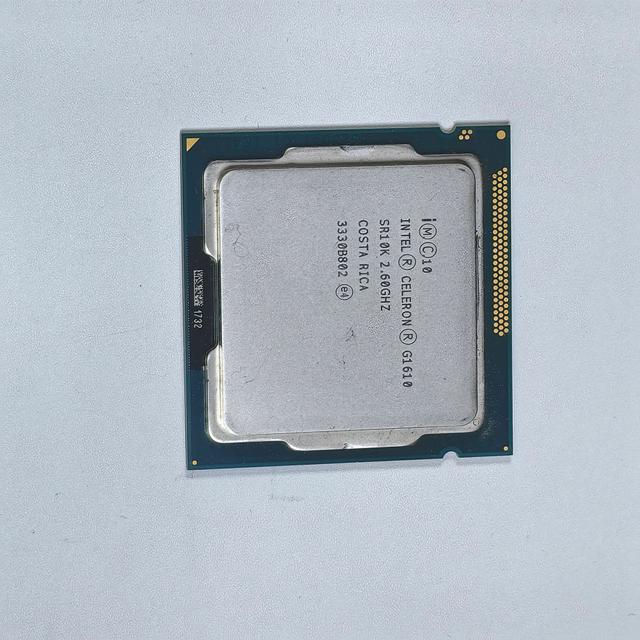
Intel Celeron N4120
- iGPU:
- Intel UHD Graphics 600
- Boost/Base Clock:
- 2.6 GHz / 1.1 GHz
- Core/Thread Count:
- 4 Core / 4 Thread
- Cache:
- 4MB L2
- TDP:
- 6 Watts
- CPU Process Node:
- 14 Nanometers
- CPU Socket:
- FCBGA1090
- CPU Series:
- Gemini Lake
- Form Factor:
- Laptop
Consumercarts is reader-supported. Learn more
Disclaimer: The price and specification of the given product may differ from the actual product. Please confirm on the retailer's website before buying.
Manufacturer: Intel Last updated: September 9, 2026
Intel Celeron N4120 Review
The Intel Celeron N4120 is a 4-core, 4-thread entry-level processor launched in November 2019 as part of Intel's Gemini Lake lineup, running a 1.1 GHz base clock that boosts to 2.6 GHz within a 6 Watt TDP.
This is a chip built for the most budget-focused laptops and basic computing devices, where the 6W power envelope prioritizes battery life and fanless designs over any real performance headroom.
Intel UHD Graphics 600
A minimal integrated GPU appropriate for basic display output, video playback, and light web browsing, with no realistic gaming capability even at the lowest settings.
How Is the Celeron N4120 in Terms of Performance
At 6 Watts, this chip trades virtually all performance headroom for battery efficiency and fanless operation, positioning it well below even entry-level U-series chips of its era. It's built specifically for basic tasks: web browsing, document editing, and video streaming, rather than any kind of multitasking or demanding workload.
Benchmarks
Cinebench R23 multi-core scores of 1,242 and single-core scores of 426 place this chip firmly at the entry-level tier, well behind even budget U-series mobile chips of the same period. Geekbench 5 multi-core scores of 1,501 and PassMark multi-core scores of 2,471 confirm the same picture: this is a chip built for the lightest possible computing tasks, not general productivity work.
Specifications
Identity
| Brand | Intel |
|---|---|
| Product Line | Celeron |
| Product Line | Celeron |
| Model Number | N4120 |
| Codename | Gemini Lake |
| Release Year | 2019 |
Segment and platform
| Market Segment | Laptop |
|---|---|
| Microarchitecture | Gemini Lake |
| Socket | BGA |
| Socket Status | End of Life |
| Process Node | 14 nm |
| Process Node | 14 nm |
Core configuration
| Total Cores | 4 |
|---|---|
| Performance Cores | 4 |
| Efficiency Cores | 0 |
| Total Threads | 4 |
| SMT Enabled | No |
Clock speeds
| P-Core Base Clock | 1.1 GHz |
|---|---|
| P-Core Boost Clock | 2.6 GHz |
Cache
| L2 Cache | 4 MB |
|---|
Power and thermal
| Base Power | 6 W |
|---|
Memory
| Memory Type | DDR4 |
|---|---|
| Max Memory Speed | 2400 MT/s |
| Memory Channels | 1 |
| ECC Support | No |
Graphics and AI
| Integrated Graphics | Yes |
|---|---|
| iGPU Model | Intel UHD Graphics 600 |
| iGPU Compute Units | 12 |
Expansion
| PCIe Generation | PCIe 3.0 |
|---|
Commercial
| Retail Availability | Soldered Only |
|---|
| Form Factor | Laptop |
|---|---|
| Core/Thread Count | 4 Core / 4 Thread |
| TDP | 6 W |
| iGPU | Intel UHD Graphics 600 |
| Cache | 4MB L2 |
| Boost/Base Clock | 2.6 GHz / 1.1 GHz |
Expert Review
Reviewed by Burooj Alam. Rated by us, not by users.
Best for
- The most basic computing tasks — web browsing, document editing, video streaming
- Buyers prioritizing battery life and fanless operation above all else
Not for
- Any kind of multitasking, content creation, or productivity-heavy workload — even entry-level U-series chips of the same era offer meaningfully more headroom
FAQs
What are the key specifications of the Intel Celeron N4120?
The Intel Celeron N4120 is a processor from Intel. Key specs: iGPU Intel UHD Graphics 600, Boost/Base Clock 2.6 GHz / 1.1 GHz, Core/Thread Count 4 Core / 4 Thread, Cache 4MB L2, TDP 6 Watts.
Will the Intel Celeron N4120 work with my current setup?
The Intel Celeron N4120 lists CPU Socket is FCBGA1090. Check that against the hardware you already own before buying, since this is the field that most often decides whether a part fits.
Who is the Intel Celeron N4120 best suited to?
It suits the most basic computing tasks — web browsing, document editing, video streaming, buyers prioritizing battery life and fanless operation above all else.
What are the drawbacks of the Intel Celeron N4120?
It is a poor fit for any kind of multitasking, content creation, or productivity-heavy workload — even entry-level u-series chips of the same era offer meaningfully more headroom.