
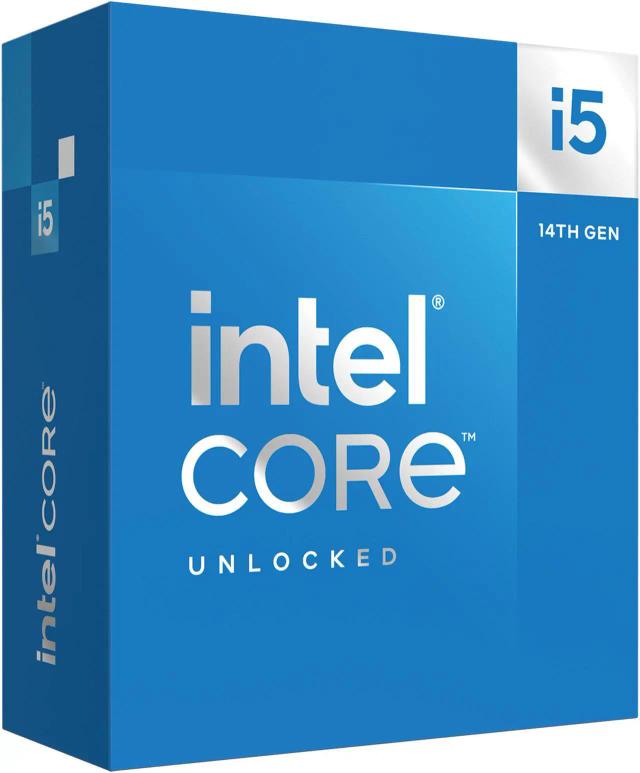
Intel Core i5-14400
- Brand:
- Intel
- Form Factor:
- Desktop
- CPU Socket:
- FCLGA1700
- Core/Thread Count:
- 10C/16T
- TDP:
- 65W
- iGPU:
- Intel UHD Graphics 730
- CPU Series:
- 14th Gen Core i5
Consumercarts is reader-supported. Learn more
Disclaimer: The price and specification of the given product may differ from the actual product. Please confirm on the retailer's website before buying.
Manufacturer: Intel Last updated:
Where to buy
- AmazonGo to store
- NeweggGo to store
- Best BuyGo to store
Intel Core i5-14400 Review
Intel Core i5-14400 desktop processor: 10 cores (6P + 4E), 16 threads, up to 4.7 GHz, 20 MB L3 cache, 9.5 MB L2 cache, 65 W base power, 148 W max turbo power, LGA1700, DDR5-4800 and DDR4-3200, PCIe 5.0, Intel UHD Graphics 730, Intel 7.
The Intel Core i5-14400 is a 10-core, 16-thread desktop processor from Intel's 14th Gen Core lineup, launched in early 2024 for the LGA1700 socket. It boosts up to 4.7 GHz, has 20 MB of L3 cache, a 65 W base power and Intel UHD Graphics 730 built in. It suits budget gaming PCs, office desktops and home builds that want a working display output without a graphics card.
What the Core i5-14400 is
The Core i5-14400 is a locked 14th Gen Intel Core desktop chip for the LGA1700 socket. It has 6 performance cores with Hyper-Threading and 4 efficient cores, 16 threads in total, with performance cores boosting to 4.7 GHz. It has 20 MB of L3 cache, a 65 W base power and a 148 W maximum turbo power. It supports DDR5 up to 4800 MT/s or DDR4 up to 3200 MT/s in two channels, up to 192 GB, and PCIe 5.0 and 4.0 lanes for a graphics card and fast SSDs. The multiplier is locked, so it cannot be overclocked.
Performance in everyday use
Office work, browsing, video calls and streaming are easy work for this chip, and 16 threads leave plenty of headroom for multitasking. With a graphics card it is a capable gaming CPU for 1080p and 1440p builds, since the six performance cores handle the game while the efficient cores take background tasks. Photo editing, light video editing and code compiles run well, though long renders finish sooner on chips with more performance cores. Budget motherboards that cap power and very basic coolers can hold it back during long all-core loads.
Graphics
Intel UHD Graphics 730 with 24 execution units at up to 1.55 GHz is built in, and it can drive up to four displays. That covers office work, 4K video playback and hardware video encoding and decoding with Intel Quick Sync, which helps in video editors and streaming apps. It is not meant for modern games, so add a graphics card for gaming. The upside over the 14400F is that the PC still works without a graphics card, which is handy for office builds or while you troubleshoot a GPU.
Comparison to Alternatives
The Core i5-14400F is the same chip without integrated graphics and usually costs less. The Core i5-14500 adds four more efficient cores, higher clocks and the faster UHD Graphics 770. AMD's Ryzen 5 7600 and 7600X have 6 cores and 12 threads on the AM5 platform with basic Radeon graphics built in and a longer upgrade path, but need DDR5. Intel's Core Ultra 5 225 is the successor on the new LGA1851 socket. The comparison pages below show each spec side by side.
Should you buy it?
Yes, if you want an affordable LGA1700 desktop that can run without a graphics card at first, or that needs Quick Sync for video work. It fits office PCs, home desktops and budget gaming builds on a B760 or H610 board with DDR4 or DDR5. If you will always use a graphics card, the 14400F saves a little money. If you want a platform with future CPU upgrades, compare it with an AM5 build around the Ryzen 5 7600.
Our verdict
Reviewed by Burooj Alam. Rated by us, not by users.
Best for
- Budget gaming PCs and home desktops on an LGA1700 board
- Office and family PCs that can run without a graphics card
- Video work that benefits from Intel Quick Sync
Not for
- Modern gaming on integrated graphics alone
- Overclocking, because the multiplier is locked
- Buyers who want a socket with future CPU upgrades
Specifications
What these specs meanIdentity
| Brand | Intel |
|---|---|
| Product Line | Core i5 |
| Model Number | 14400 |
| Codename | Raptor Lake |
| Release Year | 2024 |
Segment and platform
| Market Segment | Desktop |
|---|---|
| Microarchitecture | Raptor Lake Refresh |
| Socket | FCLGA1700 |
| Process Node | 7 nm |
Core configuration
| Total Cores | 10 |
|---|---|
| Performance Cores | 6 |
| Efficiency Cores | 4 |
| Total Threads | 16 |
| SMT Enabled | Yes |
Clock speeds
| P-Core Base Clock | 2.5 GHz |
|---|---|
| P-Core Boost Clock | 4.7 GHz |
| E-Core Base Clock | 1.8 GHz |
| E-Core Boost Clock | 3.5 GHz |
| Unlocked Multiplier | No |
Cache
| L2 Cache | 9.5 MB |
|---|---|
| L3 Cache | 20 MB |
Power and thermal
| Base Power | 65 W |
|---|---|
| Max Turbo Power | 148 W |
| Max Operating Temp | 100 C |
Memory
| Memory Type | DDR5, DDR4 |
|---|---|
| Max Memory Speed | 4800 MT/s |
| Memory Channels | 2 |
| Max Memory Capacity | 192 GB |
Graphics and AI
| Integrated Graphics | Yes |
|---|---|
| iGPU Model | Intel UHD Graphics 730 |
| Copilot Plus Certified | No |
Expansion
| PCIe Generation | PCIe 5.0 |
|---|---|
| PCIe Lanes | 20 |
Commercial
| Launch MSRP | 221 USD |
|---|---|
| Retail Availability | Boxed Retail |
| Form Factor | Desktop |
|---|---|
| TDP | 65 W |
| iGPU | Intel UHD Graphics 730 |
FAQs
What is the difference between the Core i5-14400 and the 14400F?
They have the same 10 cores, 16 threads, clocks, cache and power limits. The 14400 has Intel UHD Graphics 730 enabled, while the 14400F has no integrated graphics and needs a graphics card. The 14400F usually costs a little less.
Is the Core i5-14400 good for gaming?
Yes, with a graphics card. Its 6 performance cores boost to 4.7 GHz and handle most games well at 1080p and 1440p. The built-in UHD Graphics 730 is only suitable for very light or older games.
Does the Core i5-14400 support DDR4 or DDR5?
Both. It supports DDR5 up to 4800 MT/s and DDR4 up to 3200 MT/s in two channels, up to 192 GB. The motherboard decides which type you use.
What motherboard works with the Core i5-14400?
Any LGA1700 board with a 600 or 700 series chipset, such as H610, B660, B760, Z690 or Z790. Older 600 series boards may need a BIOS update first. To use the integrated graphics, the board needs its own video outputs.
Can you overclock the Core i5-14400?
No. The multiplier is locked, so it cannot be overclocked. It boosts on its own up to 4.7 GHz and can draw up to 148 W under turbo if the motherboard allows it.
Compare and read more
- AMD Ryzen 5 7600 vs Intel Core i5-14400
- Intel Core i5-13400 vs Intel Core i5-14400
- Intel Core i5-14400 vs Intel Core Ultra 5 225
- Intel Core i5-14400 vs Intel Core i5-14500
- Intel Core i5-14400 vs Intel Core i5-14400F
- Desktop CPU Tier List (2026): Every Chip Ranked S-Tier to Budget
- Best CPU for Gaming in 2026 (Every Budget)