
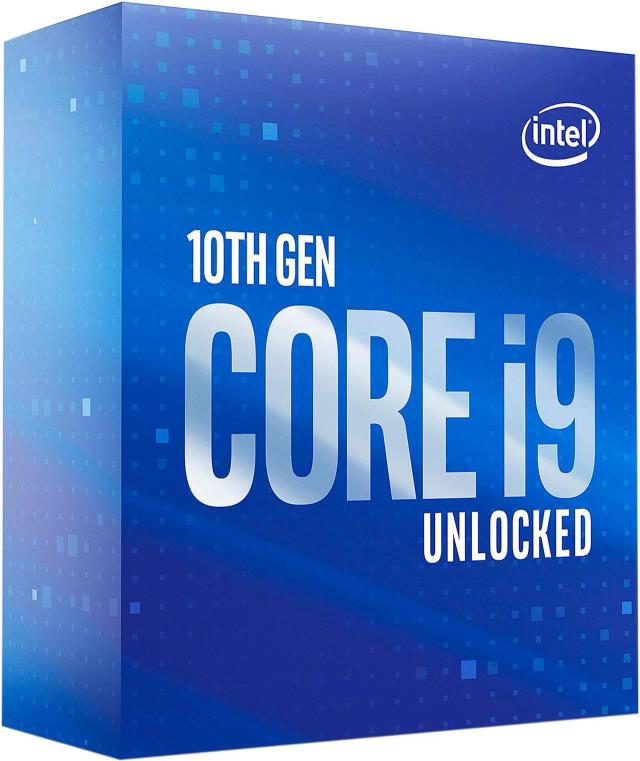
10th Gen Intel Core i9 10900
- iGPU:
- Intel UHD Graphics 630
- Boost/Base Clock:
- 5.2 GHz / 2.8 GHz
- Core/Thread Count:
- 10 Core / 20 Thread
- Cache:
- 20MB L3 + 2.5MB L2 + 640KB L1
- TDP:
- 65 Watts
- CPU Process Node:
- 14 Nanometers
- CPU Socket:
- LGA 1200
- CPU Series:
- Comet Lake
- Memory Support:
- DDR4-2933
- Form Factor:
- Desktop
Consumercarts is reader-supported. Learn more
Disclaimer: The price and specification of the given product may differ from the actual product. Please confirm on the retailer's website before buying.
Manufacturer: Intel Last updated: September 9, 2026
10th Gen Intel Core i9 10900 Review
The 10th Gen Intel Core i9 10900 (non-K) is a 10-core, 20-thread desktop processor built on Comet Lake, running a 2.8 GHz base clock that boosts to a genuinely high 5.2 GHz within a considerably lower 65 Watt TDP than the unlocked i9-10900K.
This non-overclockable variant shares the same 10-core, 20-thread layout as the flagship i9-10900K with only a modest 0.1 GHz lower boost ceiling, at a genuinely more efficient 65W power envelope for buyers who don't plan to overclock.
Intel UHD Graphics 630
A basic integrated GPU intended for display output; desktop builds around this chip typically pair it with a discrete GPU for gaming.
How Is the Core i9 10900 in Terms of Performance
The 10-core, 20-thread layout with a genuinely high 5.2 GHz boost ceiling gives this chip near-flagship gaming and productivity performance at a considerably more efficient 65W TDP than the unlocked i9-10900K.
Benchmarks
Sharing the same 10-core, 20-thread Comet Lake silicon as the i9-10900K with only a marginal 0.1 GHz lower boost ceiling, this chip's real-world performance tracks very closely with its flagship sibling at a considerably lower power draw.
Specifications
Identity
| Brand | Intel |
|---|---|
| Product Line | Core i9 |
| Product Line | Core i9 |
| Model Number | 10900 |
| Codename | Comet Lake |
| Release Year | 2020 |
Segment and platform
| Market Segment | Desktop |
|---|---|
| Microarchitecture | Comet Lake, 10th Gen Intel Core |
| Socket | LGA 1200 |
| Socket Status | Mature |
| Process Node | 14 nm |
| Process Node | 14 nm |
Core configuration
| Total Cores | 10 |
|---|---|
| Performance Cores | 10 |
| Efficiency Cores | 0 |
| Total Threads | 20 |
| SMT Enabled | Yes |
Clock speeds
| P-Core Base Clock | 2.8 GHz |
|---|---|
| P-Core Boost Clock | 5.2 GHz |
| Unlocked Multiplier | No |
Cache
| L2 Cache | 2.5 MB |
|---|---|
| L3 Cache | 20 MB |
Power and thermal
| Base Power | 65 W |
|---|---|
| Max Turbo Power | 224W |
Memory
| Memory Type | DDR4-2933 |
|---|---|
| Memory Type | DDR4 |
| Memory Channels | 2 |
| ECC Support | No |
Graphics and AI
| Integrated Graphics | Yes |
|---|---|
| iGPU Model | Intel UHD Graphics 630 |
| iGPU Compute Units | 24 |
Expansion
| PCIe Generation | PCIe 3.0 |
|---|---|
| PCIe Lanes | 16 |
Commercial
| Launch MSRP | 439 USD |
|---|---|
| Retail Availability | Retail |
| Form Factor | Desktop |
|---|---|
| Core/Thread Count | 10 Core / 20 Thread |
| TDP | 65 W |
| iGPU | Intel UHD Graphics 630 |
| Cache | 20MB L3 + 2.5MB L2 + 640KB L1 |
| Boost/Base Clock | 5.2 GHz / 2.8 GHz |
| Memory Speed | DDR4-2933 |
Expert Review
Reviewed by Burooj Alam. Rated by us, not by users.
Best for
- Buyers wanting near-flagship i9-10900K performance at a considerably lower power draw without overclocking
Not for
- Enthusiasts wanting to overclock — the unlocked i9-10900K offers that flexibility
FAQs
What are the key specifications of the 10th Gen Intel Core i9 10900?
The 10th Gen Intel Core i9 10900 is a processor from Intel. Key specs: iGPU Intel UHD Graphics 630, Boost/Base Clock 5.2 GHz / 2.8 GHz, Core/Thread Count 10 Core / 20 Thread, Cache 20MB L3 + 2.5MB L2 + 640KB L1, TDP 65 Watts.
Will the 10th Gen Intel Core i9 10900 work with my current setup?
The 10th Gen Intel Core i9 10900 lists CPU Socket is LGA 1200. Check that against the hardware you already own before buying, since this is the field that most often decides whether a part fits.
Who is the 10th Gen Intel Core i9 10900 best suited to?
It suits buyers wanting near-flagship i9-10900k performance at a considerably lower power draw without overclocking.
What are the drawbacks of the 10th Gen Intel Core i9 10900?
It is a poor fit for enthusiasts wanting to overclock — the unlocked i9-10900k offers that flexibility.