
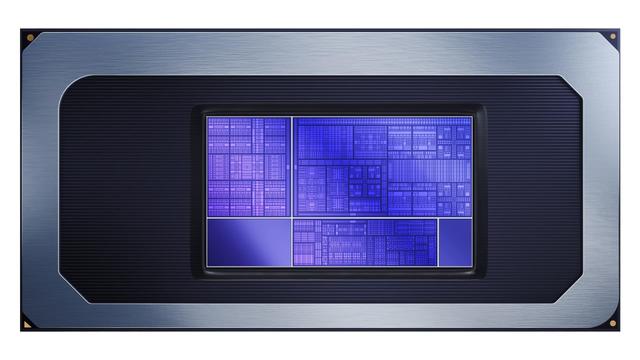
Intel Core Ultra X9 388H
- iGPU:
- Intel Arc B390 (12 Xe3-cores)
- Boost/Base Clock:
- 5.1 GHz / 2.1 GHz
- Core/Thread Count:
- 16 Core / 16 Thread (4 P-cores + 8 E-cores + 4 LPE-cores)
- Cache:
- 18MB L3
- NPU:
- 50 TOPS (NPU 5)
- TDP:
- 15-25 Watts (boost up to 80 Watts)
- CPU Socket:
- FCBGA2540
- CPU Process Node:
- Intel 18A (compute tile) / TSMC N3E (GPU and platform tiles)
- CPU Series:
- Panther Lake
- Form Factor:
- Laptop
Consumercarts is reader-supported. Learn more
Disclaimer: The price and specification of the given product may differ from the actual product. Please confirm on the retailer's website before buying.
Manufacturer: Intel Last updated: September 7, 2026
Intel Core Ultra X9 388H Review
Launched January 5, 2026, the Intel Core Ultra X9 388H is the flagship chip of Intel's Panther Lake generation, marketed as Core Ultra Series 3. It's a 16-core, 16-thread processor built from four large Cougar Cove P-cores, eight Darkmont E-cores, and four small Darkmont LPE-cores, with a base clock of 2.1 GHz that boosts up to 5.1 GHz on the P-cores. The chip is manufactured on Intel's own 18A process, the company's first mobile chip built on a node designed and fabricated in the United States, while the GPU and platform tiles are built separately at TSMC on the N3E process and assembled as a multi-tile package. Rated TDP runs 15 to 25 Watts, with boost power reaching up to 80 Watts in short bursts on laptops with sufficient cooling. It carries 18MB of L3 cache, an NPU rated at 50 TOPS for on-device AI workloads, and vPro eligibility for business systems. Memory support tops out at LPDDR5X-9600.
Launched January 5, 2026, the Intel Core Ultra X9 388H is the flagship chip of Intel's Panther Lake generation, marketed as Core Ultra Series 3. It's a 16-core, 16-thread processor built from four large Cougar Cove P-cores, eight Darkmont E-cores, and four small Darkmont LPE-cores, with a base clock of 2.1 GHz that boosts up to 5.1 GHz on the P-cores. The chip is manufactured on Intel's own 18A process, the company's first mobile chip built on a node designed and fabricated in the United States, while the GPU and platform tiles are built separately at TSMC on the N3E process and assembled as a multi-tile package. Rated TDP runs 15 to 25 Watts, with boost power reaching up to 80 Watts in short bursts on laptops with sufficient cooling. It carries 18MB of L3 cache, an NPU rated at 50 TOPS for on-device AI workloads, and vPro eligibility for business systems. Memory support tops out at LPDDR5X-9600.
Intel Arc B390
The Intel Arc B390 is the integrated GPU paired with the X9 388H, built on Intel's Xe3 architecture with 12 Xe-cores clocked up to 2.5 GHz and hardware ray tracing support. This is the largest iGPU configuration in the entire Panther Lake lineup, and Intel positions it as capable of rivalling entry-level dedicated graphics in thin-and-light laptops that have no room for a discrete GPU.
How Is the Core Ultra X9 388H in Terms of Performance
Intel's own launch figures claim up to 60% better multithreaded performance and up to 77% faster gaming performance over the outgoing Lunar Lake and Arrow Lake H generations, alongside up to 27 hours of claimed battery life. Independent hands-on testing has found the chip runs efficiently under real workloads, with one laptop review noting the X9 388H rarely exceeded 40W even under sustained load, only spiking to its 69W peak during dedicated stress testing, well under its 80W maximum boost ceiling. Against AMD's outgoing Ryzen AI 9 HX 375, Panther Lake's out-of-the-box power profile runs notably higher by default (45W versus 28W), though real-world power draw during typical use narrows that gap considerably.
Benchmarks
Geekbench 6 single-core scores are the most useful figure for estimating everyday responsiveness in Word, a browser, or most games, since most software still leans on one fast core more than many slower ones. Geekbench 6 multi-core scores estimate performance under genuinely parallel workloads: video encoding, 3D rendering, and compiling code. The X9 388H posts competitive single-core results against its closest same-generation Intel sibling, the Core Ultra 9 386H, with the gap between the two showing up mainly in graphics-heavy and AI-accelerated tasks rather than raw CPU throughput.
Specifications
Identity
| Brand | Intel |
|---|---|
| Product Line | Core Ultra X9 |
| Model Number | 388H |
Segment and platform
| Microarchitecture | Panther Lake, Intel Core Ultra Series 3 |
|---|---|
| Socket | FCBGA2540 |
| Process Node | 18 nm |
Graphics and AI
| NPU Peak TOPS | 50 TOPS (NPU 5) |
|---|
| Form Factor | Laptop |
|---|---|
| Core/Thread Count | 16 Core / 16 Thread (4 P-cores + 8 E-cores + 4 LPE-cores) |
| TDP | 15-25 Watts (boost up to 80 Watts) |
| iGPU | Intel Arc B390 (12 Xe3-cores) |
| Cache | 18MB L3 |
| Boost/Base Clock | 5.1 GHz / 2.1 GHz |
FAQs
What are the key specifications of the Intel Core Ultra X9 388H?
The Intel Core Ultra X9 388H is a processor from Intel. Key specs: iGPU Intel Arc B390 (12 Xe3-cores), Boost/Base Clock 5.1 GHz / 2.1 GHz, Core/Thread Count 16 Core / 16 Thread (4 P-cores + 8 E-cores + 4 LPE-cores), Cache 18MB L3, NPU 50 TOPS (NPU 5).
Will the Intel Core Ultra X9 388H work with my current setup?
The Intel Core Ultra X9 388H lists CPU Socket is FCBGA2540. Check that against the hardware you already own before buying, since this is the field that most often decides whether a part fits.