
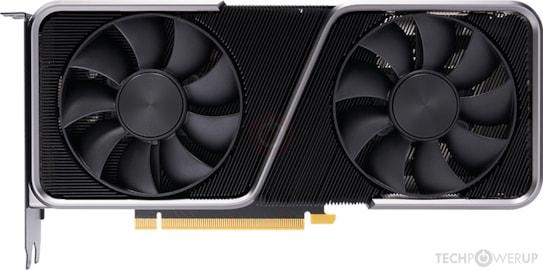
NVIDIA GeForce RTX 3070
Expert rating8 / 10
- Architecture:
- Ampere (GA104)
- CUDA Cores:
- 5888
- Memory:
- 8GB GDDR6
- TDP:
- 220W
- Launch Price:
- $499
Consumercarts is reader-supported. Learn more
Disclaimer: The price and specification of the given product may differ from the actual product. Please confirm on the retailer's website before buying.
Manufacturer: NVIDIA Last updated: September 11, 2026
NVIDIA GeForce RTX 3070 Review
The RTX 3070 launched as NVIDIA's mainstream 1440p flagship of the Ampere generation, promising RTX 2080 Ti-level performance at a fraction of the price, a claim that largely held up in independent testing.
NVIDIA's own launch claims that the RTX 3070 matched the previous-generation RTX 2080 Ti held up well in reviews, making it a landmark value card for 1440p gaming at launch.
2080 Ti Performance, Mainstream Price
NVIDIA's own launch claims that the RTX 3070 matched the previous-generation RTX 2080 Ti held up well in reviews, making it a landmark value card for 1440p gaming at launch.
A Popular Choice That Aged With an 8GB Ceiling
5888 CUDA cores deliver strong 1440p performance, though the 8GB VRAM buffer has become the card's most common criticism as newer games push memory requirements higher.
Comparison to Alternatives
Against the RTX 3070 Ti covered in this batch, the base 3070 gives up some CUDA cores and clock speed for a lower price at a similar VRAM ceiling. Against AMD's RX 6800 XT covered in this batch, the RTX 3070 trails in rasterization but offers stronger ray tracing performance.
Our verdict
Reviewed by Burooj Alam. Rated by us, not by users.
Expert rating8 / 10
A landmark 1440p value card at launch, now defined by its 8GB memory ceiling.
Best for
- 1440p gaming builds that want strong performance-per-dollar from the Ampere generation.
Not for
- Buyers planning to use high-res texture mods or run the card for many more years.
Specifications
What these specs meanIdentity and type
| Product Type | Desktop Add-In Card |
|---|---|
| Series | GeForce RTX 30 |
Performance
| VRAM | 8 GB |
|---|---|
| Memory Type | GDDR6 |
| Boost Clock | 1725 MHz |
| Ray Tracing Support | Yes |
Physical & Power
| TDP | 220 W |
|---|
Silicon
| Architecture | Ampere (GA104) |
|---|---|
| Process Node | Samsung 8N |
| Shader Units | 5888 |
Ray tracing and AI
| RT Cores | 46 |
|---|---|
| Upscaling Tech | DLSS 4 |
Clocks
| Base Clock | 1500 MHz |
|---|
Memory
| Memory Bus Width | 256 bit |
|---|---|
| Memory Bandwidth | 448 GB/s |
Power
| Power Connector | 1x 8-pin |
|---|
Host interface
| PCIe Generation | PCIe 4.0 |
|---|
Market and workstation
| MSRP | 499 USD |
|---|---|
| Launch Date | October 2020 |
FAQs
What are the key specifications of the NVIDIA GeForce RTX 3070 (Graphics Card/Ampere GA104/5888 CUDA Cores/8GB GDDR6/1440p Mainstream)?
Key specs for the NVIDIA GeForce RTX 3070: VRAM 8 GB, Memory Bandwidth 448 GB/s, Boost Clock 1725 MHz, TDP 220 W, Architecture Ampere (GA104), Product Type Desktop Add-In Card.
Who is the NVIDIA GeForce RTX 3070 (Graphics Card/Ampere GA104/5888 CUDA Cores/8GB GDDR6/1440p Mainstream) best suited to?
Best suited to: 1440p gaming builds that want strong performance-per-dollar from the Ampere generation.
What are the drawbacks of the NVIDIA GeForce RTX 3070 (Graphics Card/Ampere GA104/5888 CUDA Cores/8GB GDDR6/1440p Mainstream)?
Not the best fit for: Buyers planning to use high-res texture mods or run the card for many more years.
Compare and read more
- AMD Instinct MI210 vs NVIDIA GeForce RTX 3070 (Graphics Card/Ampere GA104/5888 CUDA Cores/8GB GDDR6/1440p Mainstream)
- Acer Predator BiFrost OC Arc A770 vs NVIDIA GeForce RTX 3070 (Graphics Card/Ampere GA104/5888 CUDA Cores/8GB GDDR6/1440p Mainstream)
- AMD Instinct MI250 vs NVIDIA GeForce RTX 3070 (Graphics Card/Ampere GA104/5888 CUDA Cores/8GB GDDR6/1440p Mainstream)
- AMD Instinct MI100 vs NVIDIA GeForce RTX 3070 (Graphics Card/Ampere GA104/5888 CUDA Cores/8GB GDDR6/1440p Mainstream)
- Laptop GPU Tier List (2026): Mobile RTX and RX Ranked
- PC Build Cost in 2026: Why a Gaming PC Costs More Than It Did Last Year