
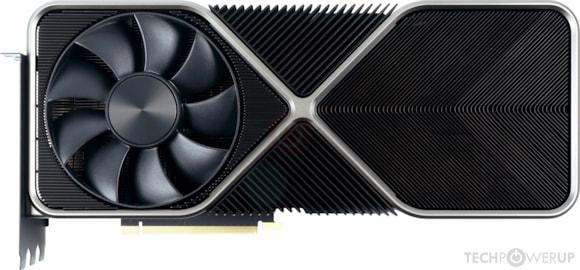
NVIDIA GeForce RTX 3090
Expert rating7.5 / 10
- Architecture:
- Ampere (GA102)
- CUDA Cores:
- 10496
- Memory:
- 24GB GDDR6X
- TDP:
- 350W
- Launch Price:
- $1,499
Consumercarts is reader-supported. Learn more
Disclaimer: The price and specification of the given product may differ from the actual product. Please confirm on the retailer's website before buying.
Manufacturer: NVIDIA Last updated: September 11, 2026
NVIDIA GeForce RTX 3090 Review
The RTX 3090 was Ampere's true flagship, aimed as much at content creators and early AI/ML workloads as at gamers, thanks to a massive 24GB VRAM buffer that dwarfed every other consumer card at the time.
NVIDIA marketed the RTX 3090 partly as a Titan-class card for creators, and its 24GB of GDDR6X memory made it a popular pick for early local AI model work well before that became a mainstream use case for consumer GPUs.
A Prosumer Card as Much as a Gaming Card
NVIDIA marketed the RTX 3090 partly as a "Titan-class" card for creators, and its 24GB of GDDR6X memory made it a popular pick for early local AI model work well before that became a mainstream use case for consumer GPUs.
Diminishing Gaming Returns Over the 3080
In pure gaming benchmarks, the RTX 3090's advantage over the RTX 3080 covered in this batch was often modest relative to its steep price premium, a gap reviewers noted consistently at launch.
Comparison to Alternatives
Against the RTX 3080 covered in this batch, the RTX 3090's main advantage is its 24GB VRAM buffer rather than a dramatically higher gaming frame rate. Against the newer RTX 4090 already on this site, the RTX 3090 trails clearly in both raw performance and efficiency.
Our verdict
Reviewed by Burooj Alam. Rated by us, not by users.
Expert rating7.5 / 10
A 24GB VRAM buffer for creators and local AI work, with modest gaming gains over the 3080.
Best for
- Creators and early local-AI users who specifically need a large VRAM buffer on Ampere-era hardware.
Not for
- Gaming-only buyers who won't use the extra VRAM headroom.
Specifications
What these specs meanPlatform
| GPU Brand | NVIDIA |
|---|
Identity and type
| Product Type | Desktop Add-In Card |
|---|---|
| Series | GeForce RTX 30 |
Performance
| Memory Type | GDDR6X |
|---|---|
| Boost Clock | 1695 MHz |
| Ray Tracing Support | Yes |
Physical & Power
| TDP | 350 W |
|---|---|
| Card Length | 313 mm |
Silicon
| Architecture | Ampere |
|---|---|
| Process Node | Samsung 8N |
| Shader Units | 10496 |
Ray tracing and AI
| RT Cores | 82 |
|---|
Clocks
| Base Clock | 1395 MHz |
|---|
Memory
| VRAM Capacity | 24 GB |
|---|---|
| Memory Bus Width | 384 bit |
| Memory Bandwidth | 936.2 GB/s |
Power
| Power Connector | 1x 12V-2x6 |
|---|
Host interface
| PCIe Generation | PCIe 4.0 |
|---|
Display and media
| DisplayPort Version | DP 1.4a |
|---|---|
| DisplayPort Count | 3 |
| HDMI Version | HDMI 2.1 |
| HDMI Count | 1 |
Market and workstation
| MSRP | 1499 USD |
|---|---|
| Launch Date | September 2020 |
FAQs
What are the key specifications of the NVIDIA GeForce RTX 3090 (Graphics Card/Ampere GA102/10496 CUDA Cores/24GB GDDR6X/Titan-Class Flagship)?
Key specs for the NVIDIA GeForce RTX 3090: VRAM Capacity 24 GB, Memory Bandwidth 936.2 GB/s, Boost Clock 1695 MHz, TDP 350 W, Card Length 313 mm, Product Type Desktop Add-In Card.
Who is the NVIDIA GeForce RTX 3090 (Graphics Card/Ampere GA102/10496 CUDA Cores/24GB GDDR6X/Titan-Class Flagship) best suited to?
Best suited to: Creators and early local-AI users who specifically need a large VRAM buffer on Ampere-era hardware.
What are the drawbacks of the NVIDIA GeForce RTX 3090 (Graphics Card/Ampere GA102/10496 CUDA Cores/24GB GDDR6X/Titan-Class Flagship)?
Not the best fit for: Gaming-only buyers who won't use the extra VRAM headroom.
Compare and read more
- AMD Instinct MI210 vs NVIDIA GeForce RTX 3090 (Graphics Card/Ampere GA102/10496 CUDA Cores/24GB GDDR6X/Titan-Class Flagship)
- Acer Predator BiFrost OC Arc A770 vs NVIDIA GeForce RTX 3090 (Graphics Card/Ampere GA102/10496 CUDA Cores/24GB GDDR6X/Titan-Class Flagship)
- AMD Instinct MI250 vs NVIDIA GeForce RTX 3090 (Graphics Card/Ampere GA102/10496 CUDA Cores/24GB GDDR6X/Titan-Class Flagship)
- AMD Instinct MI100 vs NVIDIA GeForce RTX 3090 (Graphics Card/Ampere GA102/10496 CUDA Cores/24GB GDDR6X/Titan-Class Flagship)
- NVIDIA GeForce RTX 3080 (Graphics Card/Ampere GA102/8704 CUDA Cores/10GB GDDR6X/Ampere Breakout Card) vs NVIDIA GeForce RTX 3090 (Graphics Card/Ampere GA102/10496 CUDA Cores/24GB GDDR6X/Titan-Class Flagship)
- GPU Prices in 2026: Why Cards Cost More Than MSRP Again
- Why More VRAM Doesn't Always Mean Better Ray Tracing Performance