
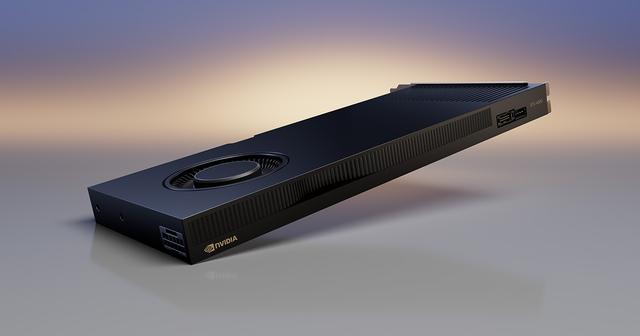
NVIDIA RTX 4000 Ada Generation
Expert rating7.5 / 10
- GPU Brand:
- NVIDIA
- VRAM:
- 20GB GDDR6
- Memory Type:
- GDDR6
- TDP:
- 130W
Consumercarts is reader-supported. Learn more
Disclaimer: The price and specification of the given product may differ from the actual product. Please confirm on the retailer's website before buying.
Manufacturer: NVIDIA Last updated: 2026-09-12
NVIDIA RTX 4000 Ada Generation Review
If you're looking at the NVIDIA RTX 4000 Ada Generation, it's the mainstream entry point in NVIDIA's previous-generation Ada Lovelace workstation lineup, a single-slot card that draws power entirely from the PCIe slot.
It has 6,144 CUDA cores and 20GB of GDDR6 in a compact single-slot, 130W design, making it a popular choice for CAD and design workstations that need real professional drivers and decent VRAM without a dual-slot card or extra power connector.
Performance & Use Case
It handles CAD/BIM viewports and moderate 3D rendering well within its 20GB frame buffer, and its single-slot, slot-powered design fits compact workstation chassis easily. It's a solid choice for CAD/engineering and design workstations that want single-slot convenience with real professional drivers.
Comparison to Alternatives
Against its Blackwell-generation successor, the NVIDIA RTX PRO 4000 Blackwell (nvidia-rtx-pro-4000-blackwell), the RTX 4000 Ada Generation has 4GB less VRAM, slower GDDR6 memory, and a full generation less RT/tensor performance, but is often available at a lower price as the previous generation. Against the NVIDIA RTX A4500 (nvidia-rtx-a4500), the RTX 4000 Ada matches it closely on VRAM while adding a generation of architecture improvements and AV1 encode support.
Specifications
Platform
| GPU Brand | NVIDIA |
|---|---|
| Board Partner | NVIDIA Reference (workstation, no AIB partners) |
Identity and type
| Series | RTX Ada Generation |
|---|---|
| Tier | Mainstream |
Performance
| VRAM | 20 GB |
|---|---|
| Memory Type | GDDR6 |
| Boost Clock | 2175 MHz |
| Ray Tracing Support | Yes |
Physical & Power
| TDP | 130 W |
|---|---|
| Card Length | 241 mm |
| Slot Width | 1 |
Silicon
| Architecture | Ada Lovelace |
|---|---|
| Process Node | TSMC 4N |
| Shader Units | 6144 |
Memory
| Memory Bus Width | 160 bit |
|---|---|
| Memory Bandwidth | 360 GB/s |
Power
| Recommended PSU | 380 W |
|---|---|
| Power Connector | None (slot powered) |
Host interface
| PCIe Generation | PCIe 4.0 x16 |
|---|
Market and workstation
| MSRP | 1250 USD |
|---|---|
| Launch Date | 2023-04 |
| Base / Game Clock | 735 MHz |
|---|---|
| Display Outputs | 4x DisplayPort 1.4a |
| Media Engine | 2x NVENC (8th gen), 2x NVDEC, AV1 encode/decode |
Expert Review
Reviewed by Burooj Alam. Rated by us, not by users.
Expert rating7.5 / 10
A dependable mainstream Ada workstation card, now best bought at a discount against the newer RTX PRO 4000 Blackwell.
Best for
- single-slot CAD and design workstations
- compact professional desktops
- value-focused workstation upgrades
Not for
- gaming
- large-scale rendering or AI workloads
- buyers wanting the newest Blackwell architecture
FAQs
What are the key specifications of the NVIDIA RTX 4000 Ada Generation?
The NVIDIA RTX 4000 Ada Generation is a graphics card from NVIDIA. Key specs: GPU Brand NVIDIA, Tier Mainstream, Board Partner NVIDIA Reference (workstation, no AIB partners), VRAM 20GB GDDR6, Memory Type GDDR6.
Who is the NVIDIA RTX 4000 Ada Generation best suited to?
It suits single-slot cad and design workstations, compact professional desktops, value-focused workstation upgrades.
What are the drawbacks of the NVIDIA RTX 4000 Ada Generation?
It is a poor fit for gaming, large-scale rendering or ai workloads, buyers wanting the newest blackwell architecture.
Compare and read more
- AMD Radeon PRO W7700 vs NVIDIA RTX 4000 Ada Generation
- AMD Radeon PRO W7700 vs NVIDIA RTX 4000 Ada Generation
- Acer Predator BiFrost OC Arc A770 vs NVIDIA RTX 4000 Ada Generation
- NVIDIA RTX 4000 Ada Generation vs Sapphire Pulse Radeon RX 7700 XT
- NVIDIA RTX 4000 Ada Generation vs Sapphire Pulse Radeon RX 7700 XT