
Consumercarts is reader-supported. Learn more
Corsair iCUE Link RX120 vs Thermaltake TOUGHFAN 12: Comparison
Corsair iCUE Link RX120 vs Thermaltake TOUGHFAN 12: the static pressure difference
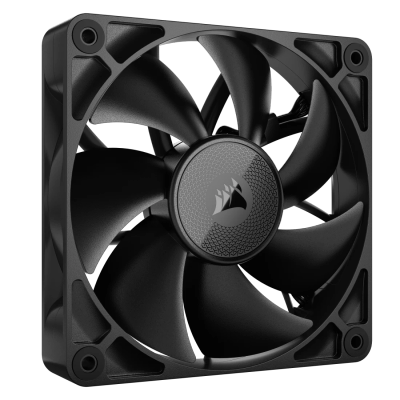
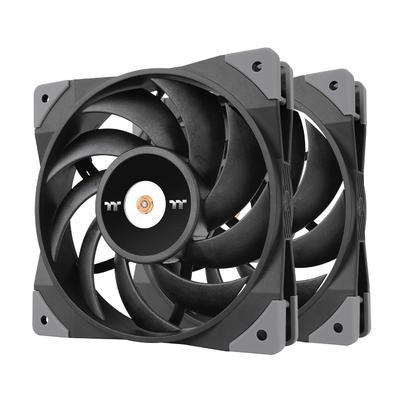
Start with static pressure, because it is the widest measured gap between them: Corsair iCUE Link RX120 4.38 mmH2O against Thermaltake TOUGHFAN 12 2.41 mmH2O, 45% in favour of Corsair iCUE Link RX120. Airflow runs the same way, 74.2 CFM on the Corsair iCUE Link RX120 versus 58.35 CFM on the Thermaltake TOUGHFAN 12, another win for Corsair iCUE Link RX120. Connector type is not the same on both, Proprietary on the Corsair iCUE Link RX120 versus 4-Pin PWM on the Thermaltake TOUGHFAN 12. There is a split on positioning as well, Mainstream on the Corsair iCUE Link RX120 versus Performance on the Thermaltake TOUGHFAN 12.
Who each one is for
The Corsair iCUE Link RX120 is the one to take for iCUE Link fan and cooler builds and cable-management-focused builds, though it is not the pick for Non-iCUE-Link systems and RGB-focused builds. Buy the Thermaltake TOUGHFAN 12 for thick AIO and custom-loop radiators and high-restriction, high-RPM setups, though it is not built for quiet, low-RPM builds and open case front intakes. Our rating of the Corsair iCUE Link RX120 (8/10): A clean, quiet workhorse fan that only really makes sense once you're bought into iCUE Link's single-cable wiring. Our rating of the Thermaltake TOUGHFAN 12 (8/10): one of the better plain-black high-pressure radiator fans, built tough for AIO and custom-loop use.
What Corsair iCUE Link RX120 and Thermaltake TOUGHFAN 12 have in common
The common ground is wider than the gap: fan size, lighting, fan thickness, pwm control and colors are identical here.
Frequently asked questions
Do the Corsair iCUE Link RX120 and Thermaltake TOUGHFAN 12 differ on noise level?
Yes. Noise Level reads 36 dBA on the Corsair iCUE Link RX120 versus 22.3 dBA on the Thermaltake TOUGHFAN 12.
Specs and benchmarks
Fan Size
- Corsair iCUE Link RX120
- 120 mm
- Thermaltake TOUGHFAN 12
- 120 mm
Brand
- Corsair iCUE Link RX120
- Corsair
- Thermaltake TOUGHFAN 12
- Thermaltake
Model
- Corsair iCUE Link RX120
- iCUE Link RX120
- Thermaltake TOUGHFAN 12
- TOUGHFAN 12
Lighting
- Corsair iCUE Link RX120
- No RGB
- Thermaltake TOUGHFAN 12
- No RGB
Fan Thickness
- Corsair iCUE Link RX120
- 25 mm
- Thermaltake TOUGHFAN 12
- 25 mm
Static Pressure
- Corsair iCUE Link RX120
- 4.38 mmH2OBest
- Thermaltake TOUGHFAN 12
- 2.41 mmH2O-45%
Max Speed
- Corsair iCUE Link RX120
- 2100 RPMBest
- Thermaltake TOUGHFAN 12
- 2000 RPM-5%
Airflow
- Corsair iCUE Link RX120
- 74.2 CFMBest
- Thermaltake TOUGHFAN 12
- 58.35 CFM-21%
Noise Level
- Corsair iCUE Link RX120
- 36 dBA
- Thermaltake TOUGHFAN 12
- 22.3 dBABest
PWM Control
- Corsair iCUE Link RX120
- Yes
- Thermaltake TOUGHFAN 12
- Yes
Min Speed
- Corsair iCUE Link RX120
- 400 RPM
- Thermaltake TOUGHFAN 12
- 500 RPMBest
Connector Type
- Corsair iCUE Link RX120
- Proprietary
- Thermaltake TOUGHFAN 12
- 4-Pin PWM
Positioning
- Corsair iCUE Link RX120
- Mainstream
- Thermaltake TOUGHFAN 12
- Performance
Colors
- Corsair iCUE Link RX120
- Black
- Thermaltake TOUGHFAN 12
- Black


Which one should you pick?
Choose Corsair iCUE Link RX120 if you want the higher static pressure (4.38 mmH2O vs 2.41 mmH2O), the higher max speed (2100 RPM vs 2000 RPM) and the higher airflow (74.2 CFM vs 58.35 CFM).
Choose Thermaltake TOUGHFAN 12 if you want the lower noise level (22.3 dBA vs 36 dBA).
Price comparison
| Retailer | Corsair iCUE Link RX120 | Thermaltake TOUGHFAN 12 |
|---|---|---|
| Corsair Store | View on Corsair Store | |
| Thermaltake | View on Thermaltake |
Disclaimer: The price and specification of the given product may differ from the actual product. Please confirm on the retailer's website before buying.
Verdict
Corsair iCUE Link RX120
8 / 10 Expert Rating
A clean, quiet workhorse fan that only really makes sense once you're bought into iCUE Link's single-cable wiring.
Thermaltake TOUGHFAN 12
8 / 10 Expert Rating
One of the better plain-black high-pressure radiator fans, built tough for AIO and custom-loop use.