
Consumercarts is reader-supported. Learn more
ASUS ROG STRIX LC III 360 ARGB vs Cooler Master MasterLiquid ML360 Sub-Zero: Comparison
What is the difference between ASUS ROG STRIX LC III 360 ARGB and Cooler Master MasterLiquid ML360 Sub-Zero?
Warranty is where these two genuinely part company, ASUS ROG STRIX LC III 360 ARGB 6 years against Cooler Master MasterLiquid ML360 Sub-Zero 5 years, a 17% lead for ASUS ROG STRIX LC III 360 ARGB. Socket compatibility is not the same on both, AMD AM4/AM5, Intel LGA1851/1700/1200/115X on the ASUS ROG STRIX LC III 360 ARGB versus Intel LGA1200 on the Cooler Master MasterLiquid ML360 Sub-Zero.
Who each one is for
Take the ASUS ROG STRIX LC III 360 ARGB for ASUS ecosystem buyers who want ROG branding and Armoury Crate integration at mainstream pricing. It also earns its place with flagship-class builds needing roughly 270W of headroom without RYUJIN III's display premium. It is not the one for buyers who want the biggest available ROG display, where the RYUJIN III 360 ARGB Extreme, covered elsewhere on this site, has the 3.5-inch LCD. The Cooler Master MasterLiquid ML360 Sub-Zero suits extreme overclocking on unlocked flagship CPUs and enthusiasts chasing sub-ambient temperatures, though it is not the pick for typical mainstream or locked-CPU builds and users who don't want extra proprietary control software. Our rating of the ASUS ROG STRIX LC III 360 ARGB (8.1/10): A sensible mainstream entry point into ASUS's ROG cooling ecosystem for buyers who don't need the RYUJIN III's flagship display. Our rating of the Cooler Master MasterLiquid ML360 Sub-Zero (7.9/10): remarkable thermal ceiling for extreme overclockers, but overkill and software-dependent for typical builds.
What ASUS ROG STRIX LC III 360 ARGB and Cooler Master MasterLiquid ML360 Sub-Zero have in common
The common ground is wider than the gap: radiator size, cooler type, tower layout, fan count and fan size are identical here.
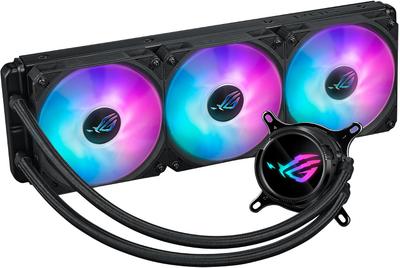

Specs and benchmarks
Brand
- ASUS ROG STRIX LC III 360 ARGB
- ASUS
- Cooler Master MasterLiquid ML360 Sub-Zero
- Cooler Master
Cooler Type
- ASUS ROG STRIX LC III 360 ARGB
- AIO Liquid
- Cooler Master MasterLiquid ML360 Sub-Zero
- AIO Liquid
Radiator Size
- ASUS ROG STRIX LC III 360 ARGB
- 360 mm
- Cooler Master MasterLiquid ML360 Sub-Zero
- 360 mm
Series
- ASUS ROG STRIX LC III 360 ARGB
- ASUS ROG STRIX LC III 360 ARGB
- Cooler Master MasterLiquid ML360 Sub-Zero
- Cooler Master MasterLiquid ML360 Sub-Zero
Model Number
- ASUS ROG STRIX LC III 360 ARGB
- 90RC00T1-M0AAY0
- Cooler Master MasterLiquid ML360 Sub-Zero
- MLZ-D36M-A19PK-12
Socket Compatibility
- ASUS ROG STRIX LC III 360 ARGB
- AMD AM4/AM5, Intel LGA1851/1700/1200/115X
- Cooler Master MasterLiquid ML360 Sub-Zero
- Intel LGA1200
Tower Layout
- ASUS ROG STRIX LC III 360 ARGB
- Not Applicable
- Cooler Master MasterLiquid ML360 Sub-Zero
- Not Applicable
Fan Count
- ASUS ROG STRIX LC III 360 ARGB
- 3
- Cooler Master MasterLiquid ML360 Sub-Zero
- 3
Fan Size
- ASUS ROG STRIX LC III 360 ARGB
- 120 mm
- Cooler Master MasterLiquid ML360 Sub-Zero
- 120 mm
Warranty
- ASUS ROG STRIX LC III 360 ARGB
- 6 yearsBest
- Cooler Master MasterLiquid ML360 Sub-Zero
- 5 years-17%


Which one should you pick?
Choose ASUS ROG STRIX LC III 360 ARGB if you want the higher radiator size (360 mm vs 360 mm), the higher fan count (3 vs 3) and the higher warranty (6 years vs 5 years).
Choose Cooler Master MasterLiquid ML360 Sub-Zero if you already have it on hand or find it at a lower price.
Price comparison
| Retailer | ASUS ROG STRIX LC III 360 ARGB | Cooler Master MasterLiquid ML360 Sub-Zero |
|---|---|---|
| Amazon | View on Amazon | |
| Newegg | View on Newegg |
Disclaimer: The price and specification of the given product may differ from the actual product. Please confirm on the retailer's website before buying.
Verdict
ASUS ROG STRIX LC III 360 ARGB
8.1 / 10 Expert Rating
A sensible mainstream entry point into ASUS's ROG cooling ecosystem for buyers who don't need the RYUJIN III's flagship display.
Cooler Master MasterLiquid ML360 Sub-Zero
7.9 / 10 Expert Rating
Remarkable thermal ceiling for extreme overclockers, but overkill and software-dependent for typical builds.