
Consumercarts is reader-supported. Learn more
Alienware Graphics Amplifier vs PowerColor Gaming Station: Comparison
Alienware Graphics Amplifier vs PowerColor Gaming Station: the extra ports difference
On extra ports the spread is 75%, Alienware Graphics Amplifier 4 against PowerColor Gaming Station 1, so Alienware Graphics Amplifier takes it. They differ on gpu compatibility too, GTX 10-series through RTX 20-series and equivalent AMD cards,... on the Alienware Graphics Amplifier versus AMD Radeon and NVIDIA cards up to RTX 20-series... on the PowerColor Gaming Station.
Who each one is for
it is not built for anyone wanting USB-C laptop charging through the eGPU cable. It is equally the pick for owners of a compatible older Alienware or Dell G-Series laptop with the Amplifier Port. It is the wrong buy for any laptop without the specific Alienware Graphics Amplifier Port, since the connector is proprietary. The PowerColor Gaming Station suits buyers who find remaining new-old-stock at a discount and anyone wanting a plain, RGB-free eGPU box with decent I/O, though it is not the pick for anyone wanting Thunderbolt 4/5 or USB4 bandwidth and buyers who need more than 60W of laptop charging. Avoid it for cards drawing near or above 375W, which push past its comfortable PSU headroom. Our rating of the Alienware Graphics Amplifier (6/10): strong bandwidth for its era, but locked to a short list of older Alienware and Dell G-Series laptops. Our rating of the PowerColor Gaming Station (6/10): competent Thunderbolt 3 box from a GPU maker, but discontinued and outpaced by newer standards.
Which is cheaper, Alienware Graphics Amplifier or PowerColor Gaming Station?
Cost splits them too. Alienware Graphics Amplifier sits at $299, PowerColor Gaming Station at $329, 10% more.
Frequently asked questions
Do the Alienware Graphics Amplifier and PowerColor Gaming Station differ on psu wattage?
Yes. PSU Wattage reads 460 W on the Alienware Graphics Amplifier versus 500 W on the PowerColor Gaming Station.
Is the Cooling Type the same on the Alienware Graphics Amplifier and PowerColor Gaming Station?
It is. Both are listed at Active Fan, so it is not a reason to pick one over the other.
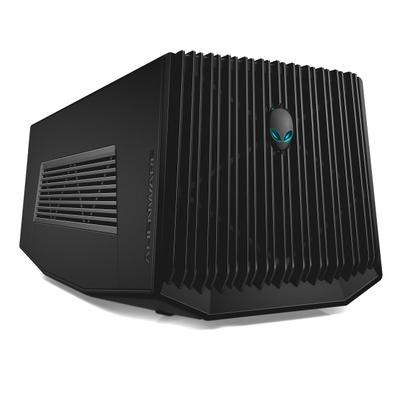

Specs and benchmarks
Brand
- Alienware Graphics Amplifier
- Alienware
- PowerColor Gaming Station
- PowerColor
Connection Standard
- Alienware Graphics Amplifier
- Proprietary
- PowerColor Gaming Station
- Thunderbolt 3
Model Number
- Alienware Graphics Amplifier
- Graphics Amplifier
- PowerColor Gaming Station
- Gaming Station
Extra Ports
- Alienware Graphics Amplifier
- 4Best
- PowerColor Gaming Station
- 1-75%
PSU Wattage
- Alienware Graphics Amplifier
- 460 W-8%
- PowerColor Gaming Station
- 500 WBest
Max GPU Length
- Alienware Graphics Amplifier
- 290 mm-6%
- PowerColor Gaming Station
- 310 mmBest
Cooling Type
- Alienware Graphics Amplifier
- Active Fan
- PowerColor Gaming Station
- Active Fan
GPU Compatibility
- Alienware Graphics Amplifier
- GTX 10-series through RTX 20-series and equivalent AMD cards, dual-slot
- PowerColor Gaming Station
- AMD Radeon and NVIDIA cards up to RTX 20-series / RX 6000-series, dual-slot
Price
- Alienware Graphics Amplifier
- Launched around $299 (2015)
- PowerColor Gaming Station
- Launched around $329 (2018)


Which one should you pick?
Choose Alienware Graphics Amplifier if you want the higher extra ports (4 vs 1).
Choose PowerColor Gaming Station if you want the higher PSU wattage (500 W vs 460 W) and the higher max GPU length (310 mm vs 290 mm).
Price comparison
| Retailer | Alienware Graphics Amplifier | PowerColor Gaming Station |
|---|---|---|
| Amazon | $299.00 View on Amazon | $329.00 View on Amazon |
| PowerColor | View on PowerColor |
Disclaimer: The price and specification of the given product may differ from the actual product. Please confirm on the retailer's website before buying.
Verdict
Alienware Graphics Amplifier
6 / 10 Expert Rating
Strong bandwidth for its era, but locked to a short list of older Alienware and Dell G-Series laptops.
PowerColor Gaming Station
6 / 10 Expert Rating
Competent Thunderbolt 3 box from a GPU maker, but discontinued and outpaced by newer standards.