
Consumercarts is reader-supported. Learn more
AMD Instinct MI210 vs AMD Radeon PRO W7500: Comparison
Instinct MI210 vs Radeon PRO W7500 tdp compared
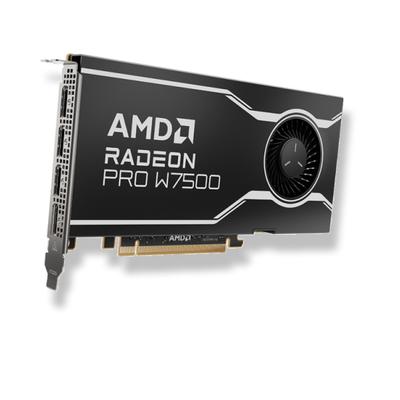
On tdp the spread is 329%, Instinct MI210 300 W against Radeon PRO W7500 70 W, so Radeon PRO W7500 takes it. Add vram to that, 64 GB on the Instinct MI210 versus 8 GB on the Radeon PRO W7500, and the pattern holds. Slot width runs the same way, 2 on the Instinct MI210 versus 1 on the Radeon PRO W7500, another win for Radeon PRO W7500. Instinct MI210 also leads on memory bus width, 4096 bit on the Instinct MI210 versus 128 bit on the Radeon PRO W7500. Add card length to that, 267 mm on the Instinct MI210 versus 167 mm on the Radeon PRO W7500, and the pattern holds. Boost clock runs the same way, 1700 MHz on the Instinct MI210 versus 2260 MHz on the Radeon PRO W7500, another win for Radeon PRO W7500.
Which should you buy, Instinct MI210 or Radeon PRO W7500?
The Instinct MI210 is the one to take for double-precision workloads that don't need MI250X-level throughput, though it is the wrong buy for any desktop or workstation build - compute-only, no display output and maximum-throughput HPC nodes (use MI250X instead). The same goes for HPC and AI deployments in standard PCIe-slot servers without OAM sled support. The Radeon PRO W7500 suits small-form-factor workstations needing AV1 hardware encode and basic CAD and 2D/3D content creation on a budget, though it is not built for CUDA-dependent professional 3D software and heavy rendering or simulation workloads.
Frequently asked questions
Do the Instinct MI210 and Radeon PRO W7500 differ on tier?
Yes. Tier reads Datacenter / AI Accelerator on the Instinct MI210 versus Entry on the Radeon PRO W7500.
Is the GPU Brand the same on the Instinct MI210 and Radeon PRO W7500?
It is. Both are listed at AMD, so it is not a reason to pick one over the other.

Specs and benchmarks
GPU Brand
- AMD Instinct MI210
- AMD
- AMD Radeon PRO W7500
- AMD
Series
- AMD Instinct MI210
- Instinct MI200
- AMD Radeon PRO W7500
- Radeon RX 7000
Board Partner
- AMD Instinct MI210
- AMD Reference (PCIe dual-slot card, data center/OEM only)
- AMD Radeon PRO W7500
- AMD Reference
VRAM
- AMD Instinct MI210
- 64 GBBest
- AMD Radeon PRO W7500
- 8 GB-87%
Tier
- AMD Instinct MI210
- Datacenter / AI Accelerator
- AMD Radeon PRO W7500
- Entry (Workstation)
Memory Type
- AMD Instinct MI210
- HBM2E
- AMD Radeon PRO W7500
- GDDR6Best
Boost Clock
- AMD Instinct MI210
- 1700 MHz-25%
- AMD Radeon PRO W7500
- 2260 MHzBest
Ray Tracing Support
- AMD Instinct MI210
- No
- AMD Radeon PRO W7500
- Yes
TDP
- AMD Instinct MI210
- 300 W-329%
- AMD Radeon PRO W7500
- 70 WBest
Architecture
- AMD Instinct MI210
- CDNA 2 (single Graphics Compute Die)
- AMD Radeon PRO W7500
- RDNA 3
Card Length
- AMD Instinct MI210
- 267 mm-60%
- AMD Radeon PRO W7500
- 167 mmBest
Slot Width
- AMD Instinct MI210
- 2-100%
- AMD Radeon PRO W7500
- 1Best
Compute Blocks
- AMD Instinct MI210
- 104
- AMD Radeon PRO W7500
- 28
Memory Bus Width
- AMD Instinct MI210
- 4096 bitBest
- AMD Radeon PRO W7500
- 128 bit-97%
PCIe Generation
- AMD Instinct MI210
- PCIe 4.0 x16
- AMD Radeon PRO W7500
- PCIe 4.0 x8


Which one should you pick?
Choose AMD Instinct MI210 if you want the higher VRAM (64 GB vs 8 GB) and the higher memory bus width (4096 bit vs 128 bit).
Choose AMD Radeon PRO W7500 if you want the higher boost clock (2260 MHz vs 1700 MHz), the lower TDP (70 W vs 300 W) and the lower card length (167 mm vs 267 mm).
Verdict
AMD Instinct MI210
7.3 / 10 Expert Rating
A practical, PCIe-slot-friendly way to get CDNA 2 compute into a standard server, useful for smaller HPC and AI deployments, but clearly the entry point of its generation next to the dual-die MI250X and now well behind the MI300 series.
AMD Radeon PRO W7500
6.8 / 10 Expert Rating
A strong entry-level workstation pick if AV1 encode or DisplayPort 2.1 output matter to your workflow; CUDA-dependent software users should still lean NVIDIA.