
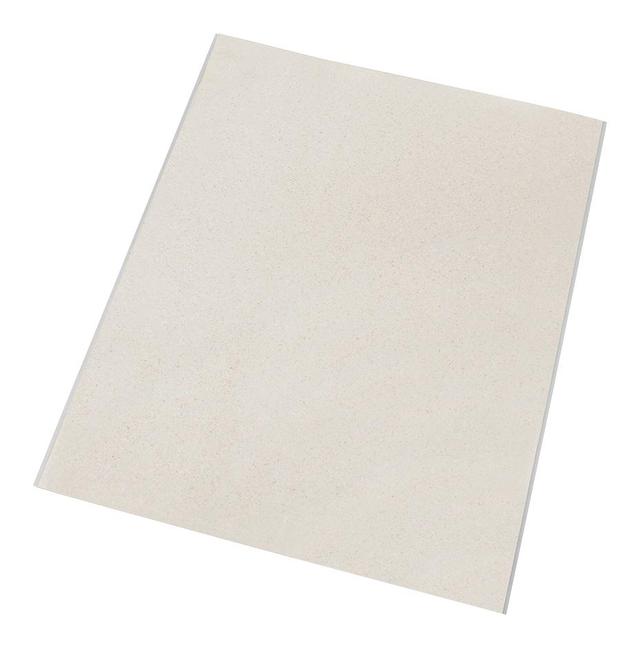
3M Thermally Conductive Acrylic Interface Pad 5590H
Expert rating6.6 / 10
- Compound Type:
- Acrylic-Based Pad
- Thermal Conductivity:
- 2.08 W/mK
- Electrical Conductivity:
- Non-Conductive
Consumercarts is reader-supported. Learn more
Disclaimer: The price and specification of the given product may differ from the actual product. Please confirm on the retailer's website before buying.
Manufacturer: 3M Last updated: 2026-10-06
Where to buy
- AmazonGo to store
- NewarkGo to store
3M Thermally Conductive Acrylic Interface Pad 5590H Review
3M 5590H is a non-silicone acrylic thermal interface pad rated 2.08 W/mK by ASTM D5470, sold in thicknesses from 0.5mm to 2.0mm.
3M 5590H is an industrial gap pad, and its reason to exist is chemistry, not conductivity. 3M's datasheet rates it at 2.08 W/mK typical (1.65 minimum) by ASTM D5470, low next to PC-focused pads, but it contains no intentionally added silicone, so there is no siloxane outgassing or oil bleed. It is UL94 V-0, insulating at 19.1 kV dielectric strength, and comes in 0.5 to 2.0mm thicknesses at 70 Shore 00. We'd use it near optics, displays or connectors where silicone contamination matters. For GPU memory or VRMs, Arctic TP-4 or Gelid GP-Ultimate move more heat.
Thermal Performance and Conductivity
3M's datasheet lists 2.08 W/mK typical, with a 1.65 W/mK minimum, measured by ASTM D5470. That is the same test standard Bergquist Gap Pad 2500S20 (2.4 W/mK) and Laird Tflex HR600 (3 W/mK) use in our catalog, so those three compare fairly.
It is a pad for parts that run warm, not hot. On a high-end GPU's memory, we'd want more.
Compound Type and Composition
5590H is a slightly tacky acrylic elastomer. 3M states it "does not contain intentionally added silicone, so there is not siloxane VOC or oil bleeding". Density is 2.14 g/cm3 and it carries a UL94 V-0 flammability listing.
Application and Consistency
3M sells it in 0.5, 1.0, 1.2, 1.5 and 2.0mm thicknesses, with tolerances from 0.10 to 0.20mm. Hardness is 70 Shore 00 (range 53 to 87), firmer than Arctic TP-4 at 50 and softer than Arctic TP-2 at 80.
3M doesn't publish a compression percentage, only that the compliant material allows pressure relaxation. Measure the gap and pick the thinnest pad that makes firm contact. It comes as sheets and die-cut shapes.
Electrical Safety
3M lists a dielectric strength of 19.1 kV (16.0 minimum) per ASTM D149 and a volume resistivity of 5.5 x 10^11 ohm-cm. It is an electrical insulator and safe against exposed traces and component leads.
Longevity and Pump-Out Resistance
As a solid pad, pump-out does not apply. 3M lists heat resistance tested at 110C for up to 1000 hours and recommends storage at 23C and 50% humidity. That heat-aging figure is a lower ceiling than PC pads like Arctic TP-4, rated -40C to 200C. 3M publishes no rated lifetime.
Comparison to Alternatives
Against Laird Tflex HR600 (3 W/mK, ASTM D5470), Laird wins on conductivity if silicone is acceptable. Against Bergquist Gap Pad 2500S20 (2.4 W/mK), the two are close on paper. Against Arctic TP-3 and TP-4, the Arctic pads target PC gap filling and are rated to higher temperatures.
Pick 5590H only when silicone-free is a requirement.
Who This Pad Is Actually For
Winner for: silicone-sensitive assemblies where siloxane outgassing or oil bleed would cause problems.
Good fit: power electronics, battery packs and display modules, which are the applications 3M lists.
Not for: high-end GPU memory or VRMs, where 2.08 W/mK leaves performance on the table.
Our verdict
Reviewed by Burooj Alam. Rated by us, not by users.
Expert rating6.6 / 10
An industrial acrylic interface pad from an established materials manufacturer, aimed at OEM and repair use rather than enthusiast builds.
Best for
- Silicone-sensitive assemblies near optics, displays or connectors
- Power electronics and battery gap filling
- General electronics where a UL94 V-0 insulating pad is required
Not for
- High-end GPU memory or VRM cooling
- Builds where silicone pads are acceptable and higher conductivity is wanted
Specifications
What these specs meanIdentity and form
| Brand | 3M |
|---|---|
| Model | 5590H |
Thermal performance
| Conductivity Source | https://multimedia.3m.com/mws/media/920112O/3m-thermally-conductive-acrylic-interface-pad-5590h-technical-data-sheet.pdf |
|---|
Electrical and board risk
| Paste Segment | Pad |
|---|
Application
| Viscosity | Firm, tacky acrylic polymer sheet |
|---|
| Compound Type | Acrylic Pad |
|---|---|
| Thermal Conductivity | 2.08 W/mK (ASTM D5470) |
| Electrical Conductivity | Insulating |
| Package Size | Sheets and die-cut shapes, 0.5/1.0/1.2/1.5/2.0mm thick |
| Recommended Use | Battery cooling, power electronics and HMI displays (general electronics gap filling) |
| Reapplication Interval | No reapplication needed; self-adhesive one-time application |
| Safety Notes | Non-conductive acrylic pad; no special handling precautions required |
FAQs
Does 3M 5590H contain silicone?
No intentionally added silicone. 3M states there is no siloxane VOC or oil bleeding, which is the main reason to choose it.
What is the real thermal conductivity of 3M 5590H?
3M's datasheet lists 2.08 W/mK typical and 1.65 W/mK minimum, measured by ASTM D5470. Some listings quote 3 W/mK; we go with the datasheet.
What thicknesses does 3M 5590H come in?
0.5, 1.0, 1.2, 1.5 and 2.0mm.
Is 3M 5590H electrically insulating?
Yes. 3M lists a dielectric strength of 19.1 kV and a volume resistivity of 5.5 x 10^11 ohm-cm.
Is 3M 5590H good for GPU VRAM?
It will work on lower-power cards, but at 2.08 W/mK it is not what we'd choose for a high-end GPU. Arctic TP-4 or Gelid GP-Ultimate suit that job better.
Compare and read more
- 3M Thermally Conductive Acrylic Interface Pad 5590H (Acrylic Pad/Non-Conductive/2.08 W/mK) vs StarTech SILV5-THERMAL-PASTE (Metal Oxide/Non-Conductive/5-Pack of Re-Sealable Syringes/IT Multi-Workstation Kit)
- 3M Thermally Conductive Acrylic Interface Pad 5590H (Acrylic Pad/Non-Conductive/2.08 W/mK) vs CS Labs K5-Pro (Silicone-Based/Non-Conductive/Viscous Thermal Pad Replacement Putty/5.3 W/mK)
- 3M Thermally Conductive Acrylic Interface Pad 5590H (Acrylic Pad/Non-Conductive/2.08 W/mK) vs EK-Quantum Vector³ RTX 5080/90 Thermal Pad Kit (Aluminum-Oxide Pad Set/Non-Conductive/Genuine Replacement for EK-Quantum Vector³ GPU Water Blocks)
- 3M Thermally Conductive Acrylic Interface Pad 5590H (Acrylic Pad/Non-Conductive/2.08 W/mK) vs Thermalright Extreme Odyssey 85x45mm Pad (Silicone-Based Pad/Non-Conductive/12.8 W/mK)
- 3M Thermally Conductive Acrylic Interface Pad 5590H (Acrylic Pad/Non-Conductive/2.08 W/mK) vs Phobya Thermal Pad Ultra 5W/mK (Pad/Non-Conductive/15x15x4mm)
- Best Thermal Paste for the RTX 50 Series (2026)
- How Often to Replace Thermal Paste (It Depends on What You Used)