
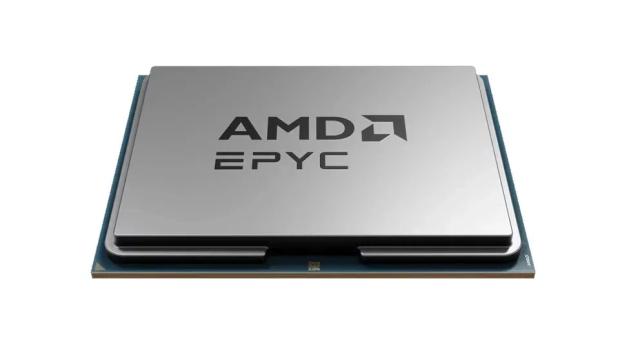
AMD EPYC 8434P
- Brand:
- AMD
- Form Factor:
- Server & Enthusiast
- CPU Socket:
- SP6
- Core/Thread Count:
- 48C/96T
- TDP:
- 200W
- CPU Series:
- EPYC 8004 Series
Consumercarts is reader-supported. Learn more
Disclaimer: The price and specification of the given product may differ from the actual product. Please confirm on the retailer's website before buying.
Manufacturer: AMD Last updated: October 9, 2026
AMD EPYC 8434P Review
AMD EPYC 8434P server processor, 48C/96T 2.5 GHz base clock, boosting up to 3.1 ghz, 200W TDP, SP6 platform.
The AMD EPYC 8434P is an AMD EPYC server processor in the EPYC 8004 Series lineup, offering 48C/96T running at 2.5 GHz base clock, boosting up to 3.1 ghz with 128 MB of L3 cache, within a 200W power envelope on AMD's SP6 platform in 1P configurations.
Performance and Architecture
With 48C/96T, the AMD EPYC 8434P runs at 2.5 GHz base clock, boosting up to 3.1 ghz. It carries 128 MB of L3 cache to keep large working sets close to the cores. As part of AMD's EPYC server lineup, it targets dense multi-socket compute, virtualization, and datacenter workloads.
Platform and Memory
The AMD EPYC 8434P is built for AMD's SP6 platform, supporting 1P socket configurations. It supports DDR5 memory across 6 channels (Up to 4800 MT/s). I/O runs over PCIe 5.0 x96.
Comparison to Alternatives
Within the EPYC 8004 Series lineup in this catalog, the AMD EPYC 8434P is positioned by its core count, clock speed, and TDP relative to other EPYC parts in the same generation. Buyers should weigh core density against per-core clock speed depending on whether the target workload favors many parallel threads or fewer, faster ones.
Our verdict
Reviewed by Burooj Alam. Rated by us, not by users.
Best for
- Datacenter and cloud compute
- Virtualization-dense server workloads
- Multi-socket enterprise deployments
Not for
- Consumer desktop builds
- Single-threaded latency-sensitive workloads on lower core-count SKUs
- Budget-constrained small business servers
Specifications
What these specs meanIdentity
| Brand | AMD |
|---|---|
| Model Number | 8434P |
| Product Family | EPYC 8004 Series |
| Release Year | 2023 |
| Segment | Data Center |
Cores and threads
| Core Count | 48 cores |
|---|---|
| Thread Count | 96 threads |
| Core Architecture | Zen 4c |
| SMT Support | Yes |
Clocks
| Base Clock | 2.5 GHz |
|---|---|
| Boost Clock | 3.1 GHz |
| All-Core Boost | 3.1 GHz |
Cache
| L3 Cache | 128 MB |
|---|
Platform
| Socket | SP6 |
|---|---|
| Multi-Socket Support | 1P |
Memory
| Memory Channels | 6 channels |
|---|---|
| Max Memory Speed | 4800 MT/s |
| ECC Support | Yes |
| Memory Bandwidth | 230.4 GB/s |
PCIe and IO
| PCIe Lanes | 96 lanes |
|---|---|
| PCIe Generation | PCIe 5.0 |
Power and thermals
| TDP | 200 W |
|---|---|
| Configurable TDP Max | 155-225W |
Accelerators and security
| AVX-512 Support | Yes |
|---|
| CPU Socket | SP6 |
|---|
Measured results
SPEC CPU 2017
Best published result on spec.org as of 23 Sept 2026.
| SPECrate® 2017 Integer (base) | 423 |
Cores 48 · Tested in ProLiant DL145 Gen11 (2.50 GHz, AMD EPYC 8434P) · Published by Hewlett Packard Enterprise, Nov-2024
Full disclosure on spec.org| SPECrate® 2017 Floating Point (base) | 370 |
Cores 48 · Tested in ThinkEdge SE455 V3 (2.50 GHz, AMD EPYC 8434P) · Published by Lenovo Global Technology, Dec-2025
Full disclosure on spec.orgSPEC®, SPECrate® and SPECspeed® are registered trademarks of the Standard Performance Evaluation Corporation. Copied by permission of the Standard Performance Evaluation Corporation (SPEC). Results retrieved from www.spec.org on 23 Sept 2026.
FAQs
What are the key specifications of the AMD EPYC 8434P?
The AMD EPYC 8434P has a 2.5 GHz base and 3.1 GHz boost clock, 128 MB of L3 cache and a 200 W TDP. Socket: SP6.
Who is the AMD EPYC 8434P best suited to?
Best suited to: Datacenter and cloud compute; Virtualization-dense server workloads; Multi-socket enterprise deployments.
What are the drawbacks of the AMD EPYC 8434P?
Not the best fit for: Consumer desktop builds; Single-threaded latency-sensitive workloads on lower core-count SKUs; Budget-constrained small business servers.