
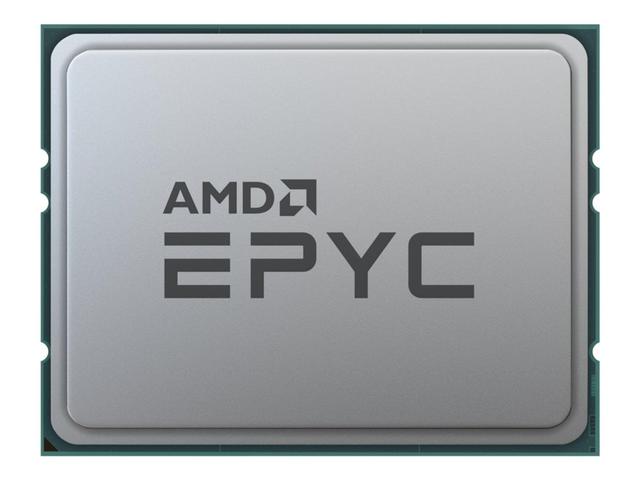
AMD EPYC 9375F
Expert rating8.9 / 10
- Brand:
- AMD
- Form Factor:
- Server & Enthusiast
- CPU Socket:
- SP5
- Core/Thread Count:
- 32C/64T
- TDP:
- 320W
- iGPU:
- None
- CPU Series:
- EPYC
Consumercarts is reader-supported. Learn more
Disclaimer: The price and specification of the given product may differ from the actual product. Please confirm on the retailer's website before buying.
Manufacturer: AMD Last updated: 2026-10-10
AMD EPYC 9375F Review
AMD EPYC 9375F 32-core 64-thread SP5 server processor, 3.8GHz base / 4.4GHz boost, 320W TDP, 256MB L3 cache, Zen 5 "Turin"
The EPYC 9375F is a frequency-optimized EPYC processor built for per-core licensed software (databases, EDA tools) where clock speed matters more than raw core count. Built on Zen 5 "Turin" and rated for 320W, it pairs 32 cores and 64 threads with a 3.8GHz base clock that boosts up to 4.4GHz, backed by 256MB of L3 cache on AMD's SP5 server platform.
Core Count and Workload Fit
With 32 cores and 64 threads, the EPYC 9375F is built for data center workloads that scale across many cores: virtualization hosts, container orchestration, databases, and web-tier fleets. Base clock of 3.8GHz with boost to 4.4GHz means per-thread performance is a priority for this SKU, not an afterthought. The 256MB L3 cache keeps per-core cache allocation reasonable for the socket.
Platform, Memory, and Cooling
The EPYC 9375F runs on AMD's SP5 platform with 12-channel DDR5 memory support and up to 128 PCIe 5.0 lanes per socket, giving it enormous memory bandwidth and I/O headroom for NVMe storage arrays and high-speed networking. It supports both single-socket (1P) and dual-socket (2P) server designs, giving system builders flexibility on scale. At 320W, it requires server-grade cooling: high-static-pressure fans and a chassis designed for sustained data-center airflow, not a repurposed desktop tower.
Comparison to Alternatives
Against a core-dense EPYC SKU like the EPYC 9654 in this catalog, the EPYC 9375F gives up core count for meaningfully higher clocks, which matters directly for per-core-licensed database and EDA software where license cost scales with cores, not threads. Compared to Intel Xeon W workstation parts in this catalog, it adds genuine dual-socket server scalability and far more memory channels. It is the right EPYC pick when licensing costs favor fewer, faster cores over many slower ones.
Our verdict
Reviewed by Burooj Alam. Rated by us, not by users.
Expert rating8.9 / 10
The EPYC 9375F is the right call when per-core software licensing makes clock speed worth more than core count.
Best for
- Per-core licensed databases (Oracle, SQL Server)
- EDA tools billed per core
- Latency-sensitive server workloads
Not for
- Massively parallel batch jobs
- Cost-per-core-sensitive deployments
- Workloads that scale linearly with cores
Specifications
What these specs meanCores and threads
| Core Count | 32 cores |
|---|---|
| Thread Count | 64 threads |
| Core Architecture | Zen 5 "Turin" |
Clocks
| Base Clock | 3.8 GHz |
|---|---|
| Boost Clock | 4.4 GHz |
Cache
| L3 Cache | 256 MB |
|---|
Platform
| Socket | SP5 |
|---|---|
| Multi-Socket Support | 1P/2P |
Memory
| Memory Channels | 12 channels |
|---|---|
| ECC Support | Yes |
Power and thermals
| TDP | 320 W |
|---|
Measured results
SPEC CPU 2017
Best published result on spec.org as of 23 Sept 2026.
| SPECrate® 2017 Integer (base) | 535 |
Cores 32 · Tested in ASUS RS520QA-E13-RS8U (3.80 GHz, AMD EPYC 9375F) · Published by ASUSTeK Computer Inc., Dec-2025
Full disclosure on spec.org| SPECrate® 2017 Floating Point (base) | 718 |
Cores 32 · Tested in ASUS RS520QA-E13-RS8U (3.80 GHz, AMD EPYC 9375F) · Published by ASUSTeK Computer Inc., Dec-2025
Full disclosure on spec.org| SPECrate® 2017 Integer (base) | 1,070 |
Cores 64 · Tested in ASUS RS720A-E13-RS8U (3.80 GHz, AMD EPYC 9375F) · Published by ASUSTeK Computer Inc., Jun-2025
Full disclosure on spec.org| SPECrate® 2017 Floating Point (base) | 1,470 |
Cores 64 · Tested in FusionServer 2258H V8 (AMD EPYC 9375F) · Published by xFusion, Nov-2025
Full disclosure on spec.orgSPEC®, SPECrate® and SPECspeed® are registered trademarks of the Standard Performance Evaluation Corporation. Copied by permission of the Standard Performance Evaluation Corporation (SPEC). Results retrieved from www.spec.org on 23 Sept 2026.
Measured results
SPEC CPU 2026
| SPECrate® 2026 Floating Point (base) | 273 | 1-chip system · CloudDC A+ Server AS -1116CS-TN (H14SHM , AMD EPYC 9375F). Licensee: Advanced Micro Devices (AMD). Published May-2026. · Source |
| SPECrate® 2026 Floating Point (base) | 577 | 2-chip system · QR8218-D3 (AMD EPYC 9375F). Licensee: Maginfra Co., Ltd. Published Jul-2026. · Source |
| SPECrate® 2026 Integer (base) | 200 | 1-chip system · CloudDC A+ Server AS -1116CS-TN (H14SHM , AMD EPYC 9375F). Licensee: Advanced Micro Devices (AMD). Published May-2026. · Source |
| SPECrate® 2026 Integer (base) | 421 | 2-chip system · QR8218-D3 (AMD EPYC 9375F). Licensee: Maginfra Co., Ltd. Published Jul-2026. · Source |
Best published base result for this chip count at www.spec.org as of 23 Sep 2026. SPEC CPU 2026 scores are not comparable with SPEC CPU 2017 scores.
Retrieved 23 Sept 2026
SPEC®, SPECrate® and SPEC CPU® are registered trademarks of the Standard Performance Evaluation Corporation. Copied by permission of the Standard Performance Evaluation Corporation (SPEC). Results retrieved from www.spec.org on 23 Sep 2026. More information: www.spec.org/cpu2026/
FAQs
What are the key specifications of the AMD EPYC 9375F?
The AMD EPYC 9375F has 32 cores and 64 threads, a 3.8 GHz base and 4.4 GHz boost clock, 256 MB of L3 cache and a 320 W TDP. Socket: SP5.
Will the AMD EPYC 9375F work with my current setup?
The AMD EPYC 9375F lists Socket is SP5. Check that against the hardware you already own before buying, since this is the field that most often decides whether a part fits.
Who is the AMD EPYC 9375F best suited to?
Best suited to: Per-core licensed databases (Oracle, SQL Server); EDA tools billed per core; Latency-sensitive server workloads.
What are the drawbacks of the AMD EPYC 9375F?
Not the best fit for: Massively parallel batch jobs; Cost-per-core-sensitive deployments; Workloads that scale linearly with cores.