
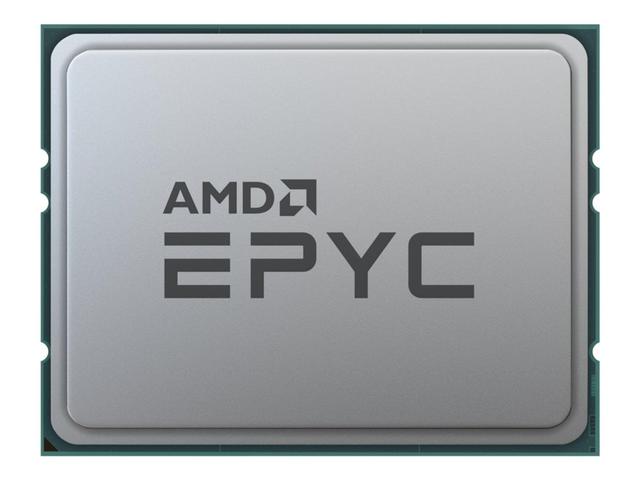
AMD EPYC 9384X
Expert rating9 / 10
- Brand:
- AMD
- Form Factor:
- Server & Enthusiast
- CPU Socket:
- SP5
- Core/Thread Count:
- 32C/64T
- TDP:
- 320W
- iGPU:
- None
- CPU Series:
- EPYC
Consumercarts is reader-supported. Learn more
Disclaimer: The price and specification of the given product may differ from the actual product. Please confirm on the retailer's website before buying.
Manufacturer: AMD Last updated: 2026-09-11
AMD EPYC 9384X Review
AMD EPYC 9384X 32-core 64-thread SP5 server processor, 3.1GHz base / 3.9GHz boost, 320W TDP, 768MB L3 cache, Zen 4 "Genoa"
The EPYC 9384X is a 3D V-Cache EPYC processor with a huge L3 cache built for technical computing and EDA workloads that are highly cache-sensitive. Built on Zen 4 "Genoa" and rated for 320W, it pairs 32 cores and 64 threads with a 3.1GHz base clock that boosts up to 3.9GHz, backed by 768MB of L3 cache on AMD's SP5 server platform.
Core Count and Workload Fit
With 32 cores and 64 threads, the EPYC 9384X is built for data center workloads that scale across many cores: virtualization hosts, container orchestration, databases, and web-tier fleets. Base clock of 3.1GHz with boost to 3.9GHz means per-thread performance is a priority for this SKU, not an afterthought. The 768MB L3 cache is unusually large for this core count, helping cache-sensitive technical computing and EDA workloads avoid memory latency.
Platform, Memory, and Cooling
The EPYC 9384X runs on AMD's SP5 platform with 12-channel DDR5 memory support and up to 128 PCIe 5.0 lanes per socket, giving it enormous memory bandwidth and I/O headroom for NVMe storage arrays and high-speed networking. It supports both single-socket (1P) and dual-socket (2P) server designs, giving system builders flexibility on scale. At 320W, it requires server-grade cooling: high-static-pressure fans and a chassis designed for sustained data-center airflow, not a repurposed desktop tower.
Comparison to Alternatives
Compared to a standard-cache EPYC SKU at a similar core count in this catalog, the EPYC 9384X costs more but delivers a meaningful uplift on cache-sensitive EDA and technical computing workloads where the extra L3 cache reduces memory stalls. Against the Threadripper PRO workstation lineup in this catalog, it trades single-socket simplicity for genuine dual-socket server scalability and 12-channel ECC memory bandwidth. It is a narrower recommendation than AMD's mainstream EPYC SKUs, worth it only when the workload is proven to be cache-bound.
Our verdict
Reviewed by Burooj Alam. Rated by us, not by users.
Expert rating9 / 10
The EPYC 9384X is a specialist chip: exceptional for cache-bound EDA and technical computing, overkill for anything else.
Best for
- EDA and chip design workloads
- Technical computing with large working sets
- Cache-sensitive financial simulation
Not for
- General-purpose virtualization
- Budget-conscious deployments
- Workloads that don't stress L3 cache
Specifications
What these specs meanCores and threads
| Core Count | 32 cores |
|---|---|
| Thread Count | 64 threads |
| Core Architecture | Zen 4 "Genoa" |
Clocks
| Base Clock | 3.1 GHz |
|---|---|
| Boost Clock | 3.9 GHz |
Cache
| L3 Cache | 768 MB |
|---|
Platform
| Socket | SP5 |
|---|---|
| Multi-Socket Support | 1P/2P |
Memory
| Memory Channels | 12 channels |
|---|---|
| ECC Support | Yes |
Power and thermals
| TDP | 320 W |
|---|
Measured results
SPEC CPU 2017
Best published result on spec.org as of 23 Sept 2026.
| SPECrate® 2017 Integer (base) | 411 |
Cores 32 · Tested in ASUS RS520A-E12-RS12U (3.10 GHz, AMD EPYC 9384X) · Published by ASUSTeK Computer Inc., Nov-2023
Full disclosure on spec.org| SPECrate® 2017 Floating Point (base) | 480 |
Cores 32 · Tested in ASUS RS520A-E12-RS12U (3.10 GHz, AMD EPYC 9384X) · Published by ASUSTeK Computer Inc., Nov-2023
Full disclosure on spec.org| SPECrate® 2017 Integer (base) | 867 |
Cores 64 · Tested in Cisco UCS X215c M8 (AMD EPYC 9384X 3.10 GHz Processor) · Published by Cisco Systems, Feb-2025
Full disclosure on spec.org| SPECrate® 2017 Floating Point (base) | 1,050 |
Cores 64 · Tested in Cisco UCS X215c M8 (AMD EPYC 9384X 3.10 GHz Processor) · Published by Cisco Systems, Feb-2025
Full disclosure on spec.orgSPEC®, SPECrate® and SPECspeed® are registered trademarks of the Standard Performance Evaluation Corporation. Copied by permission of the Standard Performance Evaluation Corporation (SPEC). Results retrieved from www.spec.org on 23 Sept 2026.
FAQs
What are the key specifications of the AMD EPYC 9384X?
The AMD EPYC 9384X has 32 cores and 64 threads, a 3.1 GHz base and 3.9 GHz boost clock, 768 MB of L3 cache and a 320 W TDP. Socket: SP5.
Will the AMD EPYC 9384X work with my current setup?
The AMD EPYC 9384X lists Socket is SP5. Check that against the hardware you already own before buying, since this is the field that most often decides whether a part fits.
Who is the AMD EPYC 9384X best suited to?
Best suited to: EDA and chip design workloads; Technical computing with large working sets; Cache-sensitive financial simulation.
What are the drawbacks of the AMD EPYC 9384X?
Not the best fit for: General-purpose virtualization; Budget-conscious deployments; Workloads that don't stress L3 cache.