
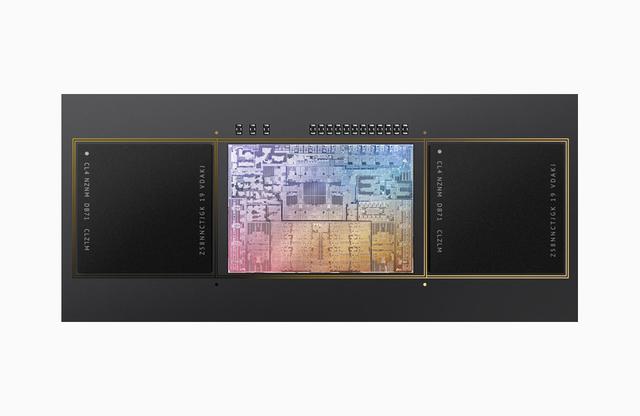
Apple M1 Pro 16-Core GPU
Expert rating6.2 / 10
- GPU Brand:
- Apple
- Tier:
- Integrated (full config)
- GPU Cores:
- 16
- Process Node:
- 5nm (TSMC N5)
- Memory Type:
- Unified
- Max Unified Memory:
- 32GB
- Memory Bandwidth:
- 200GB/s
- PC-Installable:
- No
Consumercarts is reader-supported. Learn more
Disclaimer: The price and specification of the given product may differ from the actual product. Please confirm on the retailer's website before buying.
Manufacturer: Apple Last updated: September 12, 2026
Apple M1 Pro 16-Core GPU (Integrated Graphics/Apple Silicon 5nm/16-Core GPU/Up to 32GB Unified Memory/Not PC-Installable) Review
The Apple M1 Pro 16-core GPU is the full graphics configuration of the original M1 Pro chip, launched in late 2021 with 16 GPU cores, up to 32GB of unified memory, and 200GB/s of memory bandwidth on a 5nm process, in the top-spec 14-inch and 16-inch MacBook Pro.
This was the chip that ended the 16-inch MacBook Pro's Intel-and-dGPU era, replacing a discrete AMD Radeon Pro GPU with an integrated part that ran cooler, lasted longer on battery, and still handled professional Final Cut Pro and Logic Pro workloads convincingly. It has no ray tracing hardware, unlike the M3 Pro that eventually replaced it, but for buyers not chasing that specific feature, its 200GB/s bandwidth actually matches what Apple later shipped in the M2 Pro.
The Chip That Replaced Discrete GPUs in the MacBook Pro
Apple's original M1 Pro 16-core GPU proved that an integrated, unified-memory design could replace the discrete AMD GPUs that previous 16-inch MacBook Pro models relied on, at a fraction of the power draw.
Comparison to Alternatives
Against the Apple M1 Max 24-Core GPU sold in the same 2021 lineup, this chip gives up 8 GPU cores and half the memory bandwidth in exchange for a lower price and smaller footprint, the right call for buyers not doing GPU-bound professional 3D or video work. Against the NVIDIA RTX A3000 Laptop GPU already in this catalog, a contemporary workstation-class mobile GPU, the M1 Pro lacks CUDA and hardware ray tracing entirely, but delivers comparable creative-app performance at meaningfully better battery life.
Specifications
Performance
| Memory Type | Unified LPDDR5 |
|---|
Silicon
| Process Node | 5nm (TSMC N5) |
|---|
Memory
| Memory Bandwidth | 200 GB/s |
|---|
| Brand | Apple |
|---|---|
| Model | M1 Pro 16-Core GPU |
| GPU | Apple M1 Pro (integrated, full config) |
| GPU Cores | 16 |
| Paired CPU Config | 10-core CPU (8P+2E) |
| Max Unified Memory | 32GB |
| Estimated FP32 Compute | ~5.2 TFLOPS |
| Found In | 14-inch/16-inch MacBook Pro, Late 2021 (top-spec Pro configuration) |
| PC-Installable | No |
Expert Review
Reviewed by Burooj Alam. Rated by us, not by users.
Expert rating6.2 / 10
The chip that proved Apple Silicon could replace discrete laptop GPUs for creative work; dated next to newer ray-tracing-capable chips but still solid for Metal-native editing.
Best for
- Video editors and podcasters running Final Cut Pro or Logic Pro on a 2021-era MacBook Pro.
- Photographers and designers using Metal-accelerated Lightroom or Photoshop workflows.
- Buyers prioritizing battery life and quiet operation over peak GPU throughput.
Not for
- Workloads needing hardware ray tracing, which Apple only added starting with the M3 generation.
- Dense 3D rendering or heavy color grading, where the M1 Max's extra cores and bandwidth matter more.
- Native Windows gaming or CUDA-dependent professional software.
FAQs
What are the key specifications of the Apple M1 Pro 16-Core GPU (Integrated Graphics/Apple Silicon 5nm/16-Core GPU/Up to 32GB Unified Memory/Not PC-Installable)?
The Apple M1 Pro 16-Core GPU (Integrated Graphics/Apple Silicon 5nm/16-Core GPU/Up to 32GB Unified Memory/Not PC-Installable) is a graphics card from Apple. Key specs: GPU Apple M1 Pro (integrated, full config), GPU Cores 16, Process Node 5nm (TSMC N5), Paired CPU Config 10-core CPU (8P+2E), Memory Type Unified LPDDR5.
Who is the Apple M1 Pro 16-Core GPU (Integrated Graphics/Apple Silicon 5nm/16-Core GPU/Up to 32GB Unified Memory/Not PC-Installable) best suited to?
It suits video editors and podcasters running final cut pro or logic pro on a 2021-era macbook pro., photographers and designers using metal-accelerated lightroom or photoshop workflows., buyers prioritizing battery life and quiet operation over peak gpu throughput..
What are the drawbacks of the Apple M1 Pro 16-Core GPU (Integrated Graphics/Apple Silicon 5nm/16-Core GPU/Up to 32GB Unified Memory/Not PC-Installable)?
It is a poor fit for workloads needing hardware ray tracing, which apple only added starting with the m3 generation., dense 3d rendering or heavy color grading, where the m1 max's extra cores and bandwidth matter more., native windows gaming or cuda-dependent professional software..
Compare and read more
- Acer Predator BiFrost OC Arc A770 vs Apple M1 Pro 16-Core GPU (Integrated Graphics/Apple Silicon 5nm/16-Core GPU/Up to 32GB Unified Memory/Not PC-Installable)
- AMD Instinct MI210 vs Apple M1 Pro 16-Core GPU (Integrated Graphics/Apple Silicon 5nm/16-Core GPU/Up to 32GB Unified Memory/Not PC-Installable)
- AMD Instinct MI250 vs Apple M1 Pro 16-Core GPU (Integrated Graphics/Apple Silicon 5nm/16-Core GPU/Up to 32GB Unified Memory/Not PC-Installable)
- AMD Instinct MI100 vs Apple M1 Pro 16-Core GPU (Integrated Graphics/Apple Silicon 5nm/16-Core GPU/Up to 32GB Unified Memory/Not PC-Installable)