
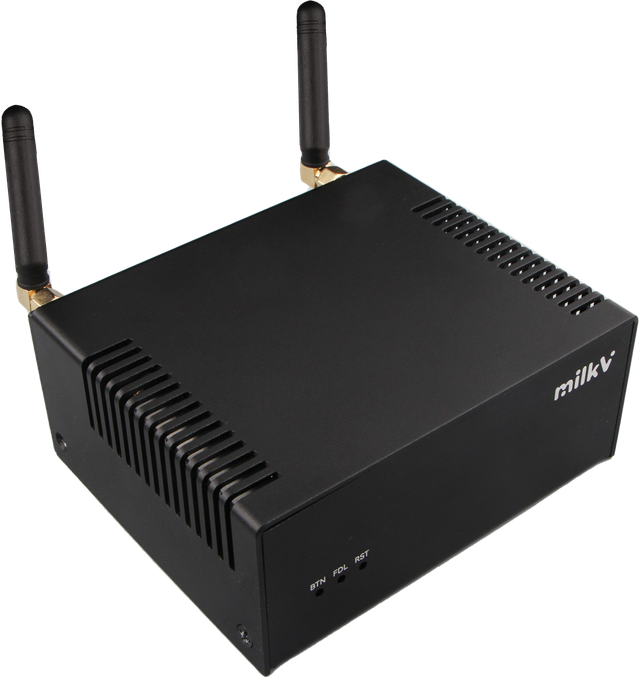
Milk-V Jupiter 2
Expert rating7 / 10
- SoC:
- SpacemiT K3 (RISC-V
- CPU:
- 8x X100 RISC-V cores @ 2.4GHz
- NPU:
- Up to 60 TOPS (manufacturer-claimed)
- Networking:
- 10GbE SFP+ + GbE RJ45
Consumercarts is reader-supported. Learn more
Disclaimer: The price and specification of the given product may differ from the actual product. Please confirm on the retailer's website before buying.
Manufacturer: Milk-V Last updated: 2026-09-14
Milk-V Jupiter 2 (SpacemiT K3 RISC-V/8-Core X100 2.4GHz/60 TOPS NPU Claim/Up to 32GB LPDDR5/10GbE SFP+/Pico-ITX) Review
If you're comparing the Milk-V Jupiter 2 against the original Jupiter, this is the sequel built around SpacemiT's new K3 RISC-V chip instead of the older SG2042.
It's built in a Pico-ITX form factor (100 x 86mm) and looks a lot more like a mini PC board than a hobbyist SBC, complete with a 10GbE SFP+ port, USB-C power delivery input, and Ubuntu 26.04 support alongside Milk-V's own Bianbu distro. The 60 TOPS NPU number is the same manufacturer claim you'll see on every K3-based board right now (including the Banana Pi BPI-SM10), so weigh it as marketing until reviewers get hands-on benchmarks.
Overview
Jupiter 2 swaps the original Jupiter's SG2042 server chip for SpacemiT's new K3, and the result is a much more balanced, general-purpose RISC-V PC board rather than a many-core server curiosity. You get 8 X100 cores at up to 2.4GHz, LPDDR5 scaling to 32GB, onboard UFS storage up to 256GB, and an NVMe M.2 slot, plus real desktop-class OS support including mainline Ubuntu 26.04 and Fedora. The Pico-ITX layout (100 x 86mm) means it's built to slot into a mini-PC or embedded chassis rather than sit exposed on a desk with GPIO headers hanging off it, there isn't a traditional GPIO header on this board.
Performance & Connectivity
The standout spec here isn't the CPU, it's the networking: a 10GbE SFP+ port alongside a standard gigabit RJ45, which is unusual at this price point and price range for an SBC-class board. Combine that with WiFi 6, dual USB-C (one carrying DisplayPort Alt Mode video out and USB-PD power in), and four USB 2.0 Type-A ports, and this reads like Milk-V is targeting NAS, edge networking, and light desktop workloads as much as pure AI inference. On the AI side, the 60 TOPS NPU claim mirrors what SpacemiT is telling every K3 board partner, and just like the BPI-SM10, we have no independent numbers yet since the K3 only started shipping in 2026. Treat it as promising, unproven silicon rather than a settled spec.
Comparison to Alternatives
For RISC-V boards with actual track records, the Sipeed LicheePi 4A and StarFive VisionFive 2 both have years of community support, mainline kernel patches, and known-good distro images, something the K3 ecosystem doesn't have yet. If you specifically need 10GbE on an SBC, there's not much RISC-V competition at all, you'd normally be looking at x86 boards for that. Compared to the Banana Pi BPI-SM10, which uses the same K3 chip, the Jupiter 2 is the more finished, PC-like product (Pico-ITX form factor, proper case-ready connectors, mainline Ubuntu) while the BPI-SM10 is closer to raw compute-module silicon for embedding into another design. If you want K3 RISC-V in a usable box today, Jupiter 2 is the more turnkey pick of the two.
Specifications
Identity
| Brand | Milk-V |
|---|
Processor
| CPU Cores | 8 cores |
|---|
Networking
| PoE Support | false |
|---|
Power
| Power Input | USB-C USB-PD 65W, or 12V 2-pin ATX-style input |
|---|
| CPU Architecture | RISC-V |
|---|---|
| Memory | 32 GB |
| Storage Type | Onboard UFS (up to 256GB), NVMe / M.2 |
| Has AI Accelerator / NPU | Yes |
| Wireless | WiFi 6, Bluetooth 5.2 |
| GPIO Header | No |
| Price | 300 USD |
| Use Case | AI / Machine Learning |
| SoC | SpacemiT K3 (Key Stone), RVA23 RISC-V profile |
| Memory Options | 8GB ($300), 16GB ($380), 32GB ($575) LPDDR5 @ 6400MT/s, dual-channel |
| PCIe / M.2 Slot | Yes - M.2 2280 Key M (PCIe Gen3 x4, NVMe), M.2 Key B (PCIe Gen3 x2 + USB, for 4G/5G modem) with Nano SIM slot |
| NPU Performance | 8x A100 AI cores, up to 60 TOPS (manufacturer-claimed; INT4/INT8/FP8/INT16/FP16/BF16; no independent benchmarks published yet) |
| GPU | IMG BXM-4-64-MC1 (Vulkan 1.3, OpenCL 3.0, OpenGL ES 3.2); 4K120 video decode, 4K60 encode |
| Ethernet | Dual 1G |
| Video Output | USB-C DisplayPort Alt Mode (4K60), eDP up to 2560x1440 @ 90Hz |
| OS Support | Bianbu 3.0, Ubuntu 26.04, OpenHarmony 6.0, OpenKylin, Deepin, Fedora |
| Board Size | 100 x 86mm (Pico-ITX) |
| RTC / Battery Header | Not documented |
| PCIe Lanes | M.2 Key M: PCIe Gen3 x4; M.2 Key B: PCIe Gen3 x2 + USB |
| Camera / Display Connectors | eDP, USB-C DisplayPort Alt Mode (no MIPI-CSI camera connector documented) |
| USB Ports | 2x USB 3.2 Gen1 Type-C, 4x USB 2.0 Type-A |
| Power Consumption | Not separately published; bounded by the 65W USB-PD input |
| Operating Temperature | Not published by Milk-V as of Sep 2026 |
| Cooling Accessories | Not documented at launch |
| Board Revision | Jupiter2 (successor to the original Milk-V Jupiter) |
Expert Review
Reviewed by Burooj Alam. Rated by us, not by users.
Expert rating7 / 10
The most usable K3 RISC-V board so far, thanks to real OS support and a 10GbE port most SBCs don't have. Still, the 60 TOPS NPU figure is unverified marketing until independent reviewers get hold of it.
Best for
- RISC-V enthusiasts who want a board that behaves like a real desktop/NAS PC, not just a dev kit
- Home-lab or edge-networking builds that want 10GbE SFP+ without going full x86
- Early adopters willing to accept an immature software stack for cutting-edge RISC-V hardware
Not for
- Anyone who needs GPIO pins for physical computing or robotics projects
- Buyers who need a verified NPU benchmark rather than a manufacturer TOPS claim
- Beginners who want a mainstream, well-documented ARM board like a Raspberry Pi
FAQs
What are the key specifications of the Milk-V Jupiter 2 (SpacemiT K3 RISC-V/8-Core X100 2.4GHz/60 TOPS NPU Claim/Up to 32GB LPDDR5/10GbE SFP+/Pico-ITX)?
The Milk-V Jupiter 2 (SpacemiT K3 RISC-V/8-Core X100 2.4GHz/60 TOPS NPU Claim/Up to 32GB LPDDR5/10GbE SFP+/Pico-ITX) is a single board computer from Milk-V. Key specs: SoC SpacemiT K3 (Key Stone), RVA23 RISC-V profile, CPU Architecture RISC-V, CPU Cores 8, Memory 32, Memory Options 8GB ($300), 16GB ($380), 32GB ($575) LPDDR5 @ 6400MT/s, dual-channel.
Will the Milk-V Jupiter 2 (SpacemiT K3 RISC-V/8-Core X100 2.4GHz/60 TOPS NPU Claim/Up to 32GB LPDDR5/10GbE SFP+/Pico-ITX) work with my current setup?
The Milk-V Jupiter 2 (SpacemiT K3 RISC-V/8-Core X100 2.4GHz/60 TOPS NPU Claim/Up to 32GB LPDDR5/10GbE SFP+/Pico-ITX) lists SoC is SpacemiT K3 (Key Stone), RVA23 RISC-V profile. Check that against the hardware you already own before buying, since this is the field that most often decides whether a part fits.
Who is the Milk-V Jupiter 2 (SpacemiT K3 RISC-V/8-Core X100 2.4GHz/60 TOPS NPU Claim/Up to 32GB LPDDR5/10GbE SFP+/Pico-ITX) best suited to?
It suits risc-v enthusiasts who want a board that behaves like a real desktop/nas pc, not just a dev kit, home-lab or edge-networking builds that want 10gbe sfp+ without going full x86, early adopters willing to accept an immature software stack for cutting-edge risc-v hardware.
What are the drawbacks of the Milk-V Jupiter 2 (SpacemiT K3 RISC-V/8-Core X100 2.4GHz/60 TOPS NPU Claim/Up to 32GB LPDDR5/10GbE SFP+/Pico-ITX)?
It is a poor fit for anyone who needs gpio pins for physical computing or robotics projects, buyers who need a verified npu benchmark rather than a manufacturer tops claim, beginners who want a mainstream, well-documented arm board like a raspberry pi.
Compare and read more
- ASUS Tinker Board 3N (Single-Board Computer/Rockchip RK3568 Quad-Core Cortex-A55/LPDDR4X/Dual LAN/PoE PD/M.2 Expansion) vs Milk-V Jupiter 2 (SpacemiT K3 RISC-V/8-Core X100 2.4GHz/60 TOPS NPU Claim/Up to 32GB LPDDR5/10GbE SFP+/Pico-ITX)
- Banana Pi BPI-F3 (Single-Board Computer/SpacemiT K1/Octa-Core RISC-V/Dual Ethernet/PCIe 2.1) vs Milk-V Jupiter 2 (SpacemiT K3 RISC-V/8-Core X100 2.4GHz/60 TOPS NPU Claim/Up to 32GB LPDDR5/10GbE SFP+/Pico-ITX)
- Banana Pi BPI-M5 Pro (RK3576 / 8GB RAM / 6 TOPS NPU / Dual GbE) vs Milk-V Jupiter 2 (SpacemiT K3 RISC-V/8-Core X100 2.4GHz/60 TOPS NPU Claim/Up to 32GB LPDDR5/10GbE SFP+/Pico-ITX)
- BeagleBone AI-64 (Single-Board Computer/Texas Instruments TDA4VM/Dual-Core Cortex-A72 2.0GHz/4GB RAM/Robotics and Vision AI Pick) vs Milk-V Jupiter 2 (SpacemiT K3 RISC-V/8-Core X100 2.4GHz/60 TOPS NPU Claim/Up to 32GB LPDDR5/10GbE SFP+/Pico-ITX)
- BeagleBone Black (Single-Board Computer/TI Sitara AM3358/Single-Core Cortex-A8 1GHz/PRU Real-Time Coprocessors) vs Milk-V Jupiter 2 (SpacemiT K3 RISC-V/8-Core X100 2.4GHz/60 TOPS NPU Claim/Up to 32GB LPDDR5/10GbE SFP+/Pico-ITX)