
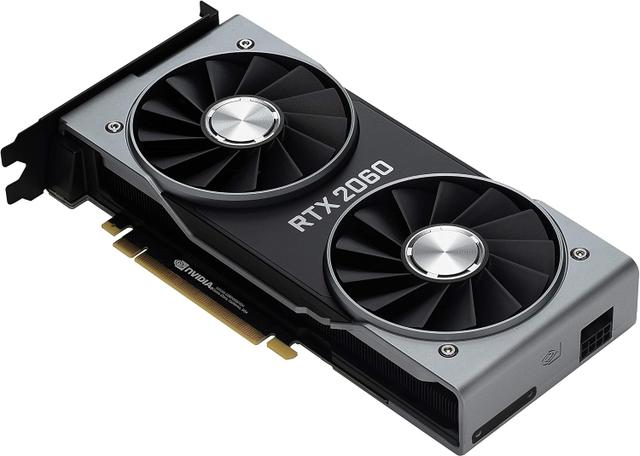
NVIDIA GeForce RTX 2060
Expert rating5 / 10
- GPU Brand:
- NVIDIA
- VRAM:
- 6GB GDDR6
- Memory Type:
- GDDR6
- TDP:
- 160W
Consumercarts is reader-supported. Learn more
Disclaimer: The price and specification of the given product may differ from the actual product. Please confirm on the retailer's website before buying.
Manufacturer: NVIDIA Last updated: 2026-09-12
NVIDIA GeForce RTX 2060 Review
The original GeForce RTX 2060 gets searched by people trying to figure out if their entry-level Turing card can still keep up, since it introduced ray tracing to the sub-$350 segment back in 2019.
With just 6GB of GDDR6 and 1920 CUDA cores, it was NVIDIA's most affordable RTX card at launch, but that VRAM ceiling is the main thing holding it back in 2026, since a lot of current titles want more memory than it has to spare.
The VRAM Ceiling
The RTX 2060's 6GB of VRAM was reasonable for 1080p gaming in 2019 but has aged into a real limitation, with newer titles at high texture settings routinely wanting more than the card can offer regardless of how much raw compute it has left. Its first-generation RT cores were always modest, and ray tracing at 1080p on this card usually means turning settings down to keep frame rates acceptable.
Comparison to Alternatives
The NVIDIA GeForce RTX 2060 Super addressed the VRAM concern directly with 8GB and a bigger TU106 configuration, making it the noticeably better pick if you can find one for similar money secondhand. Against the older NVIDIA GeForce GTX 1070 Ti, which has 8GB of GDDR5 but no ray tracing hardware at all, the RTX 2060 usually trades blows in raster performance while adding RT/DLSS support the older card lacks entirely.
Our verdict
Reviewed by Burooj Alam. Rated by us, not by users.
Expert rating5 / 10
A capable entry into ray tracing in its day, now limited mainly by its 6GB VRAM ceiling - fine for light 1080p use, best avoided otherwise.
Best for
- Budget 1080p gaming with lighter texture settings
- Buyers who already own one for casual/esports titles
- Anyone curious about early consumer ray tracing on a budget
Not for
- Modern AAA titles with high-resolution texture packs (6GB fills up fast)
- 1440p or higher gaming
- New purchases - the RTX 2060 Super or RTX 3060 offer meaningfully more headroom
Specifications
What these specs meanPlatform
| GPU Brand | NVIDIA |
|---|---|
| Board Partner | NVIDIA Founders Edition |
Identity and type
| Series | GeForce RTX 20 |
|---|---|
| Tier | Mainstream (2019, legacy) |
Performance
| VRAM | 6 GB |
|---|---|
| Memory Type | GDDR6 |
| Boost Clock | 1680 MHz |
| Ray Tracing Support | Yes |
Physical & Power
| TDP | 160 W |
|---|---|
| Card Length | 229 mm |
| Slot Width | 2 |
Silicon
| Architecture | Turing |
|---|---|
| Shader Units | 1920 |
Ray tracing and AI
| RT Cores | 30 |
|---|---|
| AI Accelerators | 240 |
Memory
| Memory Bus Width | 192 bit |
|---|---|
| Memory Bandwidth | 336 GB/s |
Host interface
| PCIe Generation | PCIe 3.0 x16 |
|---|
Market and workstation
| MSRP | 349 USD |
|---|---|
| Launch Date | 2019-01 |
FAQs
What are the key specifications of the NVIDIA GeForce RTX 2060?
Key specs for the NVIDIA GeForce RTX 2060: VRAM 6 GB, Memory Bandwidth 336 GB/s, Boost Clock 1680 MHz, TDP 160 W, PCIe Interface PCIe 3.0 x16, Card Length 229 mm.
Who is the NVIDIA GeForce RTX 2060 best suited to?
Best suited to: Budget 1080p gaming with lighter texture settings; Buyers who already own one for casual/esports titles; Anyone curious about early consumer ray tracing on a budget.
What are the drawbacks of the NVIDIA GeForce RTX 2060?
Not the best fit for: Modern AAA titles with high-resolution texture packs (6GB fills up fast); 1440p or higher gaming; New purchases - the RTX 2060 Super or RTX 3060 offer meaningfully more headroom.