
Consumercarts is reader-supported. Learn more
AMD Instinct MI210 vs NVIDIA GeForce RTX 3050: Comparison
AMD Instinct MI210 vs NVIDIA GeForce RTX 3050: the tdp difference
Tdp is where these two genuinely part company, AMD Instinct MI210 300 W against NVIDIA GeForce RTX 3050 130 W, a 131% lead for NVIDIA GeForce RTX 3050. Vram runs the same way, 64 GB on the AMD Instinct MI210 versus 8 GB on the NVIDIA GeForce RTX 3050, another win for AMD Instinct MI210. Add memory bandwidth to that, 1600 GB/s on the AMD Instinct MI210 versus 224 GB/s on the NVIDIA GeForce RTX 3050, and the pattern holds. AMD Instinct MI210 also leads on memory bus width, 4096 bit on the AMD Instinct MI210 versus 128 bit on the NVIDIA GeForce RTX 3050.
Who each one is for
Buy the AMD Instinct MI210 for double-precision workloads that don't need MI250X-level throughput, though it is the wrong buy for any desktop or workstation build - compute-only, no display output and maximum-throughput HPC nodes (use MI250X instead). It is equally the pick for HPC and AI deployments in standard PCIe-slot servers without OAM sled support. it is not the pick for buyers who prioritize raw rasterization performance over RT/DLSS features. The same goes for budget 1080p builds that want entry-level ray tracing and DLSS support. Our rating of the AMD Instinct MI210 (7.3/10): A practical, PCIe-slot-friendly way to get CDNA 2 compute into a standard server, useful for smaller HPC and AI deployments, but clearly the entry point of its generation next to the dual-die MI250X and now well behind the MI300 series.
Frequently asked questions
Do the AMD Instinct MI210 and NVIDIA GeForce RTX 3050 differ on boost clock?
Yes. Boost Clock reads 1700 MHz on the AMD Instinct MI210 versus 1777 MHz on the NVIDIA GeForce RTX 3050.

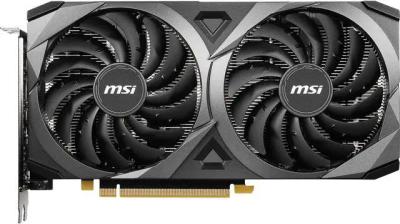
Specs and benchmarks
VRAM
- AMD Instinct MI210
- 64 GBBest
- NVIDIA GeForce RTX 3050
- 8 GB-87%
Memory Type
- AMD Instinct MI210
- HBM2E
- NVIDIA GeForce RTX 3050
- GDDR6Best
Boost Clock
- AMD Instinct MI210
- 1700 MHz-4%
- NVIDIA GeForce RTX 3050
- 1777 MHzBest
Ray Tracing Support
- AMD Instinct MI210
- No
- NVIDIA GeForce RTX 3050
- Yes
TDP
- AMD Instinct MI210
- 300 W-131%
- NVIDIA GeForce RTX 3050
- 130 WBest
Architecture
- AMD Instinct MI210
- CDNA 2 (single Graphics Compute Die)
- NVIDIA GeForce RTX 3050
- Ampere (GA106)
Process Node
- AMD Instinct MI210
- TSMC 6nm
- NVIDIA GeForce RTX 3050
- Samsung 8N
Memory Bus Width
- AMD Instinct MI210
- 4096 bitBest
- NVIDIA GeForce RTX 3050
- 128 bit-97%
Memory Bandwidth
- AMD Instinct MI210
- 1600 GB/sBest
- NVIDIA GeForce RTX 3050
- 224 GB/s-86%
PCIe Generation
- AMD Instinct MI210
- PCIe 4.0 x16
- NVIDIA GeForce RTX 3050
- PCIe 4.0
Launch Date
- AMD Instinct MI210
- 2022-03
- NVIDIA GeForce RTX 3050
- January 2022


Which one should you pick?
Choose AMD Instinct MI210 if you want the higher VRAM (64 GB vs 8 GB), the higher memory bus width (4096 bit vs 128 bit) and the higher memory bandwidth (1600 GB/s vs 224 GB/s).
Choose NVIDIA GeForce RTX 3050 if you want the higher boost clock (1777 MHz vs 1700 MHz) and the lower TDP (130 W vs 300 W).
Price comparison
| Retailer | AMD Instinct MI210 | NVIDIA GeForce RTX 3050 |
|---|---|---|
| Consumercarts listing | $249.00 View on Consumercarts listing |
Disclaimer: The price and specification of the given product may differ from the actual product. Please confirm on the retailer's website before buying.
Verdict
AMD Instinct MI210
7.3 / 10 Expert Rating
A practical, PCIe-slot-friendly way to get CDNA 2 compute into a standard server, useful for smaller HPC and AI deployments, but clearly the entry point of its generation next to the dual-die MI250X and now well behind the MI300 series.
NVIDIA GeForce RTX 3050
6.5 / 10 Expert Rating
Entry-level ray tracing and DLSS at a budget price, with modest raw performance.